
Coco Gauff has something to confess: She’s been nervous.
But the 22-year-old tennis phenom, speaking over the phone after an early August training session, isn’t referring to the National Bank Open in Toronto, where in a few days she would begin a run to the semifinal. Nor is she talking about the U.S. Open at the USTA Billie Jean King National Tennis Center, a tournament that will eventually pit her against Mirra Andreeva in a highly anticipated quarterfinal matchup on Wednesday, Sept. 9.
In 2025, Gauff launched a production company called iROC Media Group and shortly thereafter partnered with Religion of Sports, the Los Angeles-based studio founded by Tom Brady, Michael Strahan and Gotham Chopra, to produce a range of projects. The joint venture a few weeks ago released its first original offering: a pair of shortform documentaries for the Tennis Channel covering the history of fashion in the sport and the story of Zina Garrison, the first Black woman to reach a Grand Slam singles final in the Open era.
The addition of “executive producer” to Gauff’s résumé — alongside two-time Grand Slam singles champion, U.S. flag-bearer at the 2024 Paris Olympics and the youngest player to ever qualify for the Wimbledon main draw at just 15 years old — has caused some jitters.
“I didn’t know how people would perceive it, to be honest,” she says. “But a lot of people were excited about it, and, obviously, I have to wait for feedback in September. That’s the hardest thing.”
There are plenty of sports stars who can relate. Over the course of the past two decades, some of the most popular athletes on the planet have established similar businesses to service their creative ambitions, spanning documentaries, TV shows, feature films, podcasts and across multiple genres.
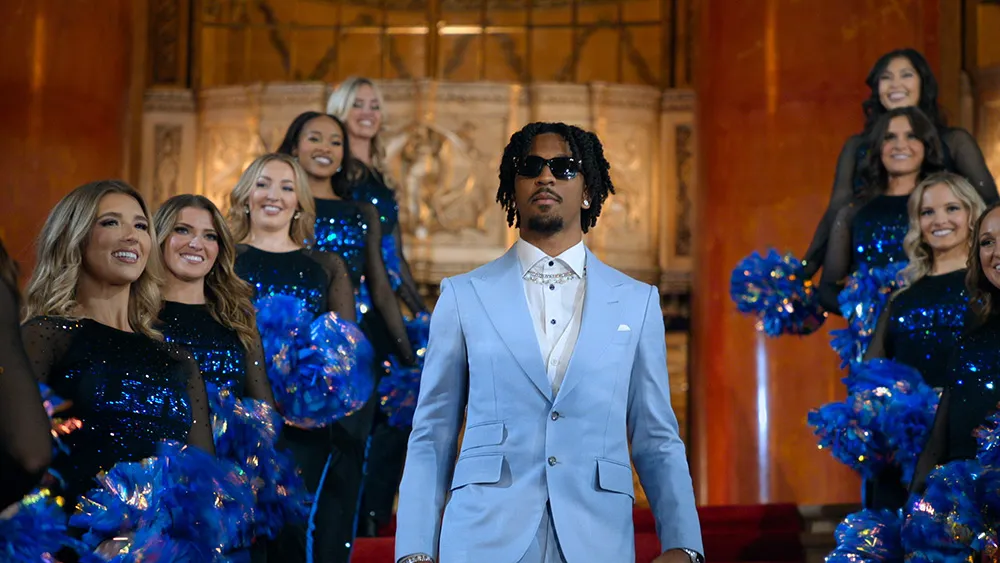
(C) Jayden Daniels in Quarterback: Season 3.
Courtesy of Netflix
LeBron James co-founded the earliest form of the SpringHill Co. in 2007, which has since merged into Fulwell Entertainment. Stephen Curry helped create Unanimous Media in 2018, and Peyton Manning’s Omaha Productions emerged two years later. A 2025 study by USC Annenberg’s Norman Lear Center identified 33 athlete-owned production companies that have generated more than 370 media properties, led by other notable names like Naomi Osaka, Kevin Durant and Tony Hawk. More recently, Buffalo Bills quarterback Josh Allen entered the fold last week by launching Out of Pocket Studios with Skydance Sports.
What all these enterprises have in common is that they’re underpinned by a desire for more control. The modern athlete wants a larger say in how they’re perceived, how their intellectual property is used and how they’re compensated. That’s exactly what Gauff, the world’s highest-paid female athlete at $31 million in 2025, was after when last year she formed a namesake company to house all her business ventures in partnership with powerhouse agency WME, with the media business underneath. “I don’t want to just promote a brand or a product,” she says. “I really want to be a part of it.”
It’s also how James, the first active NBA player to achieve billionaire status, framed some of his own moves. “I got sick and tired of the media changing the narrative or picking their narrative about what I was doing,” he said in a 2022 Sports Illustrated cover story.
Endeavoring to build a media empire is easier said than done, though. Many of these upstarts have historically been quick to parlay a buzzy name and big bankroll into an initial slate of projects, generally centered around its athlete founder. Giannis Antetokounmpo, for example, rolled out Improbable Media in 2024 with a feature-length documentary about his life story. And, for a time, that would be enough to get a business off and running, especially with the demand for sports-related content booming.
Hollywood has changed. The fallout of the COVID-19 shutdowns and the concurrent writer and actors strikes of 2023 has left an indelible mark on the entertainment industry. Studios have shrunk budgets, major production houses have cut staff, and fewer projects are reaching the finish line. That’s not to say there isn’t opportunity — Netflix and Amazon spent about $40 billion combined on video and music content last year — but the degree of difficulty, especially for the sports stars dabbling in unfamiliar territory, has intensified.
“Any athlete can walk a project in and have it sell, quote unquote,” says Josh Pyatt, the former co-head of WME Sports who joined Patrick Whitesell’s investment firm WTSL as a partner earlier this year and now runs WIN Artists, its media, content and brand partnerships division. “Getting it made, getting multiple projects made and creating real enterprise value is something that not many can actually do.”

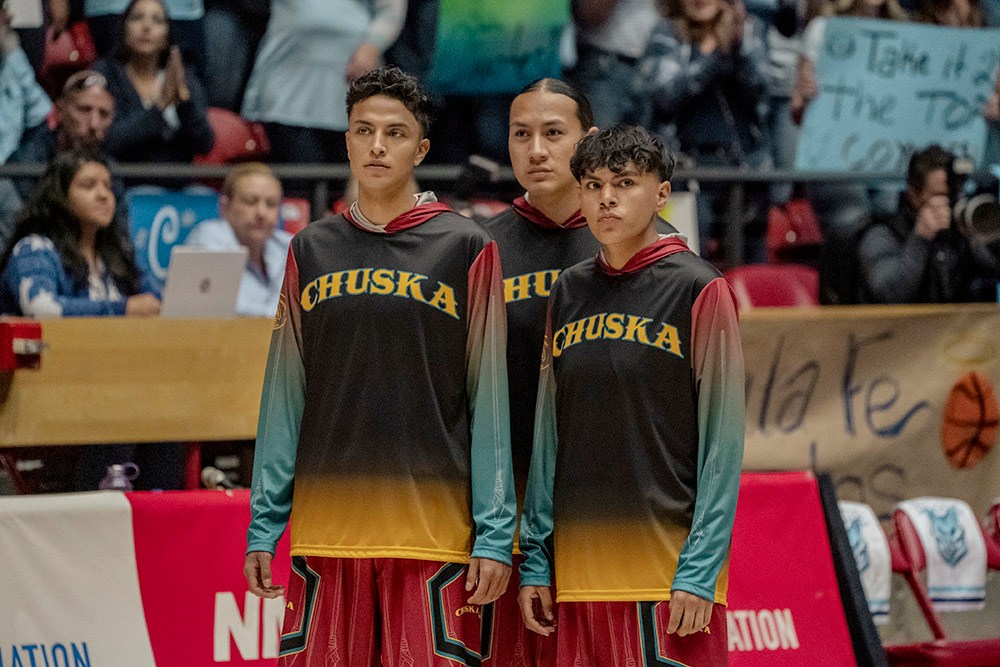
(L to R) Kauchani Bratt as Jimmy, River Rayne Thomas as Tyson and Jojo Jackson as Warlance in Rez Ball.
Lewis Jacobs/Netflix
LESSONS FROM KING JAMES
Gauff can’t take credit for the idea to push into the media business. That belongs with her father, Corey. In 2020, amid the COVID quarantine and the absence of sports, the elder Gauff was inspired by watching The Last Dance, an eight-part docuseries that chronicled Michael Jordan’s legendary career. He thought it would be cool to one day produce something similar about his then-16-year-old daughter if she could continue to win in the years to come. Gauff agreed, even though to this day, she still hasn’t seen the documentary. “It’s really bad that I haven’t watched yet,” Gauff says with a laugh.
The irony is that while Jordan never founded his own media and production company, some industry insiders suggest that it’s hard not to see his imprint on this era. The basketball legend’s first Nike deal, which landed him a royalty on the sale of every sneaker bearing his name, set a new standard for athletes looking to take ownership of their futures. The repercussions would reshape the signature shoe business and later trickle into other areas.
To Pyatt, Strahan and Shaquille O’Neal “were the first” to define the modern athlete production company movement, with the former building SMAC Entertainment alongside entertainment executive Constance Schwartz-Morini since 2010, as he transitioned from pro football player to daytime television talk show host. O’Neal, meanwhile, long has excelled at attracting opportunities and weaving them together, like becoming the president of Reebok’s basketball division in 2023 and then later selling a show to Netflix about revitalizing the brand through his production outfit, Jersey Legends.
But much of the oxygen of the era belonged to James. In 2020, he formed the SpringHill Co. with his business partner Maverick Carter, raising $100 million from backers like Guggenheim Partners and Elisabeth Murdoch and consolidating three of his businesses — SpringHill Entertainment, Uninterrupted and the Robot Co. — into a new juggernaut. The joint enterprise had produced TV shows like Survivor’s Remorse, The Wall and The Shop, as well as such films as Space Jam: A New Legacy, Hustle and What’s My Name: Muhammad Ali.
With the growing demands of streamers pushing Hollywood toward a TV production peak of 600 shows in 2022, investors poured into the space. The SpringHill Co. a year earlier had sold a minority interest to a group that included Nike, Fenway Sports Group and RedBird Capital Partners at a $725 million valuation. The enthusiasm extended beyond just athlete-led businesses, with Blackstone-backed Candle Media buying a majority stake in Reese Witherspoon’s media company, Hello Sunshine, for $900 million in 2021. Kevin Hart’s firm, Hartbeat, raised $100 million at a $650 million a year later.
The proverbial gold rush didn’t last. The aftermath of the pandemic forced the industry to rethink its compensation models, and the bets investors were making on upside gave way to a more fundamentally sound approach. The strikes of 2023 only heightened that strain. “We used to have an economic climate where it was prioritizing growth as opposed to profit,” says Leonard Armato, the former CMO of Skechers who helped O’Neal launch his footwear brand and currently advises the No. 1 pick in the 2026 NBA Draft, AJ Dybantsa. “And that came sort of to a screeching halt around the time of WeWork.”
Since then, media companies led by some of the biggest names in Hollywood, like Hart, Jordan Peele and J.J. Abrams, have undergone layoffs. Hello Sunshine reportedly missed its profit projections in 2023, and parent company Candle Media later restructured its business to cut costs. That same year, the Springhill Co. eliminated 10 roles, though it described the move as a pathway to hiring 24 new jobs.
In 2024, Bloomberg reported that James’ enterprise had never turned a profit in its four-year life span, having lost a combined $45 million in 2022 and 2023. The SpringHill Co. did rev up its growth plans last year by merging with James Corden’s Fulwell 73, raising a war chest of $40 million from existing investors.
For those soldiering on, the industry shift taught at least one valuable lesson. “Every project has to be undeniable,” says Erick Peyton, the co-founder of Curry’s Unanimous Media.
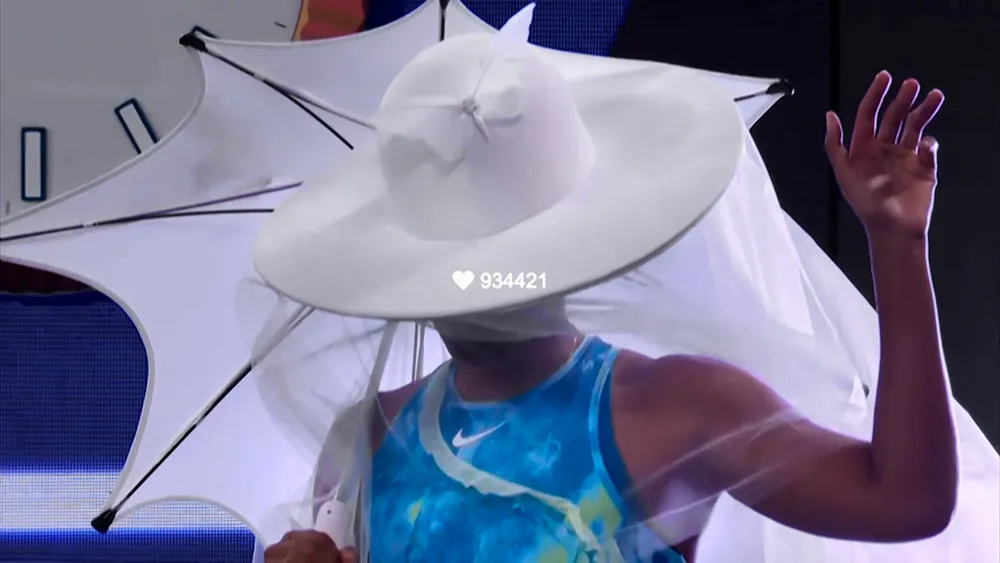
Coco Gauff in Tennis Story Serve Fashion
Tennis Story Serve Fashion & Tennis Courtesy of Tennis Channel
A LITTLE HELP FROM FRIENDS
Gauff has full creative control over iROC, but it’s not a day-to-day gig. She picks the projects, gives notes and, in some cases, appears on camera. On the two upcoming short films, Gauff estimates she put in about five to seven hours of work.
That’s understandable, considering her tennis schedule. Yet it does stress the gravity of finding the right partner. Gauff chose Religion of Sports, which produced documentaries like Shut Up and Dribble, Man in the Arena and Simone Biles Rising. “I’m kind of creative, but not in the things of finding the right people, cameras, angles and the right person to do the interview,” she says. “Just like so many little things I’ve learned that it takes to create a short.”
It’s a commonality among athlete-led production companies. James has Carter. Curry has Peyton. O’Neal has Michael Parris and Authentic Brands Group, which bought a share of his entire business interests in 2015. Strahan has Schwartz-Morini. And Manning has Jamie Horowitz.
The duo behind Omaha Productions met in 2019 and formed the business a year later, rattling off hit shows like Peyton’s Places and Monday Night Football With Peyton and Eli. It didn’t take long for outside money to arrive. Peter Chernin’s North Road content studio invested $10 million at a $400 million valuation in 2023, and WTSL, the firm Pyatt would later join, entered Omaha Productions’ cap table two years later in a deal that valued the company at more than $750 million.
That success starts at the top, according to Pyatt. “Peyton appeals to red states, and he appeals to blue states, which is very rare,” he says. “Then you have someone like Jamie, who can activate it with Peyton.”
But while Omaha Productions or any other talent-led media business can launch off the popularity of its central figure, it must evolve to achieve long-term sustainability. “We used to call it the ‘What happens if that person gets hit by a bus?’ ” Pyatt says. Peyton and Eli Manning now only appear in about a quarter of Omaha Productions’ projects as opposed to more than 70 percent at the beginning.
Some of Peyton Manning’s critical contributions to Netflix’s Quarterback docuseries came behind the camera, as the Pro Football Hall of Famer, who does briefly appear in the show, used his personal relationships to help the streamer secure “some of the marquee quarterbacks in the league,” according to Brandon Riegg, vp nonfiction series and sports at Netflix.
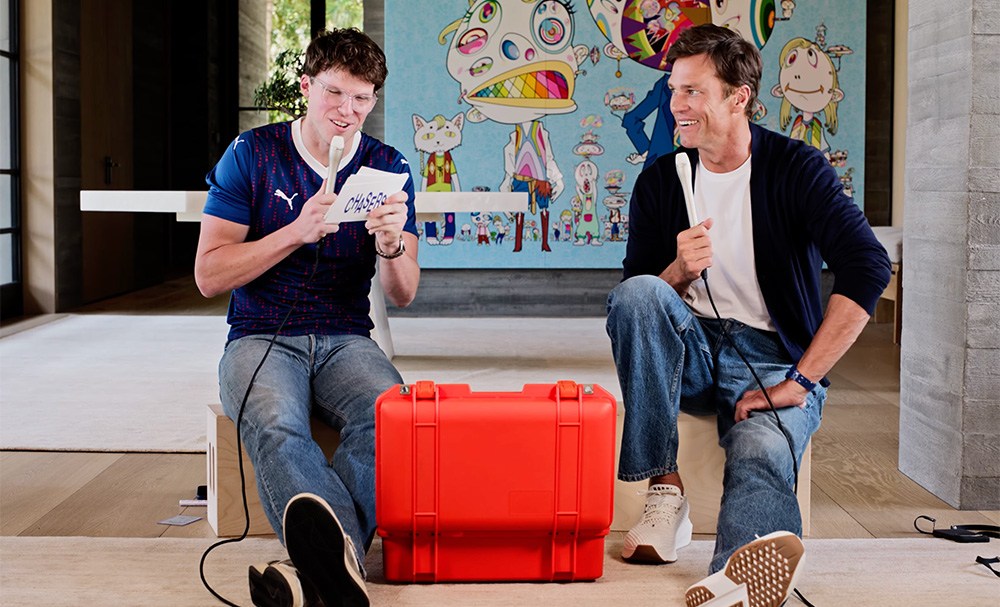
Chasers-TOM BRADY Remembers EVERYTHING! episode
Courtesy of Chasers
Riegg, who has worked with James, Curry and O’Neal, in addition to Manning, adds that any production company has to be held to the same standard of developing and executing projects, even if a famous figurehead can lift some of the industry’s typical barriers to entry. When athletes do learn just how hard it is to operate in Hollywood, prolonged success in entertainment becomes a question of their “appetite, ambition and tolerance.”
“This is a marathon; this isn’t a five-year thing,” Riegg says. “This is a business. It’s not like hitting the lottery. It’s like you have to do idea creation at a regular cadence.”
To offset the challenges of Hollywood production, some media companies use branded content and commercial campaigns. Omaha Productions has shot commercials for the Mannings, as well as Baker Mayfield, Brock Purdy and Jordan Spieth. It also put together a show for the PGA of America starring Colin Jost that was paid for by T-Mobile. The branded content and commercial campaign vertical now accounts for roughly a quarter of Omaha Productions’ revenue, the highest percentage in the company’s brief history.
Pyatt doesn’t see that changing, especially with industries like gambling upping their content spends. Gilad Haas, who co-founded production studio and marketing agency Shadow Lion with Brady, says his firm previously struck a deal with FanDuel that produced both a miniseries about the Boston Celtics 2024 championship and hundreds of man-on-the-street, social-style posts.
The progression of production companies to full-fledged media businesses has also resulted in other moneymaking endeavors. The Shop, SpringHill Co.’s popular barbershop-style talk show, launched its own line of men’s grooming products. Unanimous Media’s Peyton says his firm wants to play a bigger role in financing projects and funneling creators and other non-traditional talents to larger studios. Many companies in the space are figuring out how to push into live events, if they haven’t already, as the AI age places a stronger emphasis on social gatherings and human connection.
Gauff has her own designs on where she wants iROC to go, including producing a movie with a theatrical release. She’s got time, though. Her entertainment journey is starting much earlier than those of James, Curry or Manning.
“I’m 22 years old, so there’s still going to be a lot of eyes on me when I’m playing,” she says. “Hopefully, by the time I retire, we build something that can sustain itself without me promoting it as an active player.”
This story appears in The Hollywood Reporter’s September 2026 Sports issue. Click here to read more.