
This post was originally published on this site.
Prime Video
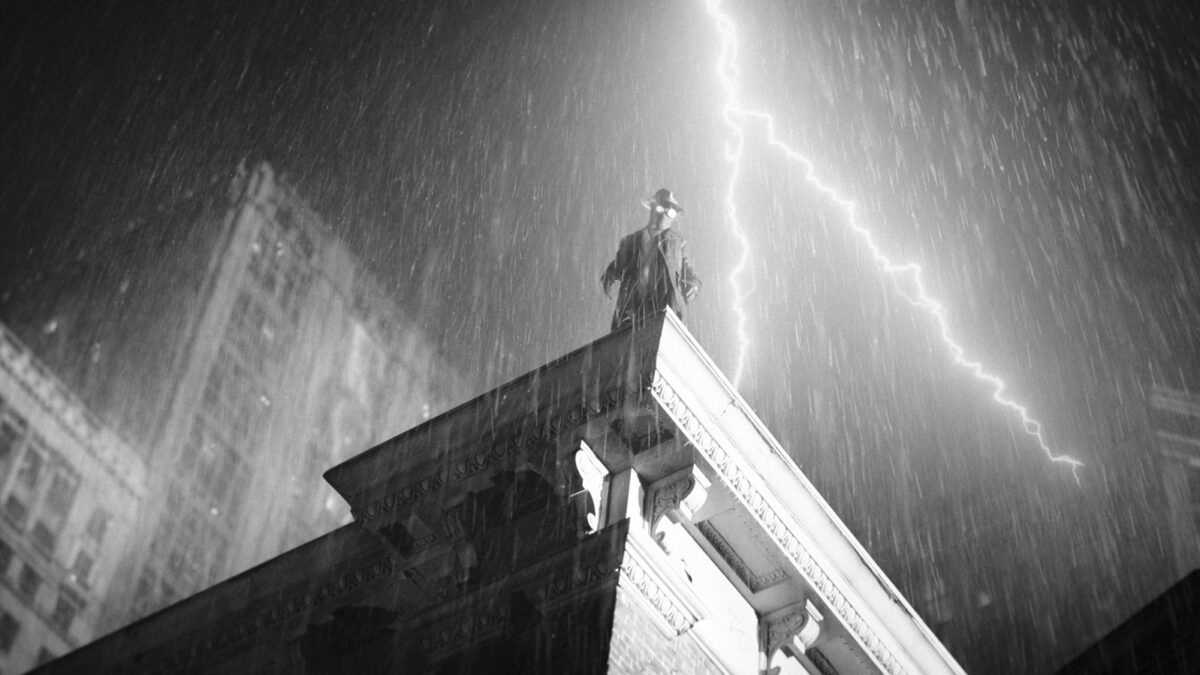
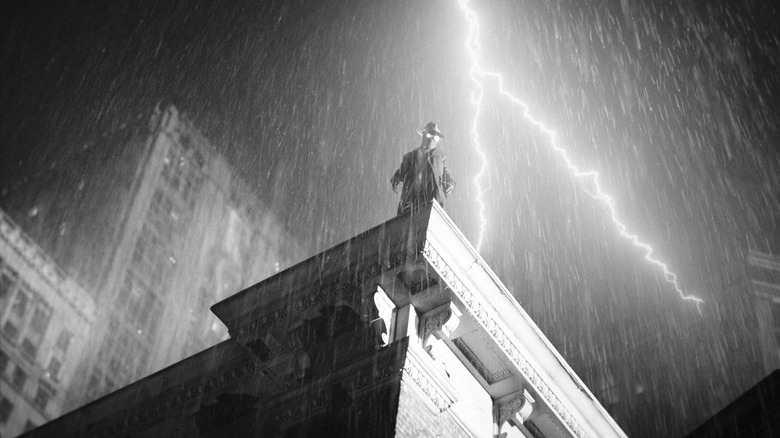
The madmen at Prime Video finally went and did it, giving a TV show of his very own to movie madman Nicolas Cage. In it, he’s a private investigator, a retired superhero, and a drunkard caught up in a case involving human-animal hybrids to make Dr. Moreau proud. Also, he’s Spider-Man. Sort of. Technically, he’s The Spider, a masked man with organic web shooters and spider senses, last seen in animated form in the “Spider-Verse” movies, where Cage also voiced him.
“Spider-Noir” dropped all its episodes at once, in color and black and white, making it easy to plough through them in one lengthy setting. So what’s next? Many other shows share similar DNA to this hybrid, and Cage delivers such a many-faceted creation that there’s something for everyone. Do you like that he’s a drunk superhero, or that he’s a 1930s detective? Are Spider-Man riffs what drew you to Ben Reilly, or was it the thrill of seeing a character actor like Cage getting his own show?
Whatever it is viewers like most about Ben and his alternate-history universe, we’ve got a show recommendation for that. Come swing along as we look at ten other shows you should watch if “Spider-Noir” is your vibe.
Black Lightning
The CW
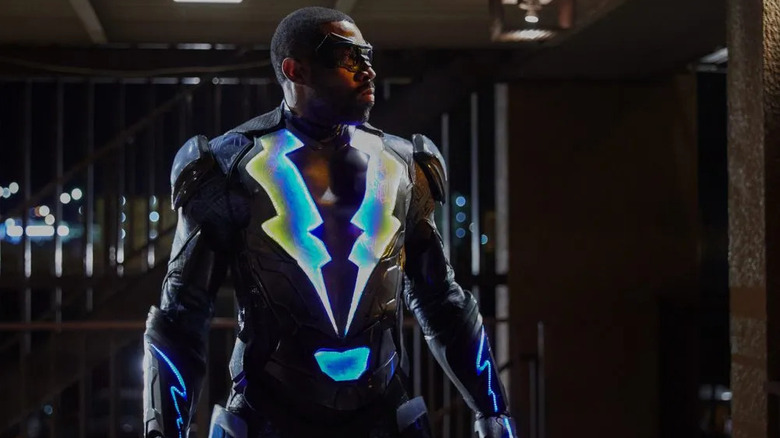
“Spider-Noir” takes the unusual approach of beginning the story after its superhero has essentially retired, and follows a series of events that lead up to “The Spider” coming out of retirement. The most notable prior show to take this approach was “Black Lightning.”
The respective heroes bowed out for extremely contrasting reasons. Black Lightning retired so that his alter-ego, Jefferson Pierce, could protect his family. Ben Reilly, on the other hand, gave up the heroics when he failed to save the woman he loved. Pierce was mostly happy until being pulled back into the life; Reilly is an emotionally numbed drunkard.
In both cases, a distinctive crime boss is ultimately the catalyst for the comeback. Black Lightning must save his daughters from the physically super-tough albino Tobias Whale, while Ben is drawn to protect alluring singer Cat Hardy from Irish mob boss Silvermane. It’s obvious on both shows who’s behind most of the wrongdoing in the city, but proving it and resoundingly defeating the bad guy turns out to be another challenge altogether.
Additionally, both shows had some questions of franchise continuity. “Black Lightning” initially stood apart from the CW’s DC superhero universe, but was ultimately folded in to the crossover “Crisis on Infinite Earths,” which brought it into the same reality. “Spider-Noir” is ostensibly not the character from the “Spider-Verse” movies, despite Nicolas Cage playing both versions … though nothing in the show technically says he can’t be.
Jessica Jones
Netflix
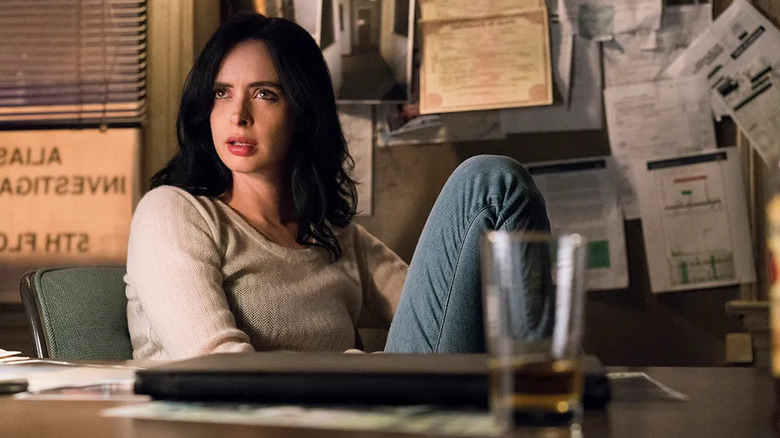
Fans of “Spider-Noir” will likely find Marvel’s “Jessica Jones” series a disturbing, thrilling watch. Like Ben Reilly, Krysten Ritter’s titular hero is a hardnosed, smart-mouthed private investigator, and shares his penchant for the bottle.
Jessica’s initial foe is the psychic Kilgrave (portrayed brilliantly by David Tennant). Later, in the second and third seasons, she finds herself pitted against the other creations of villain Karl Malus, who gave her super strength — one of whom is her own mother. It’s a parallel to Ben Reilly’s major opponents being part of the German experiments that gave him his abilities. Essentially, both characters are fighting their spiritual siblings to get to the real enemy.
“Jessica Jones” was one of the best Marvel shows that aired during the franchise’s Netflix era. It holds up remarkably well, especially as a gritty detective story. Similar to Ben Reilly, Jones starts out as a shadow of her former self, and is flung from one daring street-level adventure after another all across New York City. Just don’t expect “Jessica Jones” to be as whimsy as “Spider-Noir.” Beat for beat, the former is a far, far darker tale.
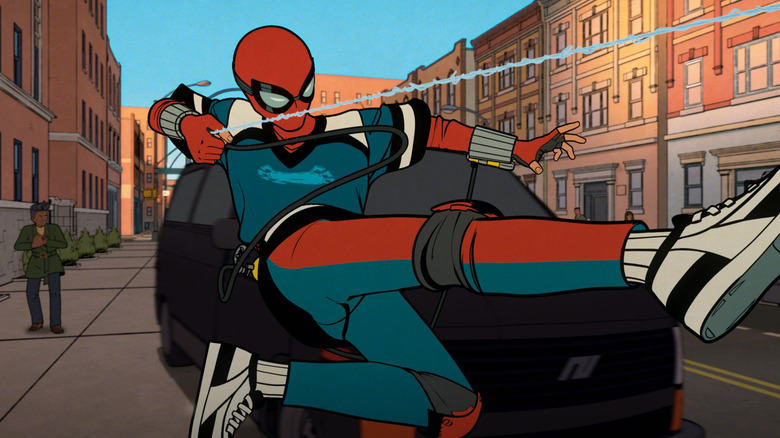
Your Friendly Neighborhood Spider-Man
Disney+
If the main appeal of “Spider-Noir” to you is that it’s the classic Spider-Man story with a twist, check out the ongoing animated series streaming on Disney+. While “Your Friendly Neighborhood Spider-Man” takes immense inspiration from the greater MCU, it still is able to successfully tell an original story with Marvel’s flagship hero.
This version of Spider-Man proceeds more classically with Peter Parker as a high school student, but substitutes Norman Osborn as his tech billionaire mentor in place of Tony Stark. Despite their otherwise vast differences as spider-based heroic webslingers, Peter and Ben also have in common the fact that they’re ultimately working for the bad guy.
As is par for the course, Spidey has personal problems, though young Peter’s can be quite different from older Ben’s. In both shows, though, part of the fun is seeing how some classic Spidey villains get redone for their respective universes. Fresh takes give old favorites new life, from the vain, aspiring actor Megawatt in “Spider-Noir” to Tombstone/Lonnie Lincoln as a reluctant gang member and classmate of Peter’s trying to protect his brother.
Penny Dreadful
Showtime
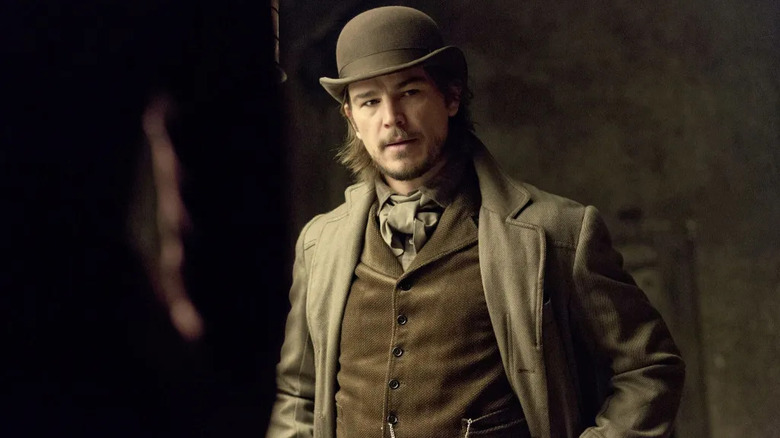
Though it takes place about 40 years earlier than “Spider-Noir,” “Penny Dreadful” has a similar vibe, and not just because its opening credits are full of spiders. Tortured protagonists in hats navigate the underworld of a dark city — London, in this case — as they encounter super-powered antagonists and potential allies who might seem very familiar to viewers.
Where “Spider-Noir” gives us twists on classic Marvel villains, “Penny Dreadful” offers new spins on classic horror novel monsters, all now in the same universe: Dracula, Dr, Frankenstein, Dr. Jekyll, Dorian Gray, and more. Both shows also base their vibe on popular cheap fiction of their respective eras. “Spider-Noir” is informed by pulp detective novels, while “Penny Dreadful” is literally named after cheap horror books popular in the Victorian era. Both shows also have legit movie stars not normally seen on TV shows as their leads: Josh Hartnett and Eva Green for “Penny,” and Nicolas Cage for “Noir.”
Hartnett’s Ethan Chandler and Cage’s Ben Reilly have much in common besides their foes. They were once great, they now drink heavily, and once the alluring, mysterious women who suck them into dangerous cases finally get these broken men past their surface BS, they prove to be genuinely heroic dudes.
For fans of “Spider-Noir,” here’s hoping it can have one more factor in common before its time is done: three seasons and a spin-off would be quite welcome, even if “Penny Dreadful” fans felt that was too short in the end.
Batman: The Animated Series
Fox
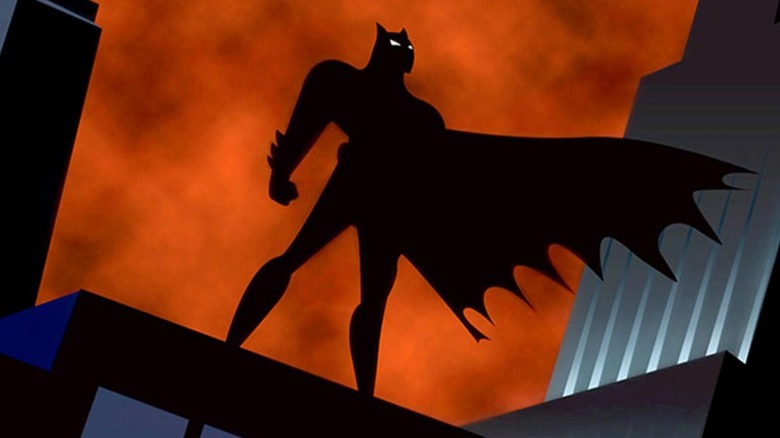
How do you make film noir an aesthetic for kids and teenagers who know and care virtually nothing for film noir? You make it Batman.
When “Batman: The Animated Series” premiered, its obvious antecedents were the Tim Burton movies, and the classic Max Fleischer Superman cartoons. While Burton’s movies mixed equal parts film noir and German expressionism, however, the animated series leaned towards mostly noir. Even the Joker wore a fedora and trench coat, and while Batman used sophisticated technology, TV sets were depicted as black and white, amid other retro touches like the police favoring blimps over helicopters. A clever use of black paper also helped give “Batman: the Animated Series” its unique look.
The similarities with “Spider-Noir” are mostly aesthetic — Paul Dini and Bruce Timm’s Bruce Wayne, unlike broken Ben Reilly, is a near-perfect human being, flawed only in his arrogance and perfectionism. It was also a family show, so Batman couldn’t kill or be as generally TV-MA rated as The Spider. Both shows, however, are takes on iconic superheroes in universes that look the way the 1930s did in movies. “Batman: TAS” just happens to be a lot more faithful to the classic model. After all, Batman himself debuted in the ’30s, while Spider-Man is a creation of the ’60s, and needs bigger changes to fit into the earlier period.
Millennium
Fox
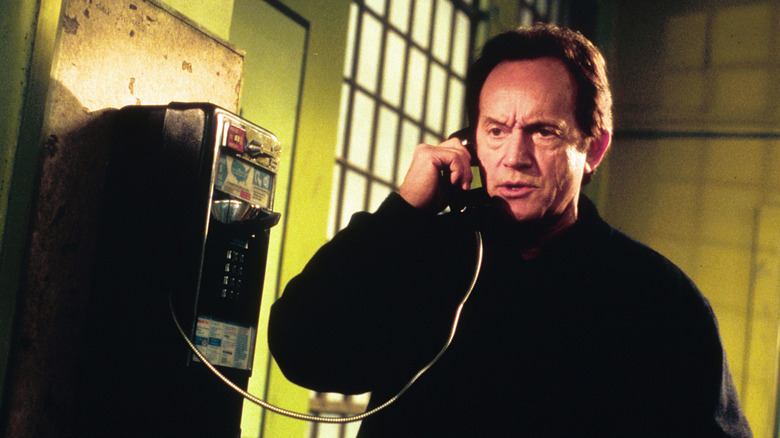
Aesthetically, “Millennium” doesn’t look a whole lot like “Spider-Noir.” It’s a totally ’90s show (that still holds up today), and Frank Black’s major “power” is an intuition that helps him see what a killer saw. There’s no superhero origin story; just a sense that that Frank is smarter and more empathetic than most.
Both shows take a beloved movie character actor and put them in a dark, crime-busting show that takes advantage of their skillset, and appeals directly to their fan base. Lance Henriksen is in many ways an opposite of Nicolas Cage — Henriksen underplays, letting his face do the talking while he remains still. Cage is known for absolutely losing his cool, and making big, bizarre choices. Both are beloved for genre stuff — think Henriksen in “Aliens,” or Cage in “Vampire’s Kiss.”
Movie and TV studios have limited imaginations, and tend to imitate successes by genre, but the real lesson here is this: get an actor who’s beloved for making weird choices, and put them in an equally strange show that plays to their eccentricities. It might not work forever — “Millennium” only reached final closure on an episode of “The X-Files” — but it’ll make for at least a couple of damn memorable seasons.
Daredevil: Born Again
Disney+
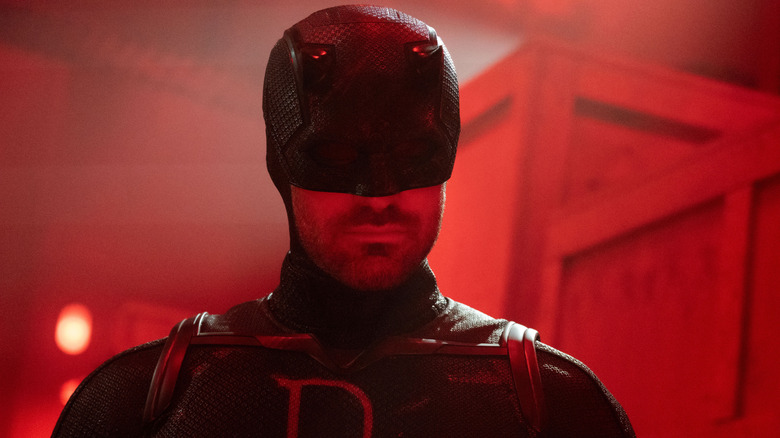
Wilson Fisk in “Daredevil: Born Again” has a lot in common with Silvermane in “Spider-Noir.” Both are the obvious villains in their respective comic book shows, neither has super powers as such, but they’re so entrenched in city hall politics that it doesn’t seem like some small-time freelance do-gooder like Matt Murdock or Ben Reilly can stop them. Additionally, both are acclaimed movie actors who got their big breaks from great directors: Vincent D’Onofrio in Stanley Kubrick’s “Full Metal Jacket,” and Brendan Gleeson in John Boorman’s “The General.”
Fortunately for our protagonists, they have super senses, and an ability to shoot and swing on grappling lines. Daredevil and The Spider have a lot in common, though Ben doesn’t sleep with his female assistant.
If Nicolas Cage is a little too weird for some tastes, Charlie Cox makes an easier hero to root for, with his clean-cut good looks and stalwart morality. On the other hand, for Marvel fans who find Daredevil too nice, The Spider has very situational ethics for an arachnid-superhero of the Spider-Verse. Either way, though, they launch themselves into the air and kick bad guys. Just as we’d all like to do at times to crooked political figures.
Perry Mason (2020)
HBO
Perry Mason isn’t a superhero, though the version best known to the public does have abilities that defy the odds. Like so many heroes of vintage TV shows, Raymond Burr’s incarnation of the fictional lawyer, in both the ’50s and the ’80s, rarely lost a case, defending the innocent and invariably revealing the real culprit.
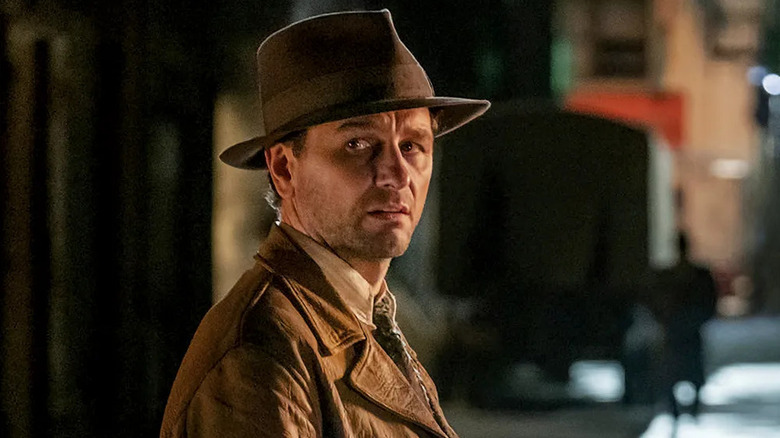
Just as “Spider-Noir” deconstructs Spider-Man by having him be a drunken, loner private detective in the 1930s, HBO’s “Perry Mason” goes back to the character’s origins from 1930s pulp novels by having Matthew Rhys star as … a drunken, loner private detective. Visually speaking, this series splits the difference between the “Spider-Noir” visual variants described as “Authentic Black & White” and “True Hue Color.” Its faded grayscale with occasional saturation looks like an old black-and-white film that’s been hand-tinted with watercolor, albeit with more modern technology making it smoother.
Perry Mason and Ben Reilly are at opposite ends of their careers, though both are traumatized World War I veterans. Ben is at the end of his vigilante career, while Perry is gradually evolving into the super-lawyer he’ll become, albeit a morally grayer one than Burr’s version. Without any super-villains in his world, Mason has it a little tougher when it comes to narrowing down the suspects, since virtually everyone in his era of Los Angeles seems corrupt.
This version of Mason was very nearly played a superhero, too: Robert Downey Jr., who produced, was once set to star until his schedule wouldn’t permit it.
Peacemaker
HBO
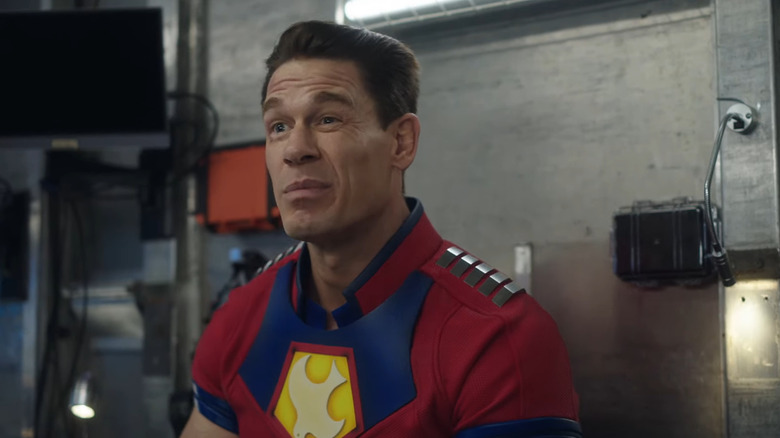
Like The Spider, Peacemaker made his screen debut in a major superhero movie (“The Suicide Squad”) that isn’t part of the current primary canon. In both cases, their popularity as supporting characters had them segue into lead roles on TV shows. As the shows begin, both are failures, having narrowly escaped death in life-changing situations, failing to do the right thing. Though their comebacks have differing stakes, both are brought back into the world of superheroics by mysterious and potentially deadly women: Amanda Waller and Cat Hardy, respectively.
John Cena isn’t yet at the level of character-actor mastery Nicolas Cage is. However, it’s fair to say both have proven their chops at both action and comedy. In their respective, down-on-their-luck-superhero shows, they also excel at pathos (Cena actually broke our hearts a little bit). Despite being physically gifted, their characters are bad at life.
Both shows, then, are redemption arcs, in separate but similar worlds where powered-up threats are real and racism is a significant problem for the hero’s associates. Both heroes also rely on alcohol to handle their inner turmoil, with varying degrees of success. Cena, however, knows he’s in a comedy. It’s never entirely clear if Cage does, which is a big part of his appeal.
The Twilight Zone (1959)
CBS
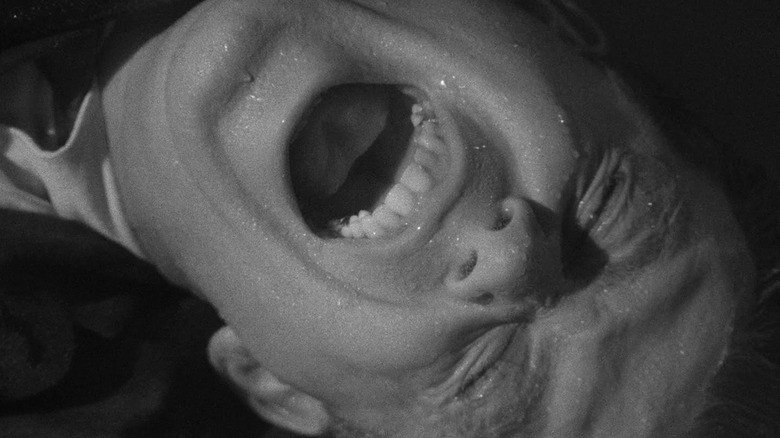
In all likelihood, most anyone who would watch “Spider-Noir” has heard of “The Twilight Zone,” quite possibly the most famous and influential fantasy-sci-fi TV show of all time. Just in case you haven’t, though, it’s a must-see for anyone who likes black-and-white shows with unusual twists and protagonists freaking out.
The original “The Twilight Zone” ran mostly in the early ’60s, right about the time Marvel Comics began, and featured stand-alone stories, usually with some sort of ironic plot reveal at the end. A man with spider powers wouldn’t seem out of place among the best “Twilight Zone” episodes, which included talking killer dolls, aliens that want to serve man for dinner, or a boy who telekinetically sends everyone he hates into a cornfield.
Due to the anthology nature of the show, the cast was completely different each week. If you want to see a star performance that matches Nicolas Cage in black and white for intensity and hamminess, look for the two episodes that star William Shatner. “Nightmare at 20,000 Feet,” in particular, offers a full-on freakout, as the future Captain Kirk is haunted by a gremlin on the wing of his plane.
Arachnid superheroes aren’t really a thing in any of the episodes, but for moodiness, grotesque surprises, and a sense that something dark is afoot, “The Twilight Zone” is tonally akin to Ben Reilly’s depressed and fractured spirit.