
French animation filmmaker Sylvain Chomet is rejecting claims that generative AI was used to make “Christian Dior’s Night in Color,” the six-minute Dior short featuring voices from Robert Pattinson, Rihanna, Josh O’Connor, LaKeith Stanfield, Louis Garrel and Camille Cottin.
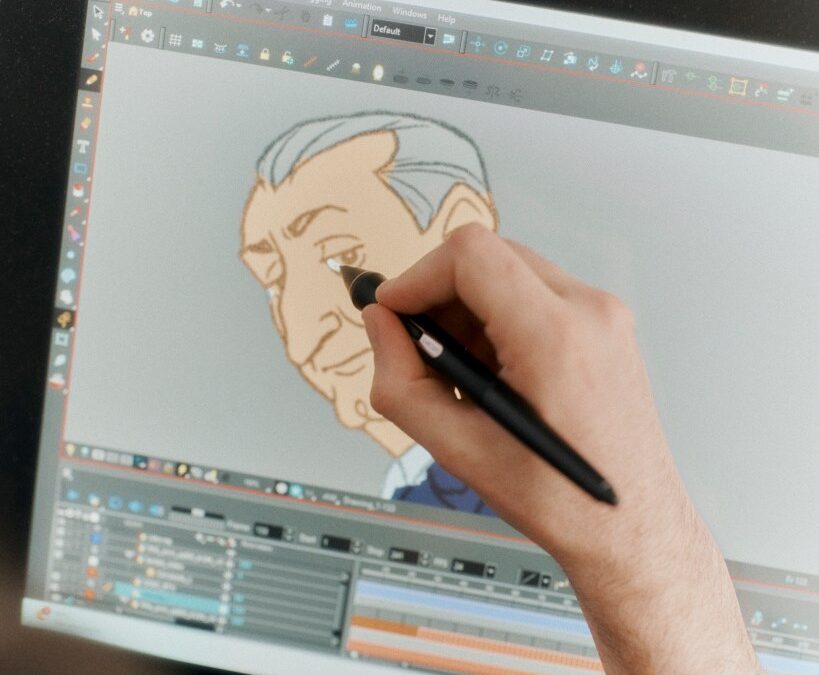
The four-time Oscar nominee behind “The Triplets of Belleville” and “The Illusionist” says the film was created through traditional 2D animation, with artists drawing its characters, backgrounds and key poses. Producer Aton Soumache acknowledged that automated interpolation helped generate a limited number of in-between frames, but both men insist the technology did not create the artwork.
The distinction became a flashpoint after online viewers highlighted apparent visual irregularities, including a character seemingly shown with six fingers, as possible evidence of AI-generated animation. The reaction carried added weight because Dior presented the film as a celebration of traditional craftsmanship for its 2026 holiday season, connecting Chomet’s hand-drawn work with the detailed craftsmanship of the fashion house’s couture ateliers.
Chomet and Soumache Detail the Production
Speaking to Variety, Soumache said the production took seven months and employed roughly 20 people. That team included six animators as well as storyboard artists, designers, background artists, compositors and editors.
“We used an automated interpolation system for a very small part of the process, but the film itself is traditional 2D animation,” the producer said.
Chomet described interpolation as a tool for handling some of animation’s repetitive, mechanical work rather than its creative decisions. Artists may now draw on digital tablets instead of paper, he explained, but the fundamental process remains rooted in hand-drawn design.
“I design the characters, we create the storyboards, the backgrounds, the colors,” Chomet said. “The entire creative process is exactly the same as when I started making animated films. What has changed is the technology.”
The filmmaker also directly addressed the disputed hand image. According to Chomet, the fingers were spread in a fan-like movement intended to communicate motion, a drawing technique that can make six or seven fingers appear visible. He added that continuity and shape errors also occur in traditional animation, citing the example of a character’s nose changing over several frames.
Chomet said the allegations were especially strange to him because he continued pursuing hand-drawn filmmaking despite industry pressure to move toward CGI following the success of “Toy Story.” While emphasizing his long-standing commitment to drawing, he also defended using available technology as part of the production process.
He said he found working on graphic tablets frustrating and planned to return to pencil and paper because he values having original drawings.
Inside Dior’s Hollywood-Inspired Story
“Christian Dior’s Night in Color” incorporates several elements from Dior’s history, including the couturier’s friendship with Marlene Dietrich, his Hollywood connections and the creation of the Junon gown in 1949. The short also draws from an early concept behind Dior creative director Jonathan Anderson’s Cruise 2027 collection: cinema’s transition from black-and-white imagery to Technicolor.
Its story places Dietrich in Los Angeles as she prepares to shoot a movie. When the director abruptly decides to film in color, an urgent request goes to Paris for a colorful Dior gown. Christian Dior and his seamstresses must then complete the assignment against the clock.
Pattinson serves as narrator, with Garrel voicing Christian Dior and Cottin playing Dietrich. O’Connor portrays a talking chair, Rihanna voices Dior’s lucky star and Stanfield plays the Hollywood director. Nine d’Urso, Nadia Tereszkiewicz and Greta Lee provide the voices of three bees.
Anderson originated the project’s central idea, while Martin Latham helped develop the screenplay. Chomet said he worked particularly closely with Latham as they shaped the script, storyboards, characters and overall story through repeated exchanges.
The collaboration expanded beyond the short itself. Chomet’s illustrations also informed Dior’s holiday collections and boutique windows around the world. According to Soumache, Dior developed physical characters and objects based on the film while the animation was still being made, requiring the company to see Chomet’s designs early in the process.
A Continued Commitment to 2D Animation
Soumache, whose credits include the Cesar-winning “The Little Prince” and “Miraculous Ladybug,” spent much of his career working in CGI before returning to traditional animation on projects including Joann Sfar’s “Little Vampire” and “A Magnificent Life.” The latter is a biopic of French novelist and filmmaker Marcel Pagnol.
Chomet’s “A Magnificent Life” had its world premiere at the previous year’s Cannes and was distributed theatrically by Sony Pictures Classics. Soumache said Dior approached the pair specifically because the company wanted Chomet’s distinctive drawing style.
Chomet identified Disney’s 1961 film “One Hundred and One Dalmatians” as a work he repeatedly revisits, describing its poetry and quality of drawing as a standard he considers whenever making a film. His goal, he said, has been to use technology while preserving traditional beauty.
The Dior project also reflects Anderson’s interest in hand-drawn animation. During his time at Loewe, Anderson collaborated with Japan’s Studio Ghibli on three collections.
ShowBiz Take
The controversy matters because it centers on where creative authorship ends and automation begins. Chomet and Soumache are not denying that an automated tool entered the workflow; they are drawing a firm line between software used for limited intermediate frames and generative AI used to originate artwork.
That distinction is particularly significant for a campaign explicitly built around traditional craftsmanship. With a seven-month production, a roughly 20-person team and Chomet’s illustrations extending into Dior’s physical displays and objects, the filmmakers’ response presents the short as a large-scale artist-led collaboration—not a work generated without drawings.