
Why This Matters
The latest midyear snapshot from Luminate points to an entertainment business that is no longer organized around a single growth story. Music streaming remains one of the sector’s most reliable engines, but film and television are moving through a more cautious phase, with platforms leaning harder into familiar libraries, documentary programming and properties that arrive with measurable fan behavior already attached.
That shift matters because it signals a change in how success is being defined. For much of the streaming era, volume was the strategy: more scripted originals, more platform exclusives, more global launches and more spending to win attention. In 2026, the emphasis is increasingly on efficiency, repeat engagement and audience communities that can be activated across formats.
Music is central to that recalibration. Luminate’s Midyear Report 2026 indicates that streaming listening remains robust, with songs, albums and artists continuing to generate the kind of daily habit that television platforms often struggle to replicate. Music’s advantage is frequency. Fans return to tracks repeatedly, build playlists, share clips, attend concerts and buy merchandise. That creates a loop of engagement that extends beyond any single release window.
At the same time, the report suggests that television is becoming more dependent on known quantities. Library titles, unscripted formats and documentaries are taking on greater importance as services reassess the economics of expensive scripted originals. The result is not the end of premium TV, but a sharper filter around what gets greenlit. A new drama now needs more than a compelling pitch. It needs a clear audience case, international potential, franchise value or a connection to an existing fan base.
For the industry, this is a reminder that fandom has become a form of currency. A devoted audience can lower marketing risk, sustain conversation between releases and travel across music, video, live events, publishing, gaming and social platforms. In a fragmented marketplace, passive awareness is less valuable than active participation.
Industry Context
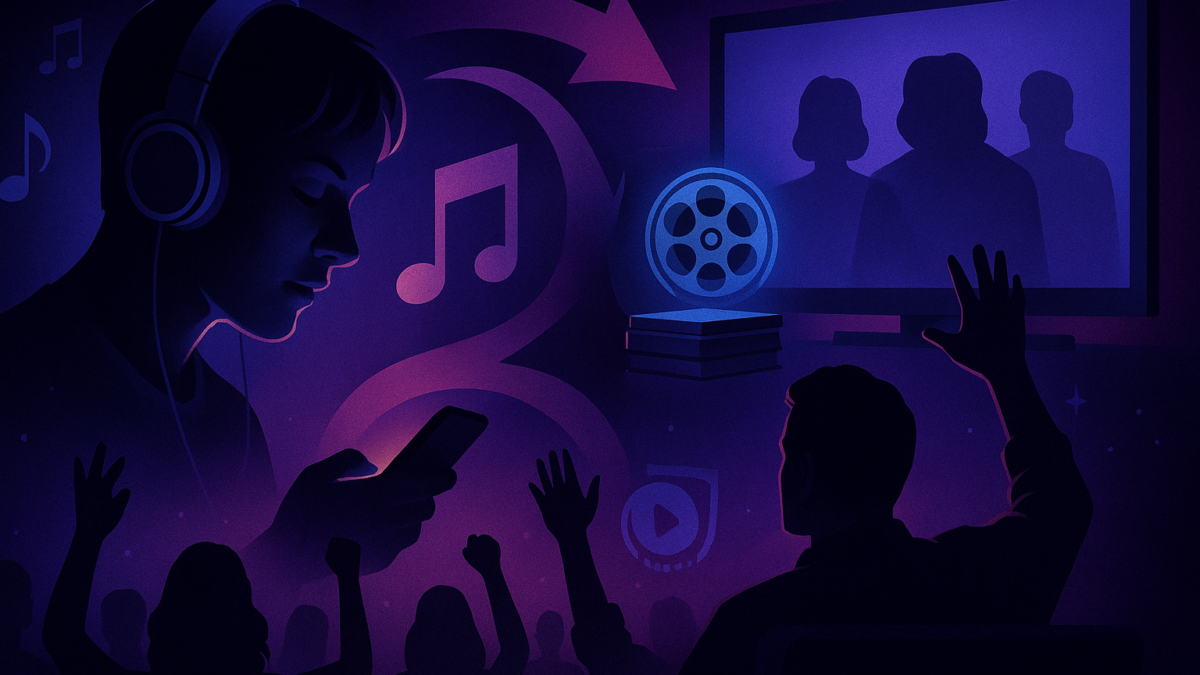
The streaming economy has matured into a converged entertainment marketplace where music, film, television and creator culture increasingly feed one another. A hit song can fuel a documentary. A concert film can drive subscription engagement. A nostalgic series can revive catalog music. A reality star can become a touring brand. The walls between formats are thinner than ever, and companies are following the audience rather than the old category lines.
That is particularly visible in the renewed strength of music as both a product and a promotional engine. Streaming continues to dominate listening behavior, but physical music’s resilience adds another wrinkle. Vinyl, deluxe editions and collectible formats have turned ownership into a fan statement rather than merely a way to access songs. For labels and artists, that creates higher-value transactions around the most committed listeners.
Television and film companies are watching closely. After several years of aggressive spending, many platforms are trying to balance subscriber retention with profitability. That has made library programming more attractive. Older series with proven appeal can generate long viewing sessions without the same production risk as a new original. Familiar titles also help platforms serve audiences that want comfort viewing, not just the next buzzy premiere.
Documentaries are benefiting from the same logic. They can be topical, relatively efficient to produce and closely tied to existing communities, whether around musicians, athletes, true crime cases, social movements or cultural icons. A documentary attached to a passionate fan base can function as both content and event, especially when timed to an anniversary, tour, album cycle or public controversy.
The report’s attention to AI also reflects a market that is becoming more experimental, even as rights holders remain cautious. Audiences are beginning to sample AI-assisted tools and experiences, from recommendation engines to creative applications, while studios, labels and talent representatives continue to debate consent, compensation and ownership. The technology is not yet a settled business model, but it is already part of the consumer environment.
For India and other high-growth entertainment markets, the implications are significant. Mobile-first consumption, multilingual audiences and social-driven discovery make fandom especially powerful. A song can break through short-form video before it reaches traditional radio. A regional series can find national attention through clips and memes. A star’s fan community can drive opening weekends, streaming charts and brand partnerships at once.
The broader lesson is that scale alone is no longer enough. Platforms have spent years competing for subscribers; now they are competing for depth of engagement. The most valuable properties are those that inspire audiences to do more than watch or listen. They comment, remix, attend, collect, recommend and return.
What Happens Next?
The next phase of the streaming business is likely to reward companies that can connect content planning with fan intelligence. Data will not replace creative judgment, but it will increasingly shape where money flows. Executives will want to know not only how many people might watch a show, but whether those viewers are likely to follow the cast, buy tickets, stream a soundtrack, engage on social media or remain loyal between seasons.
That could mean fewer speculative scripted orders and more targeted bets around recognizable IP, music-driven storytelling, sports-adjacent projects, celebrity documentaries and genre titles with built-in communities. It may also mean shorter seasons, more co-productions and greater emphasis on global rights strategies as platforms try to make each investment work harder.
Music companies, meanwhile, are positioned to expand their influence across the entertainment stack. Artists with strong fandoms are no longer just releasing albums; they are building multimedia ecosystems. Expect more concert films, behind-the-scenes series, immersive fan experiences and partnerships between labels, streamers and live-event companies.
The challenge will be avoiding overcorrection. Libraries and fandom-led projects can be powerful, but audiences still respond to originality when it feels urgent and distinctive. The next breakout hit may not come from the safest spreadsheet. It may come from a creator, artist or community that has been underestimated by conventional development models.
For now, Luminate’s midyear readout captures a business in transition rather than decline. Music is setting the pace, television is tightening its bets, physical formats are proving that fans still value ownership, and AI is beginning to test the boundaries of entertainment consumption. The companies that thrive will be those that understand the new equation: attention is fleeting, but fandom can endure.