
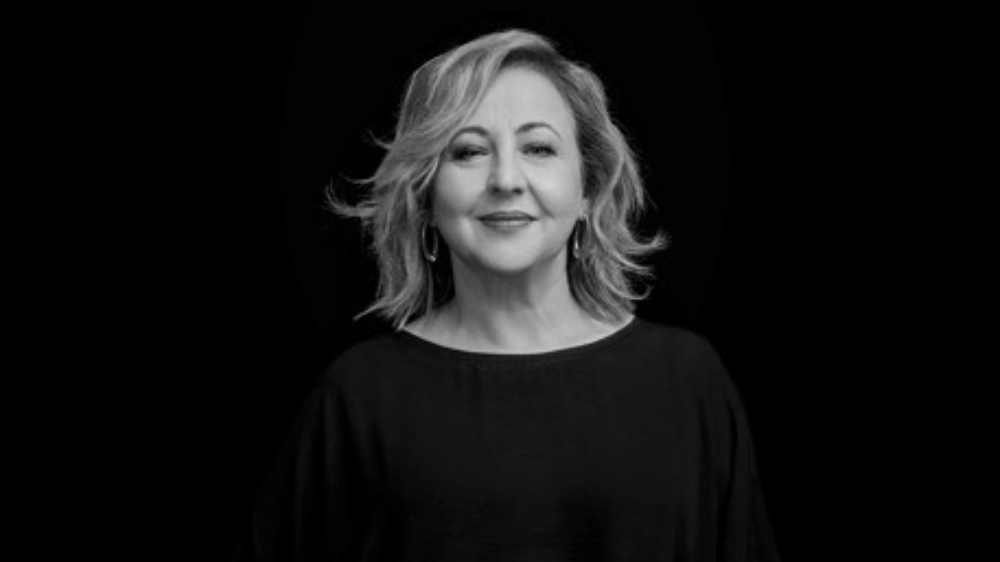
Carmen Machi has accepted Spain’s 2026 National Film Prize at the San Sebastian Festival, adding one of the country’s major cinema honors to a career that has moved across television, film, comedy, drama and melodrama.
The prize is presented by the Institute of Cinematography and Audiovisual Arts, known as ICAA, an agency under Spain’s Ministry of Culture. It carries a cash award of €30,000, listed by the source material as $34,437.
Machi is widely recognized for playing Aida in the Spanish series “7 Lives” and its spin-off “Aida,” and for key roles in the Almodóvar films “Talk to Her” and “Broken Embraces.” The National Film Prize places her in a line of honorees that, since the Ministry of Culture launched the award in 1980, has included Penélope Cruz, Javier Bardem, Antonio Banderas, director Fernando Trueba of “Belle Epoque,” and El Deseo producer Esther Garcia, among others.
Before Machi took the stage, Diego San José — co-screenwriter of the Spanish blockbuster “Spanish Affair” (“8 apellidos vascos”), in which Machi also appeared — framed the award as a recognition of how deeply she has entered Spain’s cultural imagination.
“I would say that Carmen is already part of our national heritage, like an aqueduct or like the Burgos Cathedral, but much better preserved than those two examples,” San José said.
He added: “Besides, Carmen has something that neither an aqueduct nor a cathedral has, and that is that when we look at you, we see ourselves. Today, Carmen, as you go up to collect this award, you carry inside you all those women you have portrayed from the beginning: Your mother, your aunts and your neighbors accompany you.”
The tribute also drew praise from Spanish Minister of Culture Ernest Urtasun, who said he had rarely received so many messages of delight as he did when the ministry announced in June that Machi would receive the prize. Urtasun described her as “a truly great actress of innate talent and extraordinary versatility,” and compared her with Anna Magnani, the late Marisa Paredes and Julieta Serrano.
Machi’s recent screen work underlines that range. She starred in “Celeste,” created by San José, which won her best actress and also took best series at Series Mania’s International Panorama last year. She also appeared in Carlota Pereda’s Sundance hit “Piggy,” and played the oldest version of a messianic mother in “La Mesías,” from Javier Ambrossi and Javirr Calvo, who are now behind “La Bola Negra.”
In her acceptance remarks, Machi looked back on a lifelong pull toward cinema. “I’ve always been fascinated by cinema,” she said, describing a childhood bedroom filled with clippings and stills of Marlon Brando. She recalled hiding behind the sofa while her parents watched black-and-white films, then retreating to her room to perform scenes alone in front of a mirror.
She said those private reenactments were an attempt to feel what the characters felt, and that they often ended with her in tears.
“It was something that fascinated me. It gave me a strange sense of freedom. I was just a little girl. Then I would leave the room and go back to waiting. I never imagined that that game, which was a refuge to overcome my insecurity and my shyness, would become my craft and my way of life,” Machi said.
Her speech closed with a direct reflection on what acting has meant to her beyond the public acclaim.
“This profession has given me a wonderful life,” Machi said. “It is and has been the driving force of my happiness and also a balm for my darkest moments.”