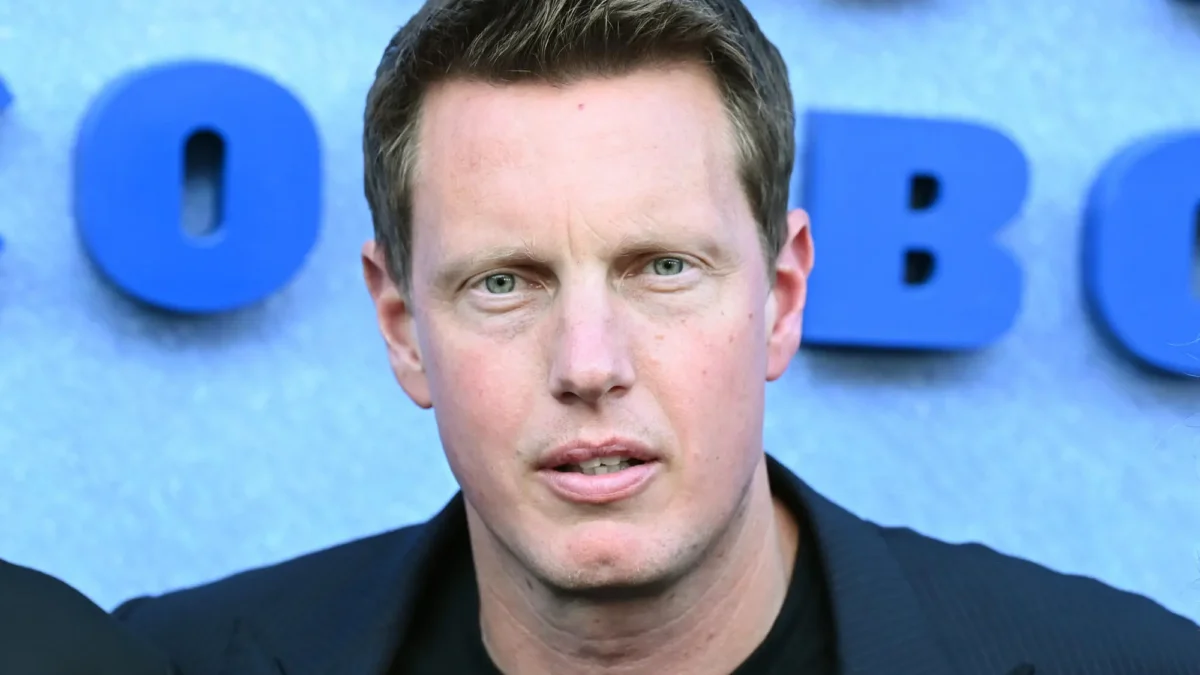
David Ellison is asking critics of Skydance’s newly completed merger with Paramount and Warner Bros. Discovery to give the combined company a chance to prove itself.
Speaking Tuesday at a press event on the Paramount lot in Los Angeles, the Skydance CEO acknowledged the damage caused by the year-long fight over the $110 billion deal, which officially closed only hours before the gathering.
“This was a turbulent process and, at times, an ugly process,” Ellison said. He added that the company must now “turn the page and make sure that we are in the business of rebuilding trust.”
Ellison appeared alongside Co-CEO Ynon Kreiz for roughly 30 minutes of on-the-record remarks covering the merger, Skydance’s nearly $80 billion debt load and its plans for streaming, cable television and film. A larger off-the-record media mixer with other Skydance executives followed.
Promises will be key to restoring confidence
The merger followed a bruising contest in which Paramount outmaneuvered Netflix and Comcast and settled two antitrust lawsuits before completing the transaction.
Ellison said confidence in Skydance will depend on the company carrying out both the strategic goals behind the combination and the obligations contained in a consent decree reached with the plaintiffs who sued to stop the deal.
One of those requirements is the release of at least 30 movies in theaters each year. Ellison said meeting that commitment will require support from Hollywood’s creative ranks.
“The only way you can do that is the creative community coming together,” he said. “When we follow through on all those promises, that’s how we will rebuild trust.”
Opposition to the merger included a petition signed by thousands of creative-community members, as well as attacks directed personally at Ellison. Asked whether that criticism had stung, he pointed to his own background in production and his longstanding ties to the people now questioning the deal.
Ellison said he began producing in his 20s and started building Skydance about 16 years ago. While he has spent only 14 months as the CEO of a major media company, he said he previously worked for more than 15 years as an on-set producer. His Skydance projects included Top Gun: Maverick and recent entries in the Mission: Impossible franchise.
“So, I love this community,” Ellison said. “I have really good relationships with this community, and I understand that even people who are friends oppose this merger.”
Ellison argues Hollywood waited too long
In defending the merger, Ellison presented it as a response to deeper pressures across the entertainment business. He argued that traditional Hollywood companies had been too slow to adapt while Netflix, YouTube, Apple and Amazon steadily cut into their revenue streams.
“How we got here to a place where Paramount could be acquired, and Warner Brothers could be acquired, is the businesses didn’t disrupt themselves over a decade ago,” he said. “They allowed Netflix to disrupt their business. They allowed Amazon Prime Video to come and disrupt their business. They didn’t transform, and they held on to the past for too long.”
Ellison said that failure to change created the conditions for Skydance to take over the much larger Paramount and then pursue Warner Bros. He described the merger as his answer to that competitive challenge.
By bringing streaming services and franchise properties together, Ellison said, Skydance will be positioned to compete with Disney, Netflix, Amazon and other major players around the world.
He also maintained that opponents should consider what might have happened without the merger. Ellison cited his time at USC film school and his 16 years building Skydance as part of his belief that the transaction offers the strongest available outcome for the industry.
“I do genuinely believe this is the best outcome for the industry,” he said. “I think we will deliver for the creative community. I think we’ll deliver for our shareholders. And the best I can say to our detractors is: Give us time, and we’ll prove it.”
What Happens Next?
The company’s immediate challenge will be turning those promises into results while managing nearly $80 billion in debt. Significant layoffs are expected as Skydance works to reduce that burden, although the issue did not come up during the media question-and-answer session.
Executives also sent employees a substantial memo outlining the company’s goals and held a town hall after the merger closed. With plans spanning film, cable television and streaming—and consent-decree commitments including at least 30 annual theatrical releases—the effort to rebuild trust will now be measured against Skydance’s ability to follow through.