
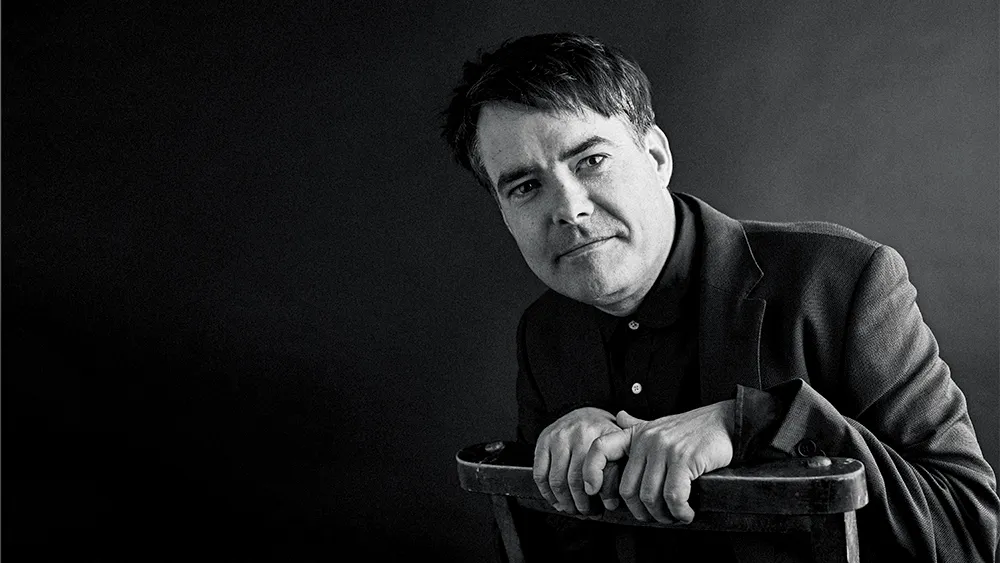
Chilean writer-director Sebastián Lelio, whose films repeatedly centered complex women navigating identity, desire, grief and social pressure, died Friday at age 52.
Across a career that moved from semi-improvised Chilean dramas to English-language productions and a political musical, Lelio developed a reputation for compassionate character studies without locking himself into a single genre or visual approach. His work included “Gloria,” “A Fantastic Woman,” “Disobedience,” “Gloria Bell,” “The Wonder” and his final film, “The Wave.”
His international breakthrough came with 2013’s “Gloria,” a comedy about the reawakening of a divorced woman in her 50s. Led by Paulina García, the film entered the main competition at the Berlin International Film Festival and was warmly received as a crowdpleaser.
Four years later, Lelio’s career reached a pivotal point with two markedly different films premiering in 2017.
A Landmark Year for Lelio
“A Fantastic Woman,” powered by Daniela Vega’s performance, followed a grieving transgender woman who is rejected by the prejudiced family of her late lover. Lelio closely developed the protagonist with Vega, aligning the character with her experience, and allowed the actor to serve as the film’s principal ambassador and spokesperson during its promotion.
The film won Best Screenplay at the Berlinale before taking the Oscar for Best International Feature, then known as Best Foreign Language Film. It became the first Chilean film to win that category and brought Lelio the greatest acclaim of his career. Its success also formed part of a broader resurgence in Chilean cinema associated with filmmakers including Sebastián Silva and producer Pablo Larraín.
That same year brought “Disobedience,” Lelio’s English-language debut. Rachel Weisz and Rachel McAdams starred in the restrained but at times openly sensual drama about a forbidden romance between two women from a strict Orthodox Jewish community in North London.
Together, “A Fantastic Woman” and “Disobedience” demonstrated how widely Lelio could vary his tone and style while maintaining his focus on women confronting restrictive worlds.
Revisiting “Gloria” Through a New Star
Also in 2017, plans were announced for Lelio to direct a U.S. remake of his own “Gloria.” The project carried obvious risks, including the possibility that returning to his breakout story could feel unnecessary while his career was advancing into new territory.
The finished film, “Gloria Bell,” premiered in 2019 with Julianne Moore in the title role. Lelio remained close to the original story, but the change in performer altered its emotional texture. Where García had brought humor and resilience to the earlier version, Moore emphasized Gloria’s loneliness, yearning and vulnerability, adding melancholy beneath the story’s uplifting movement.
Rather than replacing or competing with “Gloria,” the remake ultimately functioned as a companion piece, showing how a different actor could reshape essentially the same material. It also reinforced a defining quality of Lelio’s work: Even when revisiting a familiar narrative, he remained alert to the new possibilities created by performance.
From Early Chilean Films to “The Wonder”
Lelio’s debut feature, 2005’s “The Sacred Family,” was a handheld, semi-improvised comedy about a bourgeois man who falls for his son’s girlfriend. He continued that improvisational approach with “Navidad,” a more complicated study of troubled youth that was selected for the Cannes Directors’ Fortnight program in 2009.
His third film, 2011’s “The Year of the Tiger,” marked a more formally sophisticated step. The drama examined faith, guilt and trauma following Chile’s devastating 2010 earthquake and competed at the Locarno Film Festival.
Later, Lelio again changed direction with “The Wonder,” a period drama set in 19th-century Ireland and adapted from a novel by “Room” author Emma Donoghue. Ari Wegner shot the film’s stark, chilly setting, while Florence Pugh led its story of female resolve and conflicting moral and spiritual convictions. Its austere construction and folktale qualities distinguished it visually from much of Lelio’s earlier work, even as its themes remained closely connected to his established interests.
His final film, last year’s “The Wave,” returned him to Chile. The political musical drew inspiration from feminist student protests connected to the #MeToo movement that closed universities across the country in 2018. The film placed mass movement, music and choreography at the center of its protest story.
In one self-aware moment, “The Wave” broke the fourth wall to acknowledge Lelio’s presence and question what a male filmmaker was doing at the helm of an explicitly feminist project. The joke also reflected his willingness to interrogate his own position rather than make himself the central figure in the stories he directed.
ShowBiz Take
Lelio’s legacy rests not only on how often he placed women at the center of his films, but on the range he allowed those characters. His protagonists confronted aging, transgender identity, queer desire, religious expectations, bereavement, moral conflict and organized political action without being reduced to a single message.
The two versions of “Gloria” may offer the clearest summary of his curiosity. By entrusting the same essential story to García and Moore, Lelio showed that a character could remain recognizable while becoming emotionally distinct in another performer’s hands. Across his wider body of work, that openness—to actors, to different styles and to perspectives beyond his own—became one of his most enduring signatures.