
Why This Matters
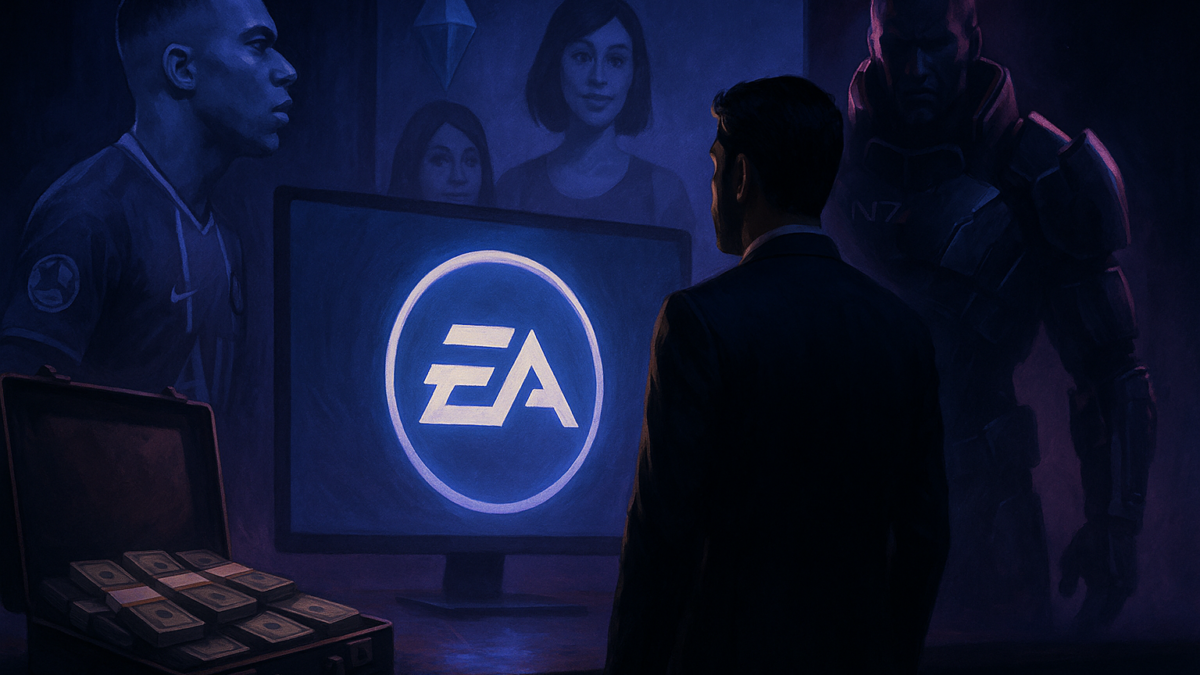
A Saudi-led investment consortium’s completed $55 billion takeover of Electronic Arts marks one of the most consequential ownership changes the video game business has ever seen, reshaping the future of a publisher whose titles sit at the center of global sports, simulation and role-playing entertainment.
The deal takes EA private, removing one of gaming’s most closely watched public companies from the quarterly earnings cycle at a moment when the industry is under pressure to find new growth beyond traditional console and PC sales. EA’s portfolio includes some of the most durable brands in interactive entertainment, from EA Sports FC and Madden NFL to The Sims, Battlefield and Mass Effect.
For consumers, the transaction is not just a Wall Street story. EA’s games reach tens of millions of players annually, and the company’s decisions influence everything from live-service pricing to sports licensing, subscription models, esports investment and the broader shift toward games as year-round entertainment platforms.
The size of the transaction also makes it a defining moment for global media capital. At $55 billion, the acquisition ranks as the largest leveraged buyout in corporate history and the second-largest gaming deal ever, trailing only Microsoft’s $69 billion purchase of Activision Blizzard. That scale signals that gaming remains one of the most coveted entertainment sectors, even after a difficult stretch marked by layoffs, studio closures and uneven consumer spending.
Going private could give EA’s new owners more flexibility to make long-term decisions without the immediate scrutiny of public shareholders. That may allow the company to invest more aggressively in new franchises, technology, international expansion and artificial intelligence-driven production tools. It may also intensify questions about debt, cost discipline and how much pressure will be placed on EA’s studios to deliver predictable returns.
Industry Context
The acquisition arrives during a period of rapid consolidation across gaming, where scale has become increasingly important. Major publishers are competing not only with one another, but also with platform holders, streaming services, social media companies and user-generated content ecosystems that command enormous amounts of player attention.
EA has long occupied a powerful but distinct position in that landscape. Unlike some rivals that rely heavily on one or two blockbuster franchises, EA combines annualized sports titles, evergreen simulation games, mobile offerings and premium releases. Its sports business, in particular, has provided recurring revenue and global brand recognition that few competitors can match.
The company’s rebranded football franchise, EA Sports FC, was closely watched after EA ended its long-running licensing relationship with FIFA. The success of that transition demonstrated the publisher’s ability to retain audiences even after a major branding shift, strengthening the perception that EA owns not just games but powerful consumer habits.
Saudi Arabia’s expanding role in gaming and entertainment has become one of the major capital stories of the last several years. Through state-backed and affiliated investment vehicles, Saudi entities have pursued stakes in major publishers, esports companies and live-event businesses as part of a broader effort to diversify the kingdom’s economy and establish itself as a global entertainment hub.
That strategy has generated both opportunity and scrutiny. Supporters argue the influx of capital can accelerate growth, create jobs and fund ambitious projects that might otherwise struggle in a risk-averse market. Critics point to ongoing concerns around human rights, governance and the cultural influence that sovereign-linked investment can bring to global entertainment companies.
For Hollywood and the broader media sector, the deal underscores the increasingly blurred line between film, television, sports and gaming. EA franchises have significant potential beyond interactive platforms, whether through streaming adaptations, live competitions, consumer products or cross-media storytelling. As studios search for recognizable intellectual property, gaming companies with established worlds and passionate fan communities have become especially attractive.
The transaction also lands after a turbulent period for game workers. Across the industry, publishers have cut staff, canceled projects and reassessed production pipelines after the pandemic-era gaming boom cooled. A private EA may be positioned to move more decisively, but employees and creators will be watching closely to see whether the new ownership prioritizes investment, restructuring or a combination of both.
What Happens Next?
The immediate focus will be on leadership continuity. EA’s current management team is expected to face questions from employees, partners and licensors about how day-to-day operations will change under private ownership. Stability will be especially important for the company’s sports franchises, where league relationships, athlete rights and annual release schedules leave little room for disruption.
Regulatory and financing details will also remain central to the story, particularly given the deal’s unprecedented leveraged buyout structure. Even after closing, investors and analysts will study how the consortium plans to manage debt while continuing to fund expensive game development cycles, marketing campaigns and live-service support.
Players are unlikely to see immediate changes in the games they already own or the services they use. The more meaningful shifts may emerge over time: new subscription bundles, deeper mobile investment, expanded regional content, larger esports ambitions or a more aggressive push into emerging markets where Saudi-backed entertainment initiatives are already seeking influence.
EA’s creative pipeline will be another key test. The company must balance reliable annual performers with the need to deliver fresh hits. Franchises such as The Sims and Mass Effect carry passionate fan expectations, while Battlefield remains a priority brand that has faced heightened scrutiny after uneven recent entries. Private ownership may give EA room to rethink development timelines, but it will not lower audience expectations.
The broader gaming industry will be watching for ripple effects. If the EA deal proves successful, it could embolden other deep-pocketed investors to pursue major publishers, middleware companies or platform-adjacent businesses. If the debt load becomes a constraint, the transaction may instead become a cautionary example of how difficult it is to apply traditional buyout logic to a hit-driven creative industry.
For now, the acquisition confirms that gaming’s biggest companies are no longer niche technology assets; they are central pillars of global entertainment. EA’s next chapter will test whether private capital can help one of the industry’s most influential publishers grow more ambitious — or whether the cost of the deal will shape the company as much as its creative vision.