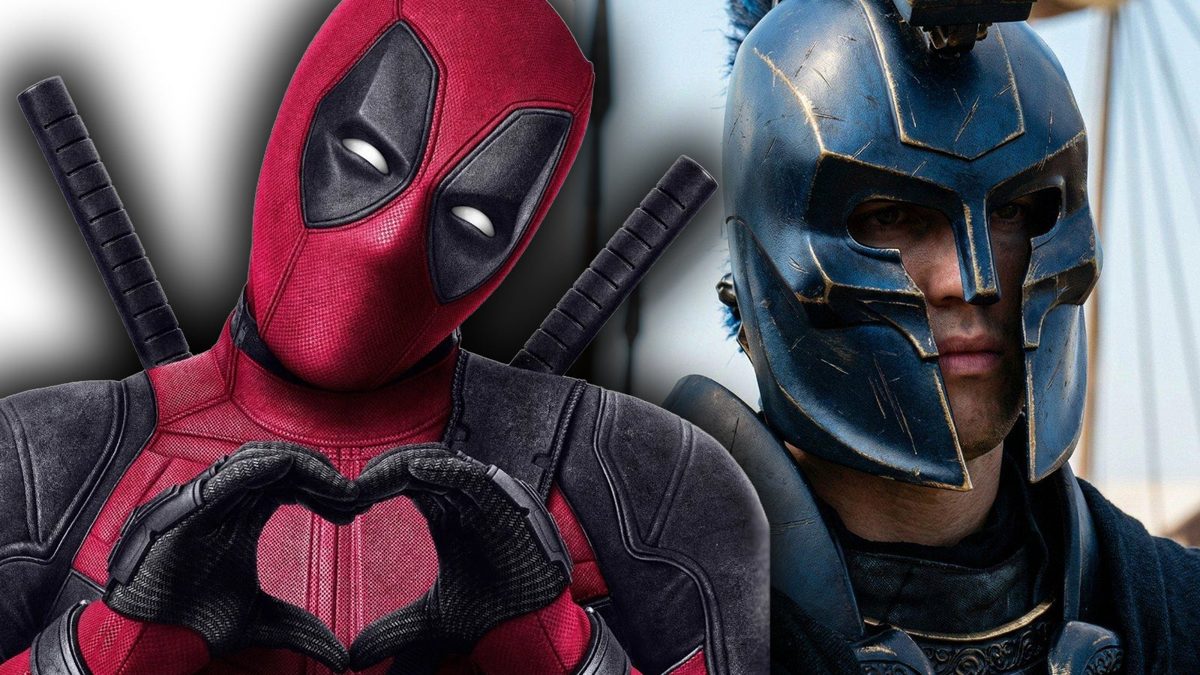
Ryan Reynolds has publicly saluted Christopher Nolan after The Odyssey overtook Deadpool & Wolverine to claim the global box office crown for an R-rated release, turning what could have been a bruised franchise milestone into a characteristically good-humored handoff.
The actor-producer, whose Marvel team-up with Hugh Jackman previously held the record, acknowledged Nolan’s achievement on social media with the kind of self-aware grace that has become part of the Deadpool brand. Reynolds’ message framed the moment less as a defeat and more as a win for theatrical movies — and for the unlikely fact that two very different films, one a meta-superhero comedy and the other a large-scale adaptation of an ancient Greek epic, have now occupied the same rare box office perch.
Universal’s The Odyssey, Nolan’s first feature since his Oscar-winning run with Oppenheimer, has become a commercial phenomenon in a space where adult-skewing event films are often treated as risky bets. Its rise past Deadpool & Wolverine is notable not simply because of the record, but because it reflects the widening definition of what can become a global blockbuster in the post-pandemic marketplace.
For much of modern box office history, the highest-grossing R-rated films have tended to fall into a handful of categories: comic book properties, prestige thrillers, horror breakouts or boundary-pushing comedies. Nolan has now pushed that ceiling with a film rooted in classical mythology, built around spectacle, star power and the filmmaker’s reputation for making audiences feel that certain movies demand the largest screen available.
The shift also puts a fresh spotlight on Deadpool & Wolverine, which remains one of Marvel Studios’ most important recent successes. The film did more than unite Reynolds’ mercenary antihero with Jackman’s Wolverine; it helped restore some momentum to a superhero sector that had faced franchise fatigue, uneven grosses and increasing scrutiny from exhibitors and analysts. Its record-breaking R-rated run proved there was still enormous appetite for comic book entertainment when the concept felt fresh, irreverent and event-sized.
That The Odyssey has now surpassed it gives Hollywood a different lesson: adult ratings do not automatically limit a film’s commercial ceiling if the theatrical proposition is strong enough. Audiences may be more selective than they were a decade ago, but they continue to show up when a movie feels culturally urgent and visually unmissable.
Why the record matters
The R rating has long been viewed by studios as both a creative asset and a financial constraint. It allows filmmakers to work with more mature themes, violence, language and intensity, but it also narrows the potential audience by excluding younger moviegoers unless accompanied by adults. For a film to become the highest-grossing R-rated release in history, it must overcome that structural limitation with repeat viewing, broad international appeal and a must-see reputation.
Reynolds’ response matters because he has been one of the most visible figures in proving that an R-rated studio tentpole can operate at blockbuster scale. The original Deadpool was once considered a gamble, arriving after years of development and skepticism about whether an adults-only superhero comedy could support a major release. Its success changed the conversation, giving studios more confidence in genre films that did not sand down their edges to reach a PG-13 rating.
Nolan, meanwhile, has become one of the few directors whose name functions like a franchise. From The Dark Knight trilogy to Inception, Dunkirk and Oppenheimer, he has built a career on convincing studios and audiences that ambitious, large-format filmmaking can be both artistically serious and commercially muscular. With The Odyssey, that brand appears to have extended into mythological territory without losing its mainstream pull.
The result is a record exchange that says as much about the state of the industry as it does about the two films involved. Hollywood has spent years chasing pre-awareness, recognizable intellectual property and franchise continuity. The Odyssey benefits from one of the oldest pieces of IP in existence, but its box office surge is also tied to Nolan’s authorship — a reminder that the director-driven event movie is not dead when paired with scale and a clear theatrical identity.
A win for very different kinds of movies
On paper, Deadpool & Wolverine and The Odyssey have little in common beyond their rating and commercial dominance. One thrives on sarcasm, cameos and comic book deconstruction. The other draws from Homeric legend, epic stakes and Nolan’s precision-engineered sense of grandeur. Yet their shared box office territory underlines a crucial point for studios: audiences are not rejecting adult-oriented films. They are rejecting the ordinary.
Reynolds’ congratulatory gesture also keeps the moment playful rather than adversarial. Box office records are often treated as studio bragging rights, but they can also function as public celebrations of theatrical health. By acknowledging Nolan’s milestone, Reynolds effectively reinforced the idea that a rising tide for moviegoing benefits everyone — superheroes, auteurs, exhibitors and audiences alike.
For Disney and Marvel, Deadpool & Wolverine remains a landmark. It demonstrated that the Marvel Cinematic Universe could absorb a more profane, self-referential tone without diluting the character’s appeal. For Universal, The Odyssey is another major validation of its filmmaker-first partnership with Nolan, following the massive critical and commercial success of Oppenheimer.
The broader industry takeaway is clear: the theatrical marketplace still has room for surprise, especially when studios resist assuming that only four-quadrant PG-13 fare can dominate globally. Adult audiences, once considered difficult to lure back consistently, continue to respond when a film becomes part of the cultural conversation.
What Happens Next
Attention now turns to how high The Odyssey can climb before the end of its theatrical run. Premium formats, repeat viewings and international legs will determine whether Nolan’s epic merely claims the R-rated record or pushes it to a level that could stand for years.
Reynolds, meanwhile, is unlikely to disappear from the conversation. The Deadpool franchise has built much of its power on reacting to pop culture in real time, and this record change gives him another moment to keep the character’s mischievous public persona alive between installments.
For Hollywood, the more important question is whether studios will take the right lesson from the milestone. The success of The Odyssey does not mean every ancient epic should suddenly be revived, just as Deadpool did not make every R-rated superhero project a sure thing. What both films prove is that bold creative identity, clear audience positioning and genuine theatrical scale can still rewrite the rules.