
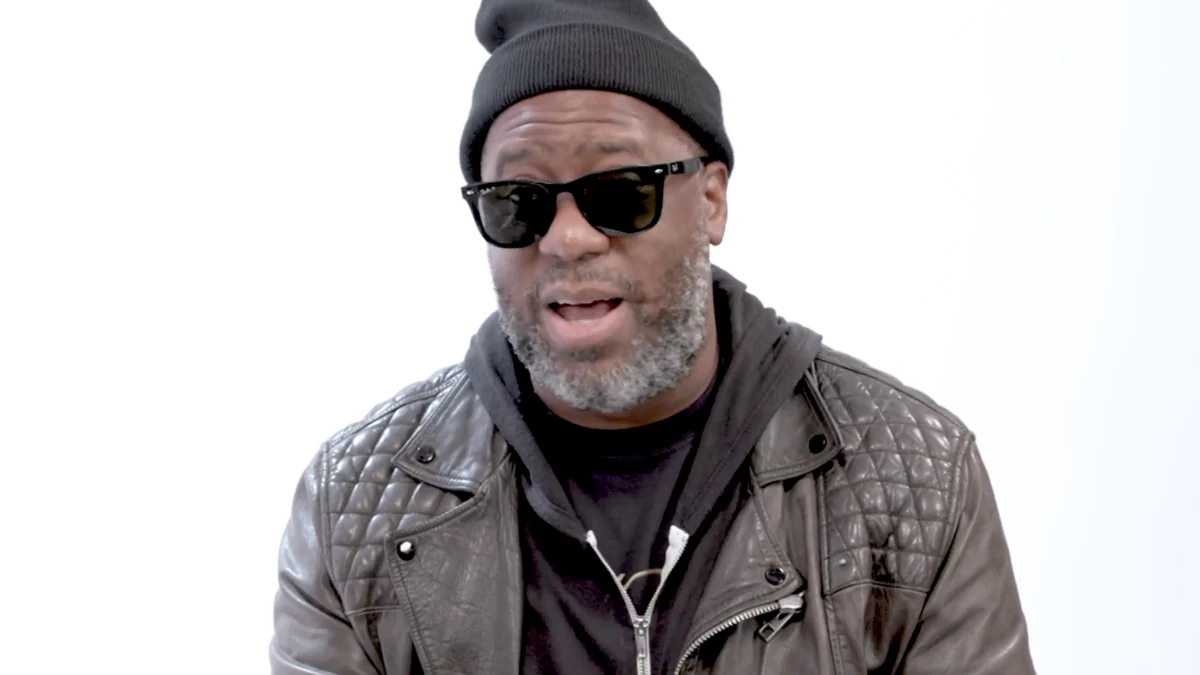
Robert Glasper sees the music industry moving toward a future in which artists have more freedom to cross between jazz, hip-hop, R&B and soul — even if he believes that evolution remains unfinished.
The five-time Grammy winner, whose work as a pianist has included major jazz and hip-hop collaborations over the past two decades, opened up about genre boundaries, influential artists, Kendrick Lamar’s To Pimp a Butterfly and the role of artificial intelligence in music during a conversation with Billboard.
For Glasper, the industry’s growing acceptance of musicians with multiple influences represents progress. Artists, he suggested, are increasingly able to resist being confined to a single musical identity.
“I feel like it’s catching up,” Glasper said. “We’re not all the way there, but I think that door is open to where people are more open to exploring different genres of music and artists not feeling like they have to be a monolithic thing.”
The artists who changed the culture
Glasper also drew a line between musical excellence and the rarer ability to redirect the culture. He identified Erykah Badu and Kendrick Lamar as examples of artists whose arrival introduced not only a distinctive sound, but a new perspective that affected later generations.
“Those are people who have moved the needle,” he explained. “When they came around, they came with a different sound, a different outlook. It changed generations. It made generations want to be that.”
His connection to Lamar’s work is personal as well as observational. Glasper contributed to the rapper’s critically acclaimed 2015 album, To Pimp a Butterfly, recording piano parts for eight songs in less than an hour.
According to Glasper, Lamar gave him considerable creative freedom during the session. He listened to each track and played what he believed suited the music, without knowing at the time how significant the album’s eventual impact would become.
That recording experience reflects the wider creative philosophy Glasper described: artists making room for instinct, individual perspective and sounds that do not fit neatly within one established category.
Why Glasper is not worried about AI
Glasper also addressed AI and what the technology could mean for his craft. Rather than expressing alarm, he focused on a quality he believes technology cannot reproduce: the mistakes and imperfections that shape human expression.
“AI can’t make mistakes, and I think that’s what makes humans human,” he said. “The imperfection is what makes humans human, and the imperfections are the things I feel are the sweet spots in music in general.”
His position places imperfection at the center of musical creativity. In Glasper’s view, the irregular and unpredictable moments in a performance are not necessarily flaws to be removed; they can be the elements that give music its human character.
The musician also discussed upcoming film-scoring work, including Miles and Juliet and Don’t Ever Wonder 2. Further details about those projects were not included in the conversation material provided.
ShowBiz Take
Glasper’s comments connect two major questions facing music: how far artists should be allowed to move beyond genre labels, and what remains uniquely human as technology becomes more involved in creative work.
His answer to both is rooted in individuality. The artists he praises are the ones who arrived with a different sound and outlook. His memory of working on To Pimp a Butterfly centers on being trusted to respond instinctively. And his confidence in the face of AI comes from the belief that human imperfection contains something valuable that precision cannot replace.
That makes his outlook less about rejecting change than protecting the conditions that allow original work to happen. Glasper believes the industry has become more receptive to artists drawing from multiple genres, though he is clear that it has not fully arrived there yet. His own career across jazz, hip-hop, R&B and soul gives that assessment particular weight.
What Happens Next?
Glasper’s next confirmed creative chapter includes his film-scoring projects Miles and Juliet and Don’t Ever Wonder 2. As those projects move forward, his stated philosophy remains consistent: explore beyond fixed categories, trust the musician’s instincts and preserve the imperfect moments that make the work human.