
Why This Matters
Robert Downey Jr.’s return to Marvel is not merely another piece of superhero casting. It is a major financial and creative signal from a studio attempting to reassert control over the most valuable franchise in modern Hollywood.
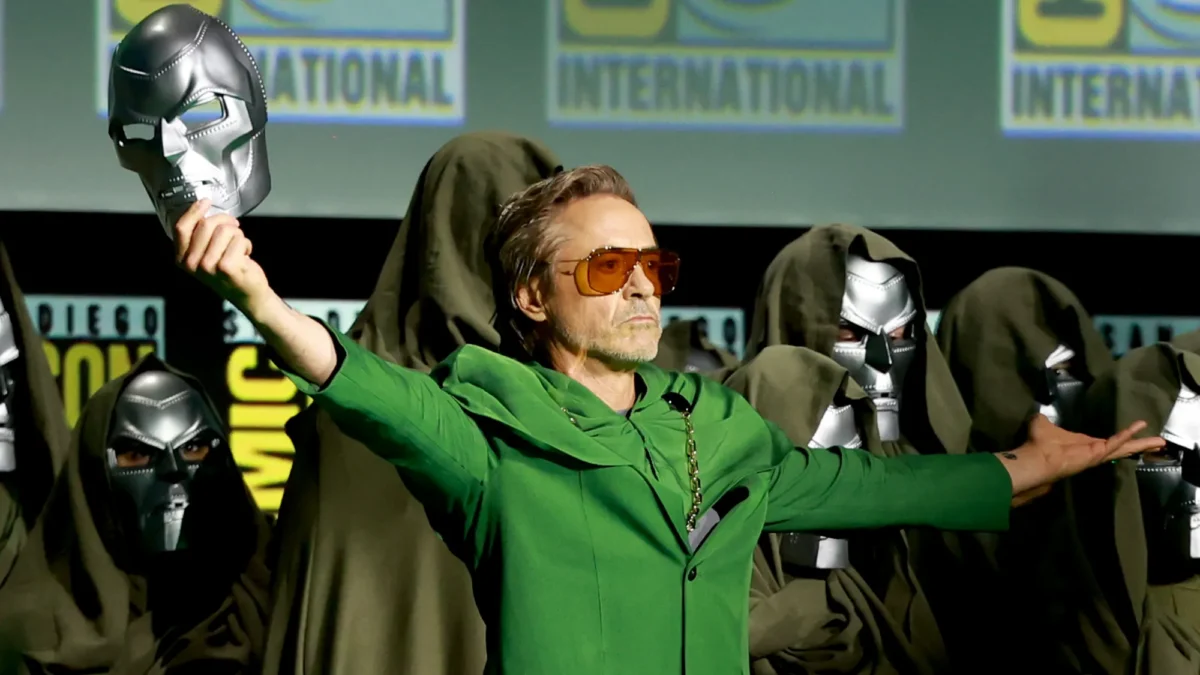
After helping define the Marvel Cinematic Universe as Tony Stark, Downey is now set to re-enter the saga from the opposite side of the moral spectrum as Victor von Doom in Avengers: Doomsday and Avengers: Secret Wars. According to industry reports, including Page Six, the Oscar-winning actor’s deal is expected to land in the neighborhood of $100 million for the two-event film package, with additional high-end perks said to include private travel, security and premium production accommodations.
That figure would place Downey once again among the highest-paid actors in Hollywood and reinforces just how central Marvel believes he is to the studio’s next phase. Downey’s previous MCU run was already one of the most lucrative in film history, with his combined earnings from the Iron Man trilogy, four Avengers films, Captain America: Civil War and Spider-Man: Homecoming estimated to have topped $500 million through salary, bonuses and backend participation.
The difference this time is symbolic. Downey is not returning as the beloved hero whose sacrifice closed Avengers: Endgame. He is stepping into the role of Doctor Doom, one of Marvel Comics’ most imposing villains and a character long viewed as essential to the studio’s ability to make the Fantastic Four and broader multiverse mythology work on screen.
For Marvel, the check is about more than star power. It is an insurance policy. Downey provides immediate global recognition, press attention and fan curiosity at a time when the MCU has faced uneven box office returns, franchise fatigue and a more skeptical audience than it had during its peak years.
Industry Context
Marvel’s Comic-Con presentation was designed to reset the conversation. The studio brought out the ensemble for Avengers: Doomsday, but Downey’s surprise unveiling dominated the weekend. It also made clear that Marvel is leaning on familiar names behind the camera as well as in front of it.
Anthony and Joe Russo, who directed Captain America: The Winter Soldier, Captain America: Civil War, Avengers: Infinity War and Avengers: Endgame, are returning for the next two Avengers installments. Their deal has also been widely reported as a massive package, underlining Disney and Marvel’s willingness to spend aggressively to restore confidence in the franchise’s biggest brand.
The move follows a turbulent stretch for Marvel Studios. The post-Endgame era expanded rapidly across theaters and Disney+, introducing new heroes, timelines and storylines at a pace that challenged even dedicated viewers. While the company still produced hits, the sense of inevitability that once surrounded every Marvel release began to fade.
The studio also had to rethink its long-term villain strategy after moving away from Kang the Conqueror as the centerpiece of the current saga. Bringing in Doctor Doom gives Marvel a cleaner pivot and a villain with deeper comic-book stature. Casting Downey in the part transforms that pivot into an event.
From a business standpoint, the deal reflects a broader Hollywood trend: studios are again paying top dollar for proven talent when the stakes are enormous. In an era when theatrical attendance is less predictable and streaming economics are under pressure, familiar stars attached to franchise intellectual property remain one of the industry’s most reliable marketing tools.
Downey’s leverage is unusually strong. He is not just an actor returning to a franchise; he is the performer most closely associated with Marvel’s rise from ambitious experiment to box office empire. His presence helped establish the tone, confidence and emotional core of the MCU. That history makes his return uniquely marketable, even if he is playing a different character.
There is also an awards-season dimension to his renewed stature. Downey is coming off an Academy Award win for Oppenheimer, a reminder that his value is not limited to franchise nostalgia. Marvel is paying for an actor whose commercial identity and critical credibility are both at a high point.
What Happens Next?
Avengers: Doomsday is expected to serve as the launchpad for Downey’s Doctor Doom, with Avengers: Secret Wars positioned as the larger culmination of the multiverse storyline. For now, the reported deal appears focused on those two films rather than an open-ended return across multiple future Marvel projects.
That does not mean Marvel will avoid leaving doors open. The studio has long specialized in flexible franchise architecture, and Doctor Doom is a character with enough narrative weight to extend beyond a single arc if audiences respond. Still, the immediate priority is clear: make the next Avengers films feel like must-see theatrical events again.
Production timelines, supporting cast details and the extent of Doom’s role are expected to remain closely guarded as Marvel manages expectations. Fans will be watching for how the studio explains Downey’s new identity without diminishing Tony Stark’s legacy, one of the most emotionally important pieces of the MCU.
The creative challenge is significant. If Marvel leans too heavily on the shock of seeing Downey back, the casting could feel like a stunt. If the studio builds a distinct and fully realized Victor von Doom, the gamble could become the kind of bold reinvention the MCU needs.
Either way, Downey’s reported payday makes one thing unmistakable: Marvel is treating Doomsday and Secret Wars as defining projects for its next era. The studio is spending at the highest level to bring back the people it trusts most, and Downey’s future in the MCU will now be one of the biggest questions hovering over the franchise until the films arrive.