
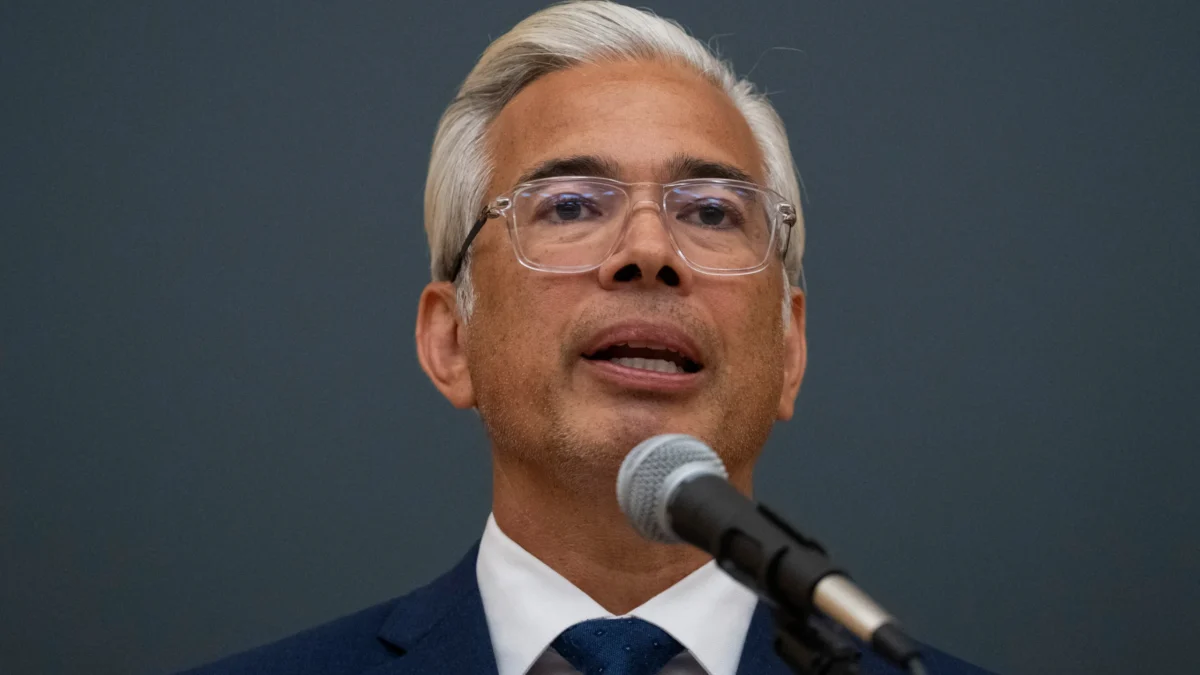
California Attorney General Rob Bonta is standing behind the antitrust settlement that permits Paramount and Warner Bros. to merge, even as he acknowledges that combining the two companies was never his preferred outcome.
During a 45-minute press conference Monday, Bonta described the agreement as a strong resolution that includes independent monitoring and commitments he said will increase Hollywood employment. The settlement also requires Paramount to expand domestic production and prevents the company from selling its Los Angeles lots for at least five years.
“I don’t think these two companies should merge,” Bonta said. “But that’s not something that we are focused on with our resolution here.”
The distinction is a significant one. Since filing suit in July, Bonta had identified “robust structural remedies” as a goal. The final agreement does not contain those three words, but the attorney general maintained that the states secured meaningful concessions addressing their antitrust concerns.
“We got the antitrust resolution that we wanted,” he said. “Very strong remedies and commitments to address the concerns that we raised.”
Production commitments take center stage
Bonta emphasized the agreement’s production provisions while arguing that it will provide stability for an entertainment business facing uncertainty. He said Paramount’s commitments offer clarity about continued work in Los Angeles and create the prospect of additional jobs.
“This deal gives certainty about the future of production right here in L.A.,” he said. “That also generates important certainty for this industry that I think is craving it.”
The attorney general contrasted the settlement with the Disney-Fox merger, which was not challenged by antitrust authorities and was followed by reduced production. In Bonta’s telling, the Paramount-Warner Bros. agreement is designed not merely to prevent a similar contraction but to produce growth.
“This agreement is the opposite of Disney-Fox,” he said. “The things that we saw in the Disney-Fox merger — a massive decrease in film production… this doesn’t just guard against that and protect against the downside; it locks in a massive upside.”
Bonta also addressed the decision to settle rather than take the case to trial next spring. Asked whether the states could have won in court, he noted that courtrooms “always have risk.” He acknowledged that extending the legal battle would have prolonged uncertainty in Hollywood, a concern raised by Paramount and some labor unions.
Pressure surrounding the settlement
The agreement arrived after Bonta faced growing calls for a resolution. Gov. Gavin Newsom, Xavier Becerra, a cinema trade group and labor leaders had all expressed hope that the dispute would be settled.
Paramount had also increased the stakes, threatening to relocate to Tennessee and seeking a court order that would require the 12-state coalition to pay $1.88 billion for delaying the transaction.
Bonta sought to minimize the role of that outside pressure in his decision-making. “That’s not what I’m thinking about, that’s not my focus,” he said, arguing instead that the attorney general’s court victories pushed Paramount toward significant concessions.
Still, the settlement has not won universal approval from those who opposed the merger. Bonta appeared alone at the podium, without his trial team or representatives from the other 11 states that participated in the lawsuit.
He was also not joined by the Writers Guild of America. The WGA filed a separate antitrust case and resolved it over the weekend, but said in a statement that the settlement terms “fall far short of adequately protecting writers.” The guild said it could not carry the expense of continuing its lawsuit without the states’ support.
Bonta stressed that the WGA did not participate in the states’ settlement discussions.
“They brought their own case,” he said. “They decided whether or not they wanted to resolve their case and under what terms.”
Disagreement within the coalition
Connecticut Attorney General William Tong also voiced disappointment, despite all 12 states ultimately signing the settlement. Tong had sought the divestiture of CBS and CNN, a remedy he said was necessary to preserve “ethical and independent journalism.”
“We fought aggressively for that remedy,” Tong said. “I am deeply disappointed that we could not do more.”
Bonta did not identify a single breakthrough or provision that brought the negotiations to a close, and he offered no clear chronology for how the final agreement emerged.
“These days have blurred because we’ve been in some deep and robust conversations,” he said.
The settlement now leaves Bonta defending a result that permits a merger he personally opposed. His case for the agreement rests on its monitoring, production and employment commitments — while critics remain focused on the structural remedies that were not secured.