
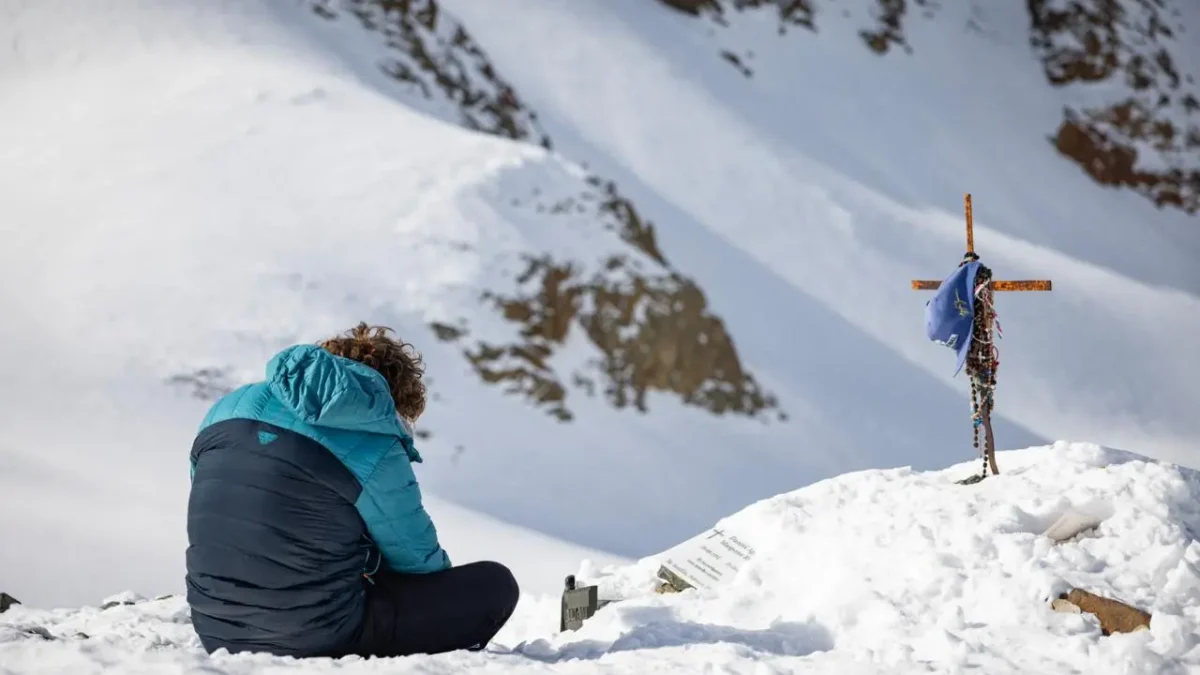
Netflix’s three-part documentary series “Beyond Society” (“Más Allá de la Sociedad”) is extending the story of the 1972 Andes plane crash beyond the rescue, focusing instead on what awaited the survivors and victims’ families when the survivors returned to Uruguay.
Created by Juan Antonio Bayona and Carlos Torres, the series had its world premiere at the San Sebastián International Film Festival on September 23. Torres directs, while Bayona produces alongside Belén Atienza and Sandra Hermida. “Beyond Society” will be available on Netflix on December 18.
The documentary follows Bayona’s 2023 film “Society of the Snow,” which recounted the crash of Uruguayan Air Force Flight 571 in the Andes Mountains. Of the 45 people onboard, 16 survived after resorting to cannibalism. The film is, to date, the most-watched film on streaming across Europe.
A story that begins with the rescue
Rather than retelling the ordeal on the mountain, “Beyond Society” opens at the point where the earlier film ends. Its subject is another form of survival: the difficult process of returning home, living with grief and confronting the competing memories that formed around the tragedy.
Torres said research conducted during the making of “Society of the Snow” uncovered many stories about what followed the rescue.
“What was clear to us was that our story begins where the others always end: with the rescue of the survivors,” Torres said at a press conference ahead of the San Sebastián premiere. “Another point is how cinema can end up changing memory and how fiction can impact reality.”
Spanning more than 50 years, the series centers on Carrasco, Uruguay, the small town from which both the survivors and those who died came. There, the families of the living and the dead continued to exist alongside one another as they processed profoundly different experiences of the same event.
For some families, the survivors’ homecoming was a celebration after they had believed their loved ones were gone. For others, the intense media attention and return of the survivors became a repeated reminder of those who had not come back.
The crash ultimately created a divide between the two groups of families. Through interviews with living survivors, relatives of those who died and journalists who covered the story, the documentary explores the emotional consequences of that fracture and considers how telling one’s own version of events can alter the way a person faces the past.
Forty-five families, different forms of grief
Bayona said the film ended at the moment of rescue, but that returning home brought another struggle for both the survivors and the bereaved.
“There was another kind of survival, which was returning home and surviving, on the part of the survivors, and surviving the loss of a loved one,” he said. Bayona added that the documentary reflects his interest in what happens when reality and fiction intersect, allowing pain and suffering to become stories people tell themselves.
For Torres, that meant acknowledging the experience of every family connected to the flight rather than approaching the tragedy from only one side.
“We can’t shy away from difficult stories,” he said. “We had to understand that we were telling the story of 45 families.” Torres added that the filmmakers sought the essence of each person’s pain and way of life, noting that the tragedy was still being discussed 54 years later.
Bayona described grief as personal and subjective, with every individual managing pain differently. He said all forms of grief were valid and pointed to the eventual reunification of the two sides as one of the story’s most meaningful developments.
According to Bayona, that gradual reconciliation was helped by fiction, the passage of time, generational change and the effort to find a voice for everyone involved. He said people who had not discussed the tragedy in 50 years were finally able to understand one another and come together, including during a screening of “Society of the Snow” in Montevideo.
The documentary also examines the crash as a media event. Bayona described it as possibly one of society’s first major media tragedies because it received worldwide coverage. The filmmakers attempted to understand the viewpoints and conduct of those involved across the following five decades while tracking how fictional portrayals became part of the story itself.
Torres said revisiting the past can function like a mirror, forcing people to confront who they were and what they have become. Although he does not see documentaries as vehicles for giving lessons, he said looking at how events were handled can offer an opportunity to learn and avoid repeating mistakes.
What Happens Next?
“Beyond Society” arrives on Netflix on December 18. In bringing survivors, bereaved relatives and journalists into the same three-part account, the series aims to close the long journey that began on the mountain while examining the consequences that continued in Carrasco for more than half a century.