
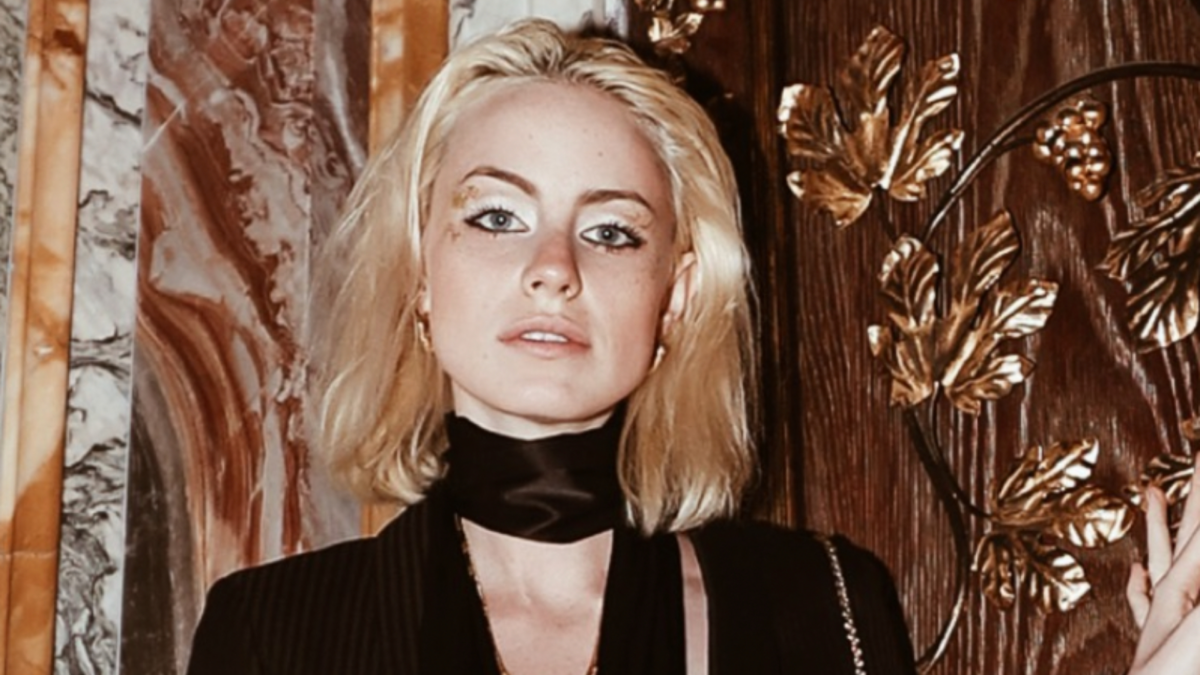
Tyler-Marie Evans can hardly believe she’s here.
The U.S. writer-director is charting her journey from growing up in a cult-like church in Texas to premiering her debut feature, tackling teen dreams and sex work, in competition at the Edinburgh Film Festival on Friday. “[It was] this merry-go-round of feeling like an insane person,” she laughs to The Hollywood Reporter about trying to get Pretty Babies off the ground. “So it feels surreal to have this happen.”
In between the aforementioned Texan upbringing and coming to the Scottish capital as a feature filmmaker, Evans waited tables in L.A., spent her last $60 on a ticket to Cannes — prepared to sleep on a Croisette bench — and pitched her film to anyone in a suit and tie. She somehow got her script to Ashley Benson, Madelaine Petsch and producing powerhouse Christine Vachon, of Killer Films, all of whom swiftly signed on to this glitter-clad coming-of-age story.
Pretty Babies follows Marie (Gossip Girl‘s Emily Alyn Lind) and Luna (Sadie Stanley), two girls who, drawn by the seductive promise of the Hollywood they imagine from the old classics they idolize, embark on a road trip for which they are ill-equipped. That long-held American dream soon fractures as they get pulled into the dark underbelly of the sex industry by veterans Sapphire (Benson, also a producer) and Gemma (Petsch).
It’s a deeply personal project for Evans, still in awe that her American dream has materialized. “[It’s] me to some degree. I feel like I have come from nothing, and here I am on this stage. But there’s a sadness in my movie because the girls don’t know how they are going to make it,” she continues to THR. The self-proclaimed cinephile was influenced by a swathe of the industry’s strongest female voices: Agnès Varda, Catherine Hardwicke’s Thirteen and Sofia Coppola’s Virgin Suicides. There is maybe even a little Euphoria in there, or, to get really specific: “What if Taxi Driver had been told from Jodie Foster’s perspective?” The final product is a poignant, haunting exploration of what it means to be a young woman with a dream in a world racing to objectify her.
Evans is currently shooting another film with Petsch, I Wish I Never Had Sex With Him, and is already lining up her next feature — also backed by Vachon and Jordan Wagner — an erotic psychological thriller Girls in London, 1999.
Below, she finds time among this inconceivably busy schedule to unpack the wild, five-year journey that went into getting Pretty Babies on screen here in Edinburgh. She talks about getting praise from Vachon on the movie’s “standout original voice,” why it’s considered arthouse to portray real women on film, and sticking it to the long-held, male-centric depiction of sex work in cinema: “I’m going to say something pretty controversial right now… I’m tired of private school guys, male directors writing about females in sex work. I’m sorry, but there are so many moments in Anora or in these other movies when I was like, ‘That doesn’t feel like a real woman.’ […] I don’t think my gender qualifies my craft, but I think that my gender influences my voice, and that voice is what needs to be heard.”
You’re finally getting Pretty Babies out into the world, via the festival circuit. What are your reflections ahead of Edinburgh?
It’s wild because Pretty Babies, I wrote for over five years — with no way to make it. I wanted to direct and write for 10 years, and people would ask me: “What’s your feature idea?” And I’d be like, “I don’t know! I don’t know. Nothing’s sticking.” When I had the idea of Pretty Babies, [it was] this instinctive thing, and I’ve been blessed to have that with my work. The same thing happened with [Evans’ next feature] Girls in London, but Pretty Babies started it all. It was a shot in the dark. I had cast attached, [then] I didn’t have cast attached. I had a producer attached, then didn’t. Rewrote it. Pitched to this person: “No.” [It was] this merry-go-round of feeling like an insane person. (Laughs.) So it feels surreal to have this happen.
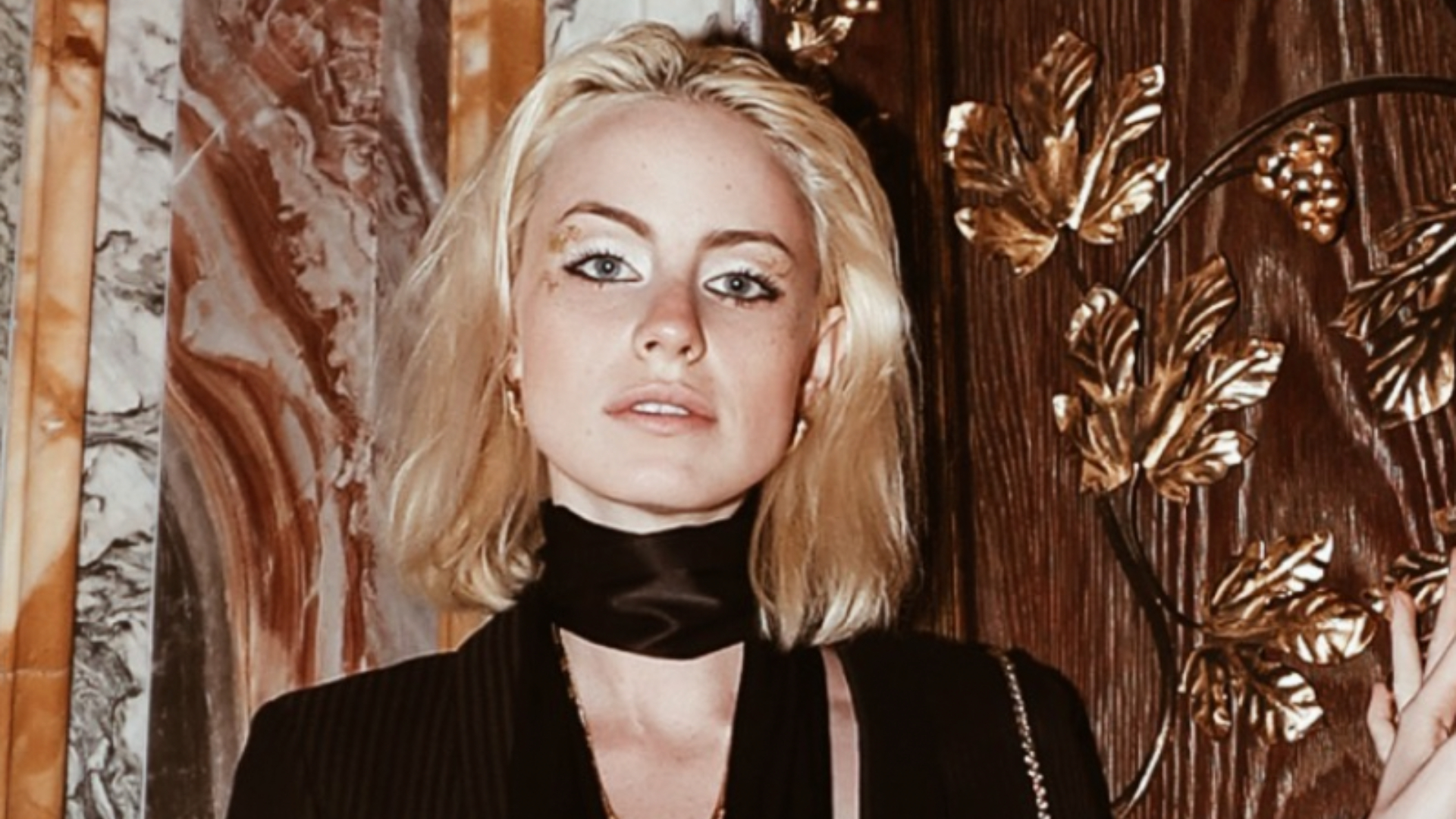
Tyler-Marie Evans says it’s “surreal” to be on the festival circuit with ‘Pretty Babies.’
Publicity
I always felt like this was a special movie. It has felt like a miracle movie, because it trails people who come from nothing, and with their sweat [they] put glitter on their eyes and believe in the impossible and believe that they could participate on the stage of Hollywood. And that’s me to some degree. I feel like I have come from nothing, and here I am on this stage. But there’s a sadness in my movie because the girls don’t know how they are going to make it. There’s that disillusion in that reaching for it, and I feel so grateful that this, in a sense, has become real. Because for so long, I felt like those girls sneaking into pools and hoping that the dream would come, and waiting and believing, but having no real credible sense of that.
Would you describe this as quite a personal project?
Yeah, it is. I was so enamored by the idea of these four girls who come from nothing and are like, “We are going to do whatever it takes.” Funny story: I grew up in a very cult-like church. I was in Santa Clarita, California. The pastor told my parents, “California [is] Sodom and Gomorrah, we need to move to Texas.” So 35 different families moved with the church.
Wow.
I was 12 years old, moved to Texas, and I wasn’t allowed to watch any films after the 1960s. I wasn’t allowed to talk to people outside of the church. I had to be homeschooled. [We] had DVDs, and I would get Charlie Chaplin and Buster Keaton and all this stuff, and I always felt like I had a strong voice as a woman. And I saw the Scarlett O’Haras, I saw the Bette Davises, I saw them as untameable women. They weren’t sexual prowess people, the Marilyn Monroes and things like that; it just still feels like consumable women to some degree. I was really attracted to these heroines in Hollywood that felt like they didn’t have that. My mom’s an only child from Vegas. My dad has two brothers who never married. I don’t have extended family. I never met my grandparents. I really found lineage within the mythology of old Hollywood, and I felt like my parents were Bette Davis and Joan Crawford and all this stuff.
So I wanted to write about these young women nowadays who don’t have a culture to grab onto, who don’t have a family, who don’t have a home, who don’t even have a group of people goading them on. They create a lineage through old Hollywood. […] I was really enamored and I saw so much strength within those women [who participate in sex work], and actually began interviewing and going to strip clubs and talking to women who were in that industry. I felt such a sense of shame, which really made me so sad because they come from such broken places. In Tulsa, I talked to a sex worker, and she said she had been at this club for 10 years. And I said, “Why do you think a lot of women get involved in this? Is it sexual freedom? What is it? You tell me.” And she said, “Because of rape.” And then she said, “To take care of a child.” I feel like there’s such a derogatory stance towards sex work, and throughout history, our sexuality has been such a key to survival.
How did deciding sex work was to be a driving narrative force open up the rest of the film for you?
It was actually the first idea I had. I’m really close friends with the actress Suzanna Son, and she was discovered by Sean Baker and put in the film Red Rocket. I knew her before Sean Baker cast her. She knew a lot of young women who were trying to get into the film industry and had done porn or sex work to get there, and I met a lot of her friends. It really moved me. There’s the desire to be seen in that way, and I just had this image in my mind of these two girls on the side of the road hitchhiking in messed-up clothes, and we don’t really know what happened the night before. When we, as women, use our bodies as armor for our survival.
That was the first image I had of Pretty Babies, coupled with, around the same time, I saw the Brooke Shields film Pretty Baby. I remember I loved Polly Platt, who was the writer, but Louis Malle directed it. And I saw the moment that Brooke Shields’ [character] has sex with that guy for the first time. It’s a 12-year-old girl, and she pops out of bed in the movie… I thought, ‘What a misrepresentation of how a 12-year-old girl would experience sex for the first time, and what a misconception and how dangerous this is.’ I took the sex scene so seriously in this film, and I really tried to show it from the female point of view, which I don’t see a lot [of] in movies. My actresses told me that every single time they had filmed a sex scene before, it was very objectifying, and I felt that in movies. One of the most feminine viewpoints of sex Sofia Coppola captured in Virgin Suicides when Kirsten Dunst is left lying on the ground… I really wanted to show that in this movie, we’re not showing sex for gratification of someone else. We’re showing it so women can say, “I’ve been there.”
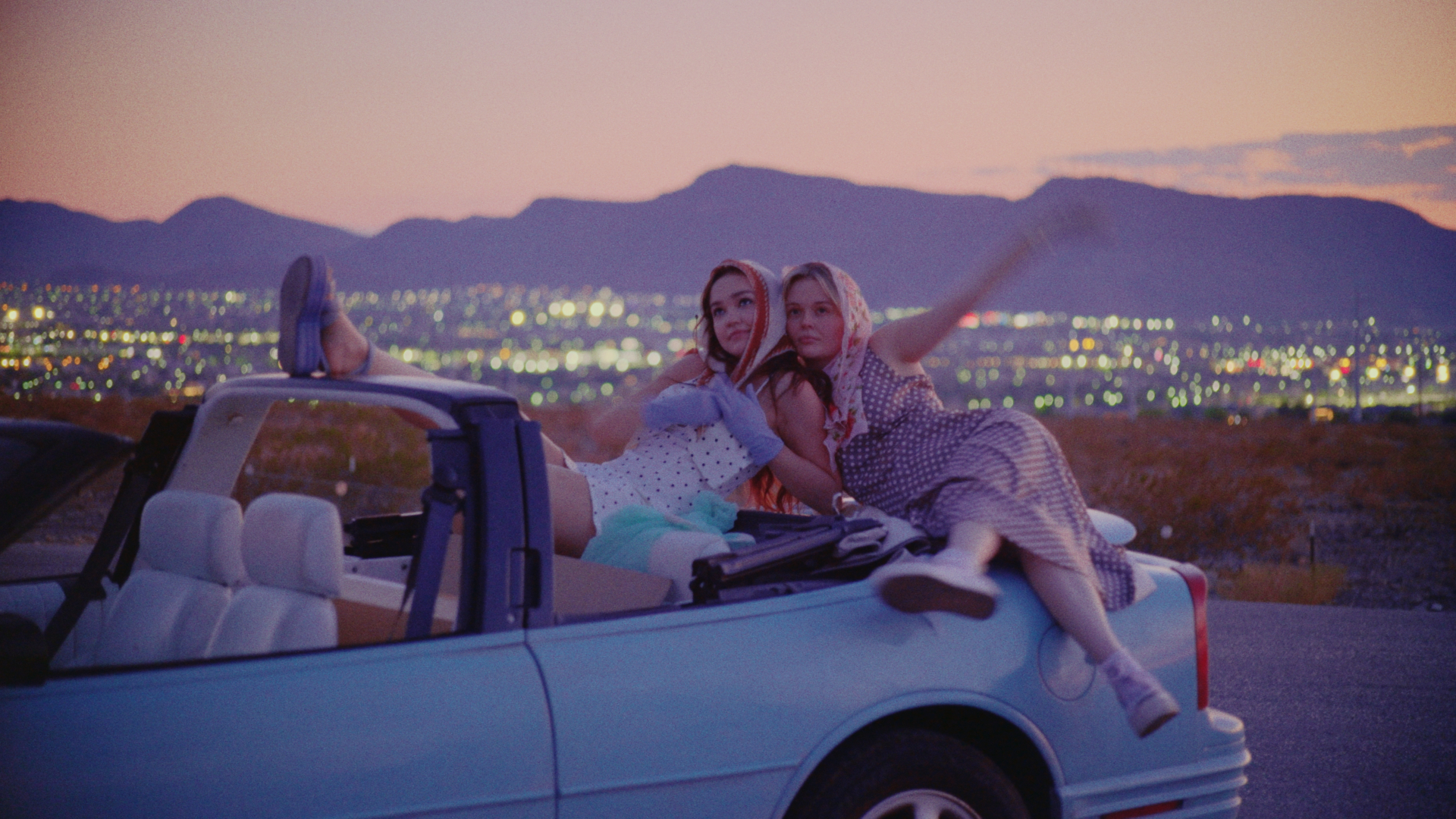
Sadie Stanley and Emily Alyn Lind in ‘Pretty Babies’
Courtesy of EIFF
You talk about old Hollywood and Virgin Suicides. I’ve read Sofia Coppola has been a big influence for you. But there are so many genres within Pretty Babies — road trip, found family. Sometimes it’s Euphoria-esque.
I’m such a cinephile, and I pull from everywhere. The two films that I gave to some of my heads of department were Thirteen and Virgin Suicides. Thirteen is one of my favorite films of all time, and I think what Catherine Hardwicke did with the change that Evan Rachel Wood endures, and how her perspective changes… It was really big to me. [With] Virgin Suicides, I just love how complex the women’s points of views are. It doesn’t feel like a type of woman, and Sofia Coppola did a brilliant job with that.
I actually haven’t seen most of Euphoria, so it’s funny. But even with the glitter, I didn’t want it to feel like they were putting it on [every take]. That image of these girls putting on their cheap, Dollar General glitter with the sweat and the smell, the texture was so important to me. Another one is Taxi Driver. I rewatched it and I thought, “What if this film had been told from Jodie Foster’s perspective?” When I was pitching Pretty Babies in the beginning, that was the pitch.
I do want to ask about the casting process — such a brilliant quartet of rising and established stars — who came aboard first, who was right for each role and why?
Oh my god, well, I’m gonna tell you this whole story. So I was a random girl in L.A., right, just trying to be a writer-director. Sometimes working at a catering company. Sometimes working on set [or] making films with my iPhone. I don’t even have time to become YouTube famous because I’m just trying to pay my bills. And I just had a moment where I went through a really intense breakup. I had a final version of the script that I love. This is 2023. My ex kicked me out. It was really terrible situation, and it was the day before Thanksgiving, and I was like, “I believe in this script. I’m gonna go to Cannes. I will sleep on a park bench.” I don’t know. I just felt like, “There’s gonna be people there. I’m gonna pitch to every person I meet. I have like $60 left in my bank account, but I’m going to go to Cannes.”
I almost didn’t go because I was like, “I don’t have a place to stay. This is kind of dangerous.” But I get to Nice and run into someone I [know] and they’re like, “You can stay on my couch.” And I’m in Cannes on the main boardwalk and if I see someone in a tie, I’m gonna [go up to them]. And my one-liner pitch for Pretty Babies was: “I want to show young, sexually objectified females and show that they ask themselves the same questions as Dostoevsky.” That was my one-liner. No one cared. I actually had this one guy who was a potential investor. He goes, “I invest mainly in religious movies, but I’ll pray for you.”
What a wild few days!
But then I’m at an afterparty and I meet Jordan Wagner. He was like, “How much money are you trying to raise?” And I go, “$50,000 or something. I just want to make this movie.” I said, “I’ll make this movie with a Sony Handycam, shooting in motel rooms, with non-actors. I don’t care. I want to do this.”
I go back to L.A. Nothing was fruitful. But a week later, I was showing a short film, and I put together a whole night [for it]. And I had a performance art thing with these two female actresses and showed the film. I invited Jordan, and he came, and said, “You know what? Send me that script. I was really interested by this.” So the next morning, he sent that script to Ashley Benson, who he’s been friends with for 15 years. He said, “Hey, I met this female director who’s super passionate.” I was annoying him too. I kept texting. That was 10 a.m. the next day after my short film screening. At 4 p.m., she writes him and says, “I want to play the role of Sapphire and I want to produce.”
No way.
I actually hadn’t seen Pretty Little Liars, but my idea of Ashley Benson was Spring Breakers — another comp, in some way, for Pretty Babies — so that was huge. And we had nothing. No money. I’m a random town girl, working at the restaurant, and Ashley Benson signed on because she said, “I haven’t read a script like this. I’m really enamored.” And then a few months later, she was like, “We need to bring on a bigger production company.” A few months later, Jordan goes to Christine Vachon and he showed her a few scripts and she chose Pretty Babies.
So once Killer Films was on after Ashley and Jordan, we started casting, and Madelaine was our number one dream [pick] for Gemma, but they told me: “Keep your expectations low because she’s really big and you’ve never directed before.” She read the script, she loved it. Then for the role of Luna, we [auditioned] 2,500 girls. Sadie’s the only one out of all the girls who did a tape [that] gave us chills. Then the last one to be cast was Emily Alyn Lind, who I met up with, and she loved the script. And she was like, “Listen, I want to be a part of your Virgin Suicides. I want to be your Lux Lisbon.”
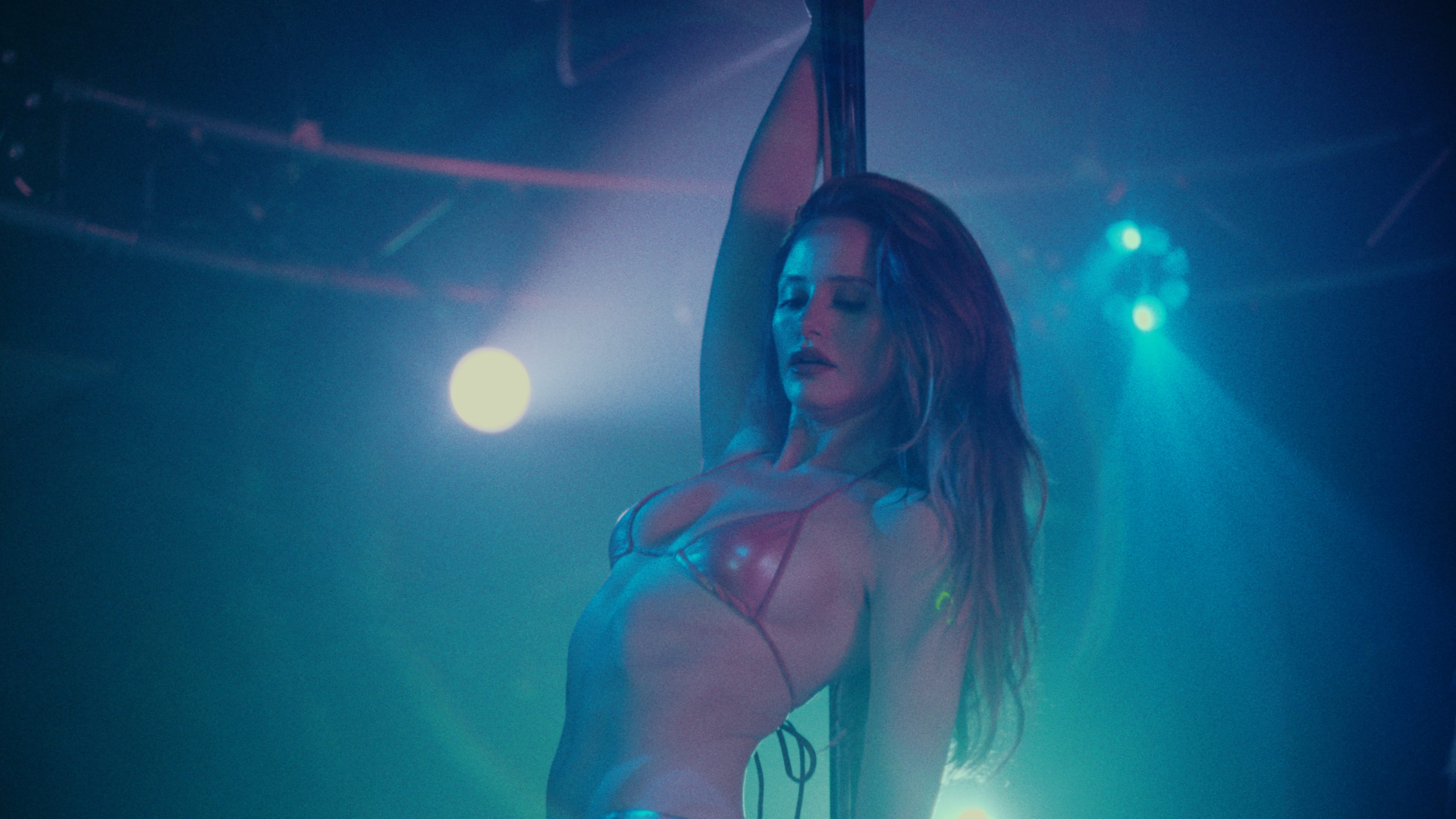
Madelaine Petsch as Gemma in ‘Pretty Babies’
Courtesy of EIFF
What do you think it says about the industry right now that these four women, five if you include Christine, were immediately so enraptured by your script?
Listen, I did my degrees in English and Film. I did a double major, and feminist lit theory was one of my favorites. And the dynamic writers of Virginia Woolf and Simon de Beauvoir, all these different writers, were hugely influential. I’m so attracted to the complexity of the female soul, how our identity is crafted through sexuality, and how women have been put in this corner of, “If you’re sexual, you’re stupid.”
Within film, I feel like the female voice hasn’t been highlighted. [French filmmaker] Agnes Varda is one of my favorites, almost no one’s seen her films. We have very few female voices out there, and I think every individual actress told me, “I get typecast as a YA [Young Adult], not a real person. I want to play a real woman.” It’s so sad that it’s considered controversial or arthouse to play a real woman. And I’m going to say something pretty controversial right now. I’m tired of private school guys, male directors writing about females in sex work. I’m sorry, but there are so many moments in Anora or in these other movies when I was like, “That doesn’t feel like a real woman.” And when they’re naked, it still feels like consumption. We put the sticker of independent filmmaking on it, and [suddenly] that’s okay. I don’t think my gender qualifies my craft, but I think that my gender influences my voice, and that voice is what needs to be heard.
What did it mean to have the backing of someone as prolific and experienced as Christine?
Oh my god! I kind of get emotional. Christine Vachon is a cornerstone of film. I have a trans sibling, and when I saw Boys Don’t Cry, that spoke so deeply to me about understanding him. It really was a film that changed my life. When Jordan told me, “Hey, have you heard of Killer Films?” I was like, “Are you kidding me?” When she said yes, she wrote an email and said, “This is an extraordinary film for an extraordinary festival.” And she’s a woman of very few words. I’m literally going to frame it.
I was staying in New York with the editor when we did the first cut. I lost sleep the night before. I was like, “Okay, Christine’s going to see the movie.” It’s so funny. In the screening room, she has a little notepad with her notes and then she just walked out. Her assistant was like, “She does that for every movie.” We all got dinner the next day and she goes all quiet. My eyes are watering. I’m such an anxious, nervous person. She was like, “The most standout thing about this film is the director’s original voice.” That was a moment that will live [in my head] because I hold her up so highly.
I promise you will have wonderful reactions to this film in Edinburgh.
I’m so nervous. One of my favorite directors is Frank Capra, and I’m going to paraphrase it terribly, but he said, “What a privilege it is to speak to your fellow man for two hours and in the dark.” It’s going to sound a little corny, but truly, with this film, I wanted to show the complexity of these girls’ journeys, and this dream of old Hollywood. Even though it’s melancholy to still have dreams, [I want to show] the innocence within dreams, the beauty within them, and I want people like to sit in that theater and remember themselves as children, and remember the hope and beauty, and remember that there’s goodness within people, and remember that the woman who comes out of the club still has hopes and dreams.
I was in [Edinburgh] on Halloween years ago because I was backpacking to the U.K. with my [friend], and I dressed up like Harry Potter with a little Sharpie lightning bolt. I was walking around the city, and I realized, “Oh, no one’s dressed up.” There’s a photo of me alone and drunk outside of The Elephant House because it’s closed. (Laughs.) I’m gonna be dressed like a normal person [this time].
This interview has been shortened and edited for clarity. The 2026 Edinburgh International Film Festival runs Aug. 13-19.