
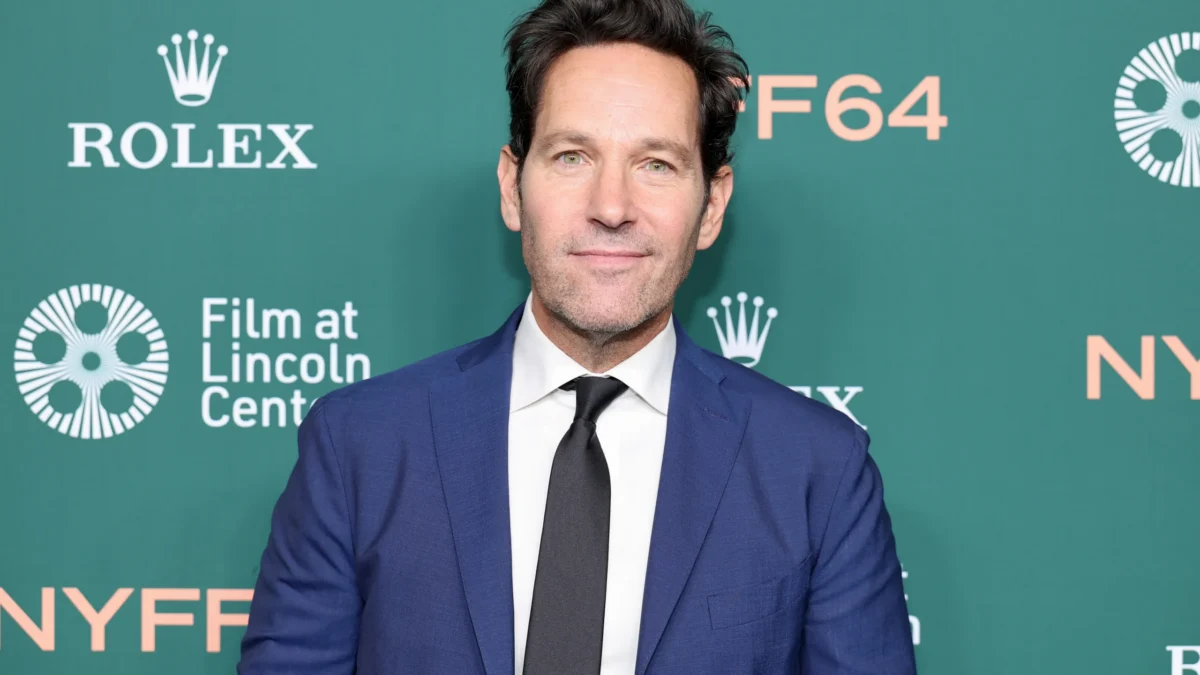
Paul Rudd has stopped taking his phone onto film sets, and his experience making Tom McCarthy’s “A Statement” only strengthened his case for staying disconnected while working.
Speaking Saturday evening at the film’s world premiere at the New York Film Festival, Rudd said he has kept his smartphone in his trailer during productions for some time.
“I don’t go to sets with a phone. I haven’t done that for a while now,” Rudd said. “It’s important to put it down. Anytime. They’re horrible things. I’m addicted to it like everybody else. They’re facilitating our own destruction.”
His personal habit fit neatly with McCarthy’s approach to “A Statement.” The Oscar-winning director imposed what Rudd described as a “very strict no phones policy” during filming, keeping the ensemble—including Paul Giamatti, Tatiana Maslany, John Turturro and Amy Ryan—away from their devices while on set.
For Rudd, that rule changed the atmosphere of the production. Rather than retreating into their screens between takes, the actors spent more time talking and connecting. He said the process made the movie feel more like a play.
A Cast Forced to Connect
Rudd argued that phones have reshaped everyday interactions, making people less likely to engage directly with those around them. Removing that distraction gave the cast a chance to return to a different rhythm.
“The world has changed since cell phones have existed. We don’t look at each other or talk to each other quite the same way,” he said. “Now, [with the phone ban], we were forced to really spend time with each other and talk.”
The movie’s period setting added another dimension to that experience. “A Statement” takes place in 1980, and Rudd said that being dressed for the era while working without phones helped create the sensation of stepping back into a time when people routinely sat together and spoke face to face.
“It felt like, ‘Oh, yeah. I remember this. This feels like it used to feel when people sat around and spoke to one another,’” he said.
Ryan also supported McCarthy’s phone-free policy and encouraged other filmmakers to consider doing the same. She said the lack of notifications and doomscrolling “definitely made the work much more rich.”
Instead of spending a short break looking at a screen, Ryan said cast members would use the time to check in with one another and discuss the material.
“What happens is there’s a five-minute break and people are connected. ‘Hey, what are you doing? How’s your morning? What do you think of this scene?’” Ryan explained.
She compared the adjustment to giving up sugar, suggesting that the urge to reach for a phone fades quickly once the habit is interrupted. “In three days, it’s out of your system. You don’t miss it!” she said. “And hopefully, it becomes like a toy you’re gonna get sick of.”
Inside “A Statement”
The phone ban was especially fitting for a film built around sustained conversation and disagreement. Rudd plays the moderator of the first meeting devoted to solving America’s climate crisis.
Set at a beachside resort in Florida in 1980, the story brings 20 experts into a conference room for a weekend. Working through their competing views, they attempt to draft a statement to Congress addressing the effects of carbon dioxide emissions on the climate.
The confined, debate-driven premise follows a “12 Angry Men”-style structure, with the ensemble hashing out its differences largely through discussion. Ryan’s character ultimately delivers a sobering wake-up call to the group during the film’s climax.
For the actors, the production’s central focus on people sitting together and confronting a difficult subject was mirrored by the way they worked off camera. McCarthy’s no-phone rule removed a familiar escape and left the cast to do exactly what the film’s characters must do: remain in the room, listen and engage with one another.