Why This Matters
Paramount’s planned acquisition of Warner Bros. Discovery has gained a meaningful reprieve after Oregon’s attorney general withdrew a bid to slow the transaction, removing one near-term legal complication from a merger that would reshape the top tier of the entertainment business.
According to a filing submitted Friday in Multnomah County Circuit Court, Oregon backed away from a motion that sought to delay the closing of the roughly $110 billion deal. The withdrawal does not amount to a full regulatory green light, and it does not end the broader review of the transaction. But it does reduce the immediate risk that a state-level challenge could interfere with the companies’ preferred timetable.
The deal could now close as soon as July 22, assuming no other court, state agency or foreign regulator steps in before then. For Paramount and Warner Bros. Discovery, that timing matters. Large media mergers are not only legal and financial exercises; they are also operational races. The longer a transaction sits in limbo, the harder it becomes to keep executives, creative partners, advertisers and Wall Street aligned around a unified future.
Oregon’s move is significant because state attorneys general have become increasingly active in scrutinizing major corporate combinations, particularly deals that affect consumer choice, employment and market concentration. Even when federal agencies take the lead, state-level action can complicate the closing calendar, add political pressure and create uncertainty around integration planning.
For Hollywood, the stakes are especially high. A Paramount-Warner Bros. Discovery combination would bring together a vast collection of film and television assets, cable networks, streaming platforms, news operations, sports rights and deep intellectual property libraries. The merged company would control everything from historic studio franchises to major unscripted brands, creating a media player with extraordinary scale at a time when scale has become both a shield and a necessity.
The withdrawal also offers a moment of relief for dealmakers who have watched consolidation plans run into a tougher antitrust environment. Over the past several years, regulators have taken a harder look at mergers across technology, publishing, gaming and entertainment. A state attorney general stepping back from a request to delay closing does not guarantee smooth sailing, but it suggests that at least one front in the legal battle has cooled.
Industry Context
The possible union of Paramount and Warner Bros. Discovery comes as legacy media companies face an unforgiving marketplace. Linear television continues to erode, streaming remains expensive and often margin-challenged, and theatrical box office performance has become more uneven. At the same time, tech giants with enormous balance sheets continue to compete aggressively for audience attention, advertising dollars and premium content.
Paramount has spent years trying to balance its traditional television assets with the demands of streaming through Paramount+, while Warner Bros. Discovery has been working through its own post-merger transformation since combining WarnerMedia and Discovery. Both companies own valuable brands, but both have also faced the same industry-wide pressure: how to fund content at a global level without allowing streaming losses, debt obligations or declining cable fees to overwhelm the balance sheet.
A combined company would be positioned to pursue cost savings, bundle streaming offerings, consolidate back-office functions and better leverage its film and television libraries. In theory, that could create a stronger competitor to Netflix, Disney, Amazon and Apple. In practice, the integration would be extraordinarily complex, touching studios, networks, streaming services, distribution deals, advertising sales teams and international operations.
Regulators are likely to examine whether the transaction could reduce competition in content licensing, sports rights, news, cable carriage negotiations or streaming. They may also look at the impact on workers, including writers, producers, below-the-line crews and corporate staff. Major entertainment mergers typically bring promises of efficiency, but those efficiencies often translate into layoffs, reduced commissioning and fewer buyers in the marketplace.
Creative communities will be watching closely. Independent producers, talent agencies and guilds have become increasingly concerned that consolidation narrows the number of meaningful outlets for scripted series, feature films and documentaries. If two major buyers become one, the fear is that creators will have less leverage, fewer bidding wars and a smaller range of homes for ambitious projects.
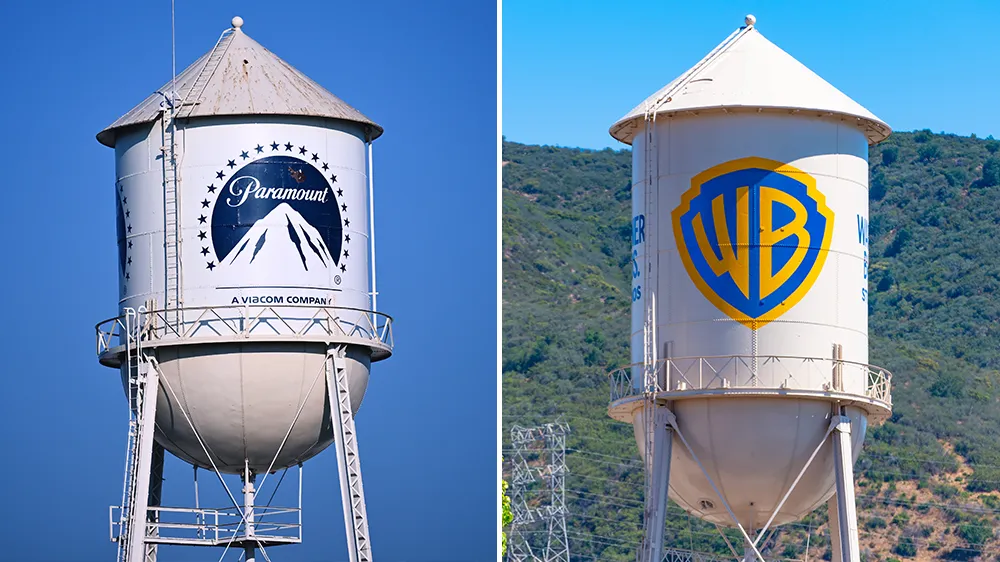
There is also a brand question. Paramount and Warner Bros. are two of the most storied names in the history of filmed entertainment. Each carries a legacy that stretches back to Hollywood’s studio era, with deep emotional connections among filmmakers, audiences and employees. Any merger at this scale must do more than satisfy regulators and investors; it must convince the creative community that the combined operation will nurture, rather than flatten, those identities.
International review remains another crucial factor. Media assets often operate across borders through distribution agreements, local production arms, streaming platforms and regional channels. Regulators outside the United States may have their own concerns about market power, data, advertising and consumer access. A deal that advances domestically can still face conditions, delays or modifications abroad.
What Happens Next?
With Oregon stepping back from its request to delay the closing, attention now shifts to the remaining regulatory checkpoints and any pending objections from other states. The companies will be looking to preserve the July 22 window, while opponents of the transaction may use the remaining time to press concerns about competition, labor and consumer impact.
If the deal closes on that timetable, the first phase will likely be focused on governance, leadership structure and integration planning. Investors will want clarity on who controls key divisions, how the streaming strategy will be organized and where cost savings are expected to come from. Employees will be watching for signs of restructuring, particularly in areas where the companies have overlapping operations.
Consumers may not see immediate changes, but the long-term effects could be substantial. Streaming bundles, content windows, library availability and pricing strategies could all be revisited once the companies operate under one roof. Franchises, sports programming and unscripted brands may be deployed differently as the merged entity seeks to maximize subscriber retention and advertising revenue.
The withdrawal in Oregon does not end the story. It simply gives the transaction more room to move. In a media economy defined by consolidation, debt pressure and the search for global scale, that breathing space could prove valuable. The next several days will determine whether Paramount and Warner Bros. Discovery can convert that opening into a completed merger — or whether another regulator will step into the path before the finish line.