
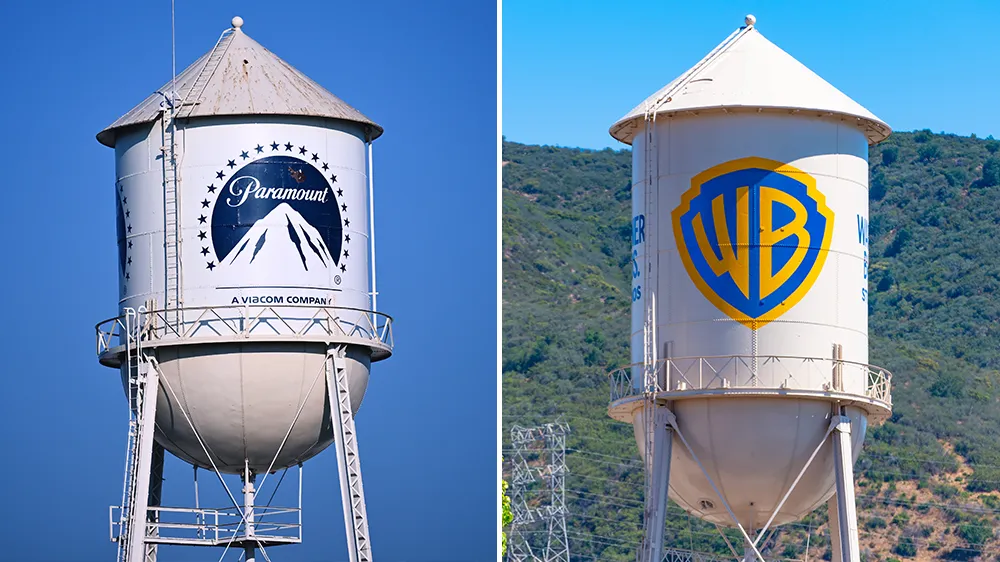
Why This Matters
One of the most closely watched consolidation plays in Hollywood has shifted from dealmaking drama to legal endurance test. Paramount’s proposed takeover of Warner Bros. Discovery is now effectively paused until June 1, 2027, or until five days after a federal court rules on the merits of lawsuits challenging the transaction, whichever comes first.
That timeline matters because it removes the immediate suspense around a potential closing and replaces it with a prolonged period of uncertainty for two companies sitting at the center of the film, television and streaming business. A combination of Paramount and Warner Bros. Discovery would reshape the balance of power in entertainment, bringing together major studio libraries, cable networks, sports rights, news assets and streaming platforms under one corporate roof.
For employees, talent representatives, producers and distribution partners, the pause does not simply delay a financial transaction. It freezes strategic planning. Executives cannot fully move as if the companies are combined, yet they must operate in a marketplace that is already reacting to the possibility that they eventually could be. That can complicate greenlight decisions, long-term output deals, licensing negotiations and staffing plans.
The legal standstill also raises the cost of the transaction in ways that go beyond attorneys’ fees. The longer a deal remains unresolved, the more vulnerable it becomes to market shifts, political pressure, shareholder frustration and operational drift. Streaming economics may look different in 2027 than they do today. Advertising demand could change. Sports rights valuations may rise or cool. Theatrical recovery remains uneven. A merger designed for one competitive environment can become harder to justify if that environment evolves while the parties wait.
For Hollywood, the significance is broader than two balance sheets. The case will be watched as a test of how courts and regulators view media consolidation in an era when legacy studios argue they must gain scale to compete with global technology giants. The outcome could influence how aggressively other entertainment companies pursue mergers, asset sales or joint ventures over the next several years.
Industry Context
The entertainment sector has been living through a prolonged correction after the streaming arms race. Studios that once spent heavily to chase subscribers are now under pressure to show profitability, reduce debt and make better use of existing libraries. That has made consolidation both tempting and controversial.
Paramount and Warner Bros. Discovery each carry assets that remain highly valuable in a fragmented market. Paramount brings a century-old studio, CBS, cable brands and a streaming service built around franchises, sports and broadcast reach. Warner Bros. Discovery controls Warner Bros., HBO, DC, CNN, Discovery’s unscripted empire and a deep film and television library. Together, the companies would represent a formidable content supplier and distributor.
But size is exactly what makes the transaction legally sensitive. Lawsuits challenging the deal are likely to focus on competition concerns, market concentration and the impact on consumers, creators and distributors. In the modern media business, those questions are complex. The companies compete in theatrical film, television production, streaming, cable carriage, advertising sales and licensing. They also negotiate with many of the same guilds, exhibitors, pay-TV operators and digital platforms.
Antitrust scrutiny in media has grown more politically charged in recent years. The government’s past fights over major entertainment and technology transactions have shown that courts may ultimately allow large deals, but the process itself can be lengthy and disruptive. Even when companies prevail, the delay can force concessions, alter financing assumptions or weaken the original logic of the merger.
The pause until June 2027, unless a court rules sooner, gives the legal process a defined runway. It also creates a public clock. Both companies now must demonstrate that they can maintain momentum independently while defending a transaction premised on the advantages of operating together. That is not an easy message to deliver to Wall Street or Hollywood’s creative community.
There is also a talent dimension. Writers, directors, actors and producers will want clarity on who will control future projects, which labels will survive, and whether a combined company would reduce the number of buyers in the marketplace. Fewer major buyers can mean fewer bidding wars and less leverage for creators, even if larger platforms argue they can fund more ambitious programming.
For competitors, the delay is an opening. Netflix, Disney, Amazon, Apple and Comcast can continue recruiting talent, locking up sports packages, making international moves and exploiting uncertainty around the pending combination. Smaller studios and independent producers may also use the moment to position themselves as stable alternatives for filmmakers and showrunners wary of a merger cloud.
What Happens Next?
The immediate next phase is legal preparation. The companies and the plaintiffs challenging the transaction are expected to move toward a trial schedule that will determine whether the deal can proceed. Discovery, document production, expert testimony and pretrial motions could become central to the battle, with each side building a record around how the merger would affect competition and consumers.
Paramount and Warner Bros. Discovery will also need to manage the optics of the delay. Investors will want assurance that the transaction remains viable and that financing, governance plans and integration assumptions have not deteriorated. Employees will want answers about job security, reporting lines and future priorities, though the companies may be limited in what they can coordinate while the deal is pending.
Operationally, both businesses must keep competing. That means continuing to develop films, commission series, sell advertising, negotiate carriage agreements and pursue streaming growth without acting as a merged entity. The challenge is to avoid paralysis. A company waiting for a transformative merger can lose valuable time if managers defer difficult decisions in anticipation of a future structure that may never arrive.
The court’s eventual ruling will determine whether the freeze lifts early. If the companies win on the merits, the agreement allows the transaction to move forward five days later, assuming other closing conditions are satisfied. If the challengers prevail, the merger could be blocked, renegotiated or abandoned, depending on the ruling and any appeals.
Until then, Hollywood will be watching a rare high-stakes waiting game. The proposed combination remains alive, but not actionable. In an industry where timing can define winners and losers, a delay of this scale may prove almost as consequential as the final verdict.