
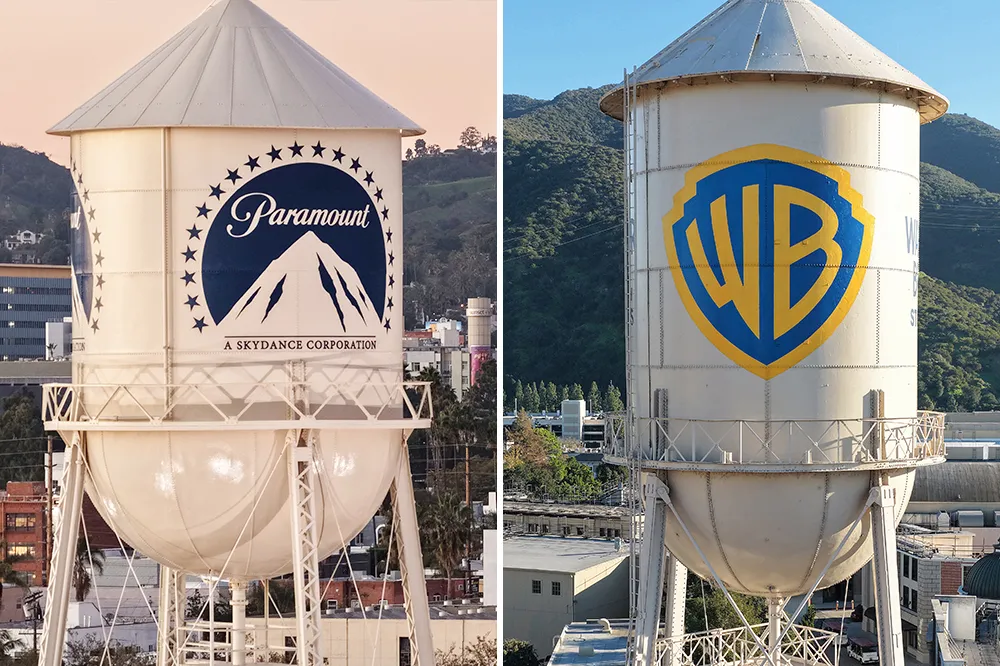
Paramount Skydance’s effort to acquire Warner Bros. Discovery has entered a decisive stretch, with weekend settlement talks between the company and state attorneys general moving toward a potential resolution as merger opponents mobilize against what they fear could be a weakened deal.
The federal antitrust lawsuit filed in July by 12 states, including California and New York, remains the final barrier to Paramount closing the $110 billion acquisition agreement it reached in late February. The pressure on Paramount is substantial: beginning Oct. 1, the company is obligated to pay Warner Bros. Discovery shareholders an additional $7 million per day if the transaction has not closed.
Sources familiar with the situation said negotiations with the state attorneys general appeared to be moving in a positive direction. The sides were expected to remain in communication Sunday, though talks would pause by evening for the Yom Kippur holiday if no agreement had been reached. The matter could come to a head as soon as Sunday night, according to the source material.
California Attorney General Rob Bonta has been a central figure in the standoff. He has demanded “structural remedies” as part of any agreement, but merger critics are increasingly alarmed by reports and rumors that the final settlement could fall short of that standard.
The Wall Street Journal, citing unnamed sources, reported Friday that a possible deal could require the two studios to operate “separately for a period,” rather than be combined immediately. But that concept has already surfaced in Paramount Skydance CEO David Ellison’s public commitments. In a Feb. 28 letter to Sen. Adam Schiff and Rep. Laura Friedman, Ellison wrote: “my promise to you is to build a stronger Hollywood, by keeping both of these legacy studios operating separately, thereby preserving and potentially increasing jobs.”
According to two sources familiar with the talks, the discussions have also covered production output, including Ellison’s longstanding pledge to produce at least 30 films a year. Other items under discussion in remote meetings have included a written commitment to remain in California and the creation of a third-party “editorial adviser” for CNN and CBS.
Bonta, however, has previously cast doubt on the effectiveness of those types of commitments. He has repeatedly said that “behavioral” remedies are weak and difficult for states to enforce. In an interview with Variety last month, he described separate operations as a “behavioral” remedy as well.
“There needs to be separate ownership,” Bonta said. “If it’s under the same Paramount-Warner Bros. merged-entity roof, that’s not separate.”
Still, sources close to the situation reinforced the suggestion, also reflected in the Wall Street Journal report, that enforceable commitments for Paramount to operate some or all Warner Bros. Discovery assets separately from Paramount could become a pathway to settlement. Such an agreement might also include job-preservation commitments for a fixed period of time.
Merger Opponents Intensify Pressure
Outside the negotiating room, opposition groups are stepping up public pressure. Antimerger activists are planning rallies in Oakland, Los Angeles and New York as they warn against any settlement they view as inadequate.
The Block the Merger coalition said Saturday that the rumored settlement terms were unacceptable, calling them “an insult to everyone who has stood up against this harmful transaction.”
Actor Mark Ruffalo, an outspoken critic of the merger, also urged his supporters to pressure Bonta not to “cave.” Ruffalo currently top-lines the HBO drama series “Task,” which was recently picked up for a second season, creating an unusual public dynamic between the actor and a network connected to the transaction. Ruffalo, a four-time Oscar nominee who was Emmy-nominated this year for “Task,” has continued to speak out.
“Don’t you dare @AGRobBonta, do not cave,” Ruffalo wrote on X. “You work for the people — the very people who will be hurt if you let this lousy deal filled with empty promises go forward.”
Ruffalo asked supporters to gather at Bonta’s office in Oakland at 5 p.m. Sunday to oppose the deal. Additional rallies were set for Monday outside Attorney General Letitia James’ office in New York and Tuesday outside Writers Guild of America West headquarters in Los Angeles.
The Writers Guild of America has also filed its own antitrust lawsuit, alleging that the deal would unlawfully reduce the market for writers’ work. The WGA is a party to the stipulation preventing the merger from closing before a March 2027 federal trial, but it has not participated in the settlement talks.
Meanwhile, sources noted signs of deal-closing activity inside the Warner Bros. Discovery orbit. HBO CEO Casey Bloys and JB Perrette, president of WBD streaming and gaming and the business leader of HBO Max, appear to be shifting into that mode, according to sources. Both have experience with M&A from years at Time Warner and Discovery Communications. Merger-watchers also noticed that Bloys and Perrette were prominent in the social scene surrounding the Emmy Awards this past week. “Casey looks happier than he has in a long time,” one knowledgeable source said.
A representative for Paramount Skydance declined to comment Saturday on the settlement talks.
What Happens Next?
The next few days could be pivotal. If Paramount and the state attorneys general reach a settlement, it could remove the last state-led obstacle to closing the $110 billion acquisition. If not, the legal fight remains active.
The case is due before Judge Araceli Martinez-Olguin on Thursday. Paramount is seeking a $1.88 billion bond from the WGA and the states as the price of keeping the merger on hold.