
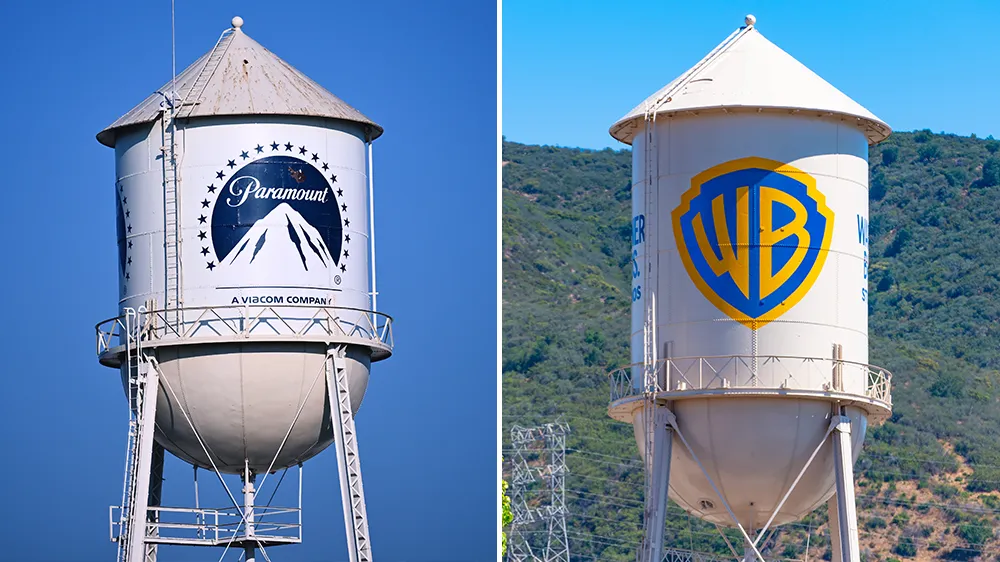
Paramount Skydance said Friday that it has secured the final regulatory clearance needed to complete its proposed $110 billion acquisition of Warner Bros. Discovery, with approval from Mexico marking the last required sign-off in an eight-month global review.
The company said the transaction has now been reviewed by authorities in 68 countries, including the U.S. Department of Justice, positioning the entertainment giants to move toward closing what would be one of the largest media combinations in modern Hollywood history.
But the deal is not yet across the finish line. A lawsuit filed by multiple states continues to stand in the way, with those challengers arguing that the merger would reduce competition, threaten jobs and concentrate too much power in an already compressed entertainment marketplace.
For Paramount Skydance, Friday’s announcement is a major milestone. Regulatory approval across dozens of jurisdictions removes one of the biggest uncertainties surrounding the transaction and allows the company to argue that antitrust officials and competition authorities have broadly accepted its case for the merger. Still, the pending state-level litigation means the closing timeline remains unsettled.
In a statement, Paramount officials framed the global approvals as evidence that the combination can proceed without harming consumers or the broader industry. The company has maintained that joining forces with Warner Bros. Discovery would create a stronger competitor in a market increasingly shaped by tech-backed streaming platforms, shifting advertising economics and rising content costs.
The proposed acquisition would bring together a vast collection of assets spanning film, television, news, sports, cable networks and streaming. Warner Bros. Discovery controls HBO, Max, Warner Bros. film and television studios, CNN, Discovery and a deep library that includes DC, “Harry Potter” and decades of prestige programming. Paramount Skydance’s holdings include Paramount Pictures, CBS, Paramount+, Pluto TV, Nickelodeon, MTV, Comedy Central and a major sports footprint through broadcast rights.
That scale is precisely why the deal has drawn scrutiny. Supporters say the combined company would have the heft to compete more effectively with Netflix, Amazon, Apple, Disney and YouTube, all of which have altered the economics of filmed entertainment. Critics argue the merger would narrow the number of major buyers for talent, reduce the number of places where projects can be sold and potentially accelerate layoffs across overlapping divisions.
Why the Deal Matters
The merger arrives at a volatile moment for the entertainment business. Traditional media companies are still trying to manage the decline of linear television while spending heavily to keep streaming services relevant. Cable channels that once generated reliable profits have been weakened by cord-cutting, while theatrical box office remains uneven and advertising markets have become more unpredictable.
Hollywood has already seen years of consolidation, from Disney’s acquisition of much of 21st Century Fox to WarnerMedia’s merger with Discovery. Each deal has been sold as a response to industry disruption, but each has also brought job cuts, restructuring and questions about whether fewer corporate owners ultimately mean fewer creative opportunities.
A Paramount-Warner Bros. Discovery combination would further reshape the competitive map. The new company would control one of the deepest content libraries in the business, a broader global distribution network and a significantly expanded streaming portfolio. It could also create new leverage in negotiations with theater chains, advertisers, sports leagues, pay-TV distributors and talent representatives.
For Wall Street, the appeal is straightforward: scale, cost savings and a stronger balance sheet for the streaming era. For Hollywood’s creative community, the calculation is more complicated. A larger buyer can make bigger bets, but consolidation often leads to tighter spending controls and fewer decision-makers willing to take risks.
The Legal Overhang
The state lawsuit remains the most immediate obstacle. While federal and international regulatory reviews have been cleared, state attorneys general can still pursue legal action if they believe a transaction violates competition laws or harms workers and consumers within their jurisdictions.
The challengers are expected to focus on the practical effects of combining two legacy media companies with overlapping operations in film, television production, cable networks, news, streaming and advertising. Their case may also examine whether the merger could reduce employment, diminish bargaining power for writers, producers and other suppliers, or limit consumer choice over time.
Paramount Skydance is expected to counter that the media landscape is broader than traditional studio competition and that the merged company would face aggressive rivals far larger in market capitalization and technology infrastructure. The company is also likely to emphasize that streaming has expanded consumer options, even as it has pressured legacy businesses.
The dispute underscores a broader shift in antitrust enforcement. Regulators and state officials have increasingly examined not only prices for consumers but also labor markets, platform power and the long-term effects of consolidation. In entertainment, those issues carry heightened sensitivity after years of layoffs, production slowdowns and labor unrest.
Industry Context
The proposed transaction reflects a hard reality confronting legacy studios: content alone is no longer enough. Companies need global distribution, data, technology, sports rights, franchise management and enough financial capacity to withstand expensive streaming competition. The old model of cable fees, theatrical windows and syndicated television profits has been replaced by a more fragmented system with fewer guaranteed revenue streams.
At the same time, mergers are no longer a simple cure. Warner Bros. Discovery itself has spent years integrating assets, cutting costs and navigating debt after its own transformative deal. Paramount, meanwhile, has faced persistent questions about how to scale Paramount+ and protect the value of its broadcast and cable businesses as audiences migrate elsewhere.
If completed, the acquisition would create a company with enormous reach but also enormous integration challenges. Combining corporate cultures, technology platforms, sales teams, production pipelines and executive ranks could take years. Decisions about which brands to prioritize, which streaming services to maintain and which assets to sell would be closely watched across the industry.
What Happens Next
With the regulatory process effectively cleared, attention now turns to the courtroom. The merger cannot fully move forward while the state lawsuit remains unresolved, unless the parties reach a settlement or win a ruling that allows the transaction to close.
Paramount Skydance is expected to push for a swift resolution, arguing that prolonged uncertainty could harm employees, partners and shareholders. The states challenging the deal are likely to seek assurances, remedies or an outright block depending on how the litigation develops.
For now, the company has achieved a significant victory by securing global approvals. Whether that momentum is enough to carry the $110 billion merger to completion will depend on the next phase: convincing a court that Hollywood’s latest mega-deal is a necessary response to industry disruption, not a threat to the marketplace it seeks to transform.