
The Academy Awards short film race is putting rising filmmakers, established directors and experimental storytellers in the same spotlight, with contenders spanning live action, animation and documentary filmmaking.
Working within a running time of 40 minutes or less, the filmmakers are tackling subjects ranging from community trauma and dementia to insomnia, refugee experiences and Marilyn Monroe. The field also reflects the form’s technical range, pairing hand-drawn animation with emerging artificial intelligence tools.
Documentaries Focus on Communities and Care
Director Anne Sundberg’s “A Month in Minnesota” examines the aftermath of the fatal ICE shootings in Minneapolis, concentrating on how residents responded to the violence and began building networks of support.
“The first thing was I really wanted to bring people inside the experience of what it was to be in Minnesota at the time that this happened,” Sundberg said. She described a city where people had felt safe at parks, schools and workplaces before circumstances changed “in a moment.” The film also captures how residents learned to trust one another, organize and determine who needed help.
Taliesin Black-Brown takes a more intimate approach with “Listen.” The documentary follows sound recordist Hank Lentfer as he records the natural world while caring for his mother during the final stages of dementia.
Black-Brown hopes the film encourages audiences to pause and pay attention to their surroundings. “Just to make space to sit in a park and listen to a bird,” the director said. “It can be really healing.”
Animation Tests Style and Technology
Among the animated projects, Joe Hsieh’s “Praying Mantis” combines his interest in horror with hand-drawn 2D animation. The Taiwan-based filmmaker spent about four years bringing the short to the screen.
Hsieh sees the format as an effective showcase for the imaginative possibilities of both animation and horror. For him, a short can begin with a character idea and build that concept into a complete story for an audience.
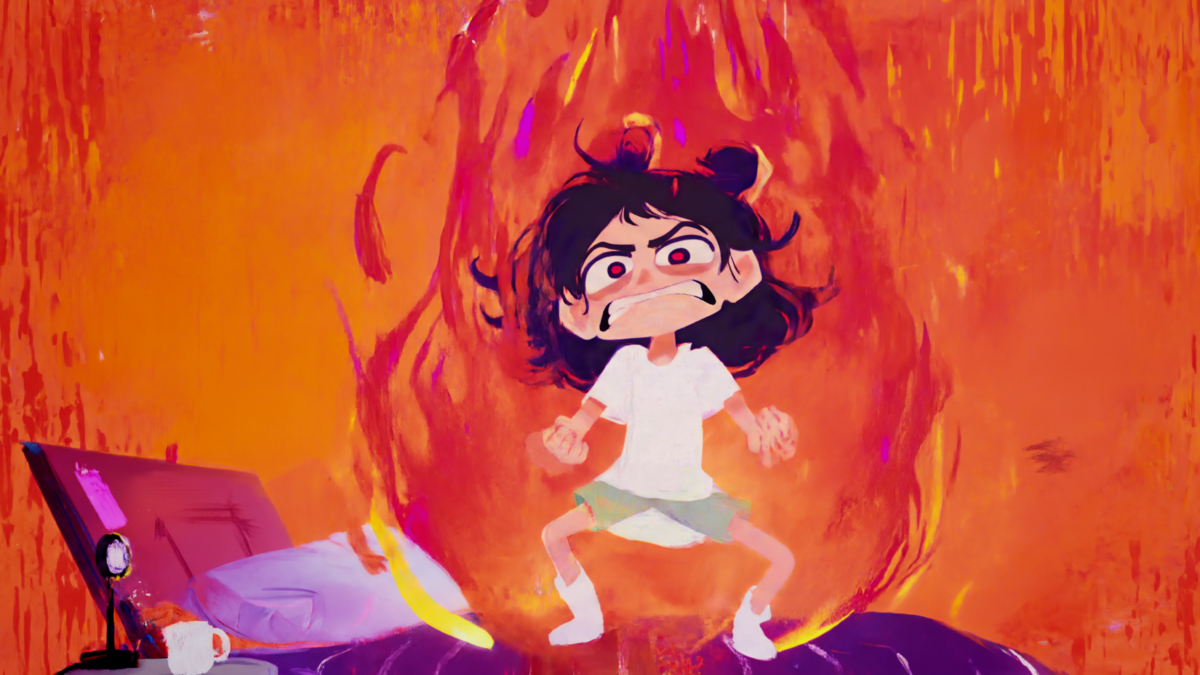
“Dear Upstairs Neighbors,” meanwhile, uses emerging AI technology to assemble artist-created drawings under the guidance of the artists. Directed by Connie He, the film centers on an exhausted insomniac attempting to get some sleep.
Executive producer Marcia Mayer, who previously worked at Pixar, compared the current controversy surrounding AI with the disruption that accompanied the arrival of CG technology in hand-drawn animation. The production scanned 35 paintings and trained a model using their different visual styles.
According to Mayer, the tools allowed He to pursue the appearance the filmmakers had envisioned while completing the project within a realistic timeline. She also noted that short films have often provided a testing ground for new animation technology.
Personal Stories Drive the Live Action Field
Several live action filmmakers drew on personal histories or adapted to tightly constrained production circumstances.
Kathryn Kalucki’s “Jozefa” grew out of efforts to tell a story about the director’s grandmother and her early life as a refugee. Kalucki and her producing partner chose to make a short using the time, talent and resources available to them. Following one week of preparation, the team filmed in Burbank over an intense two-and-a-half-day shoot.
Patrick Willems brought experience with fast, resource-conscious production to “Power Trip.” Willems makes YouTube videos for a living, combining long-form film criticism with narrative filmmaking. Accustomed to handling projects with minimal resources, he said working with a professional crew meant he no longer had to do everything himself — although the compressed schedule still left “no time to waste.”
Mekhai Lee, director of “Them That’s Not,” does not view the short simply as a steppingstone toward a feature. Comparing the relationship between shorts and features to that between novellas and novels, Lee said the project’s specific length, circumstances and parameters represented the right way to bring its story into the world.
Established Filmmakers Embrace the Format
The field also includes Academy Award-winning “Anora” filmmaker Sean Baker. His live action short “Sandiwara,” starring Oscar winner Michelle Yeoh, emerged from fashion house Self-Portrait’s residency program.
Baker described the project as an opportunity to keep practicing, learn new techniques and collaborate with a new crew. “I never consider myself an expert filmmaker,” he said, explaining that he embraces opportunities when he connects with the underlying idea.
Maggie Gyllenhaal’s 17-minute “Flesh Impact” focuses on the life of Marilyn Monroe and stars Ellen Burstyn and Dakota Johnson. Genesis commissioned Gyllenhaal to make the film about Monroe.
Gyllenhaal argued that some stories are naturally suited to a brief running time and acknowledged the practical challenges surrounding the form. “Short films don’t get distribution,” she said. “It’s not realistic to finance something like this.” At the same time, she sees the medium as one that is not entirely driven by commercial considerations.
ShowBiz Take
This developing race demonstrates why shorts occupy a distinctive place in filmmaking. The format can accommodate a documentary about public violence, a quiet portrait of caregiving, a hand-drawn horror story and an AI-assisted animation without requiring any of them to expand into feature length.
Just as importantly, the contenders place filmmakers with limited schedules and resources beside Oscar-winning talent. The common thread is not scale, but precision: each project is using the boundaries of the short form to determine exactly how its story should be told.