
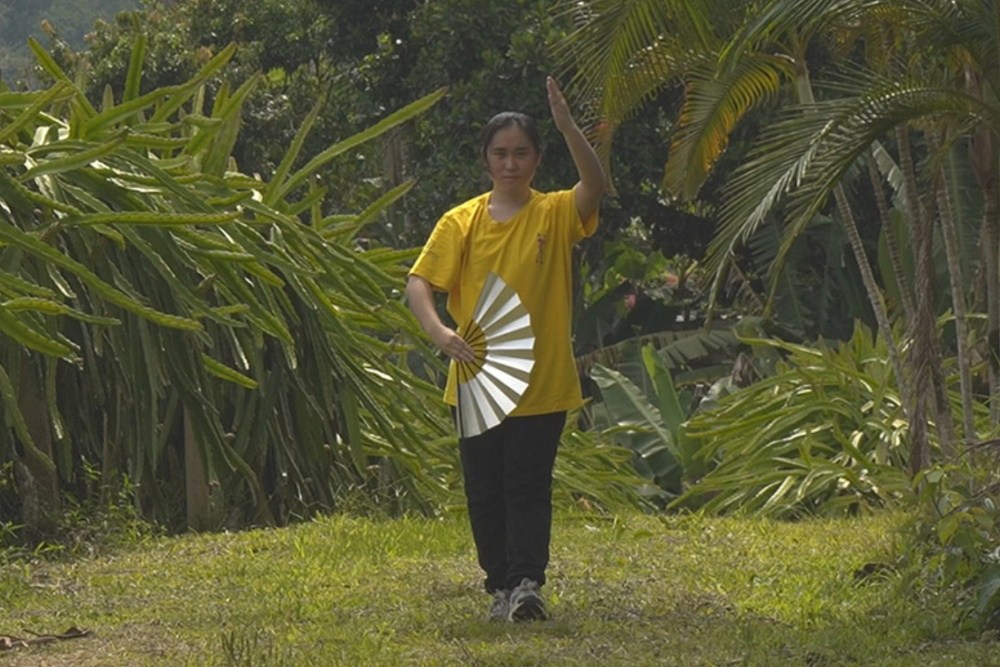
Director Matsubayashi Yoju’s decade-long connection with Okinawan immigrants in Brazil has led to “Okinawa Saudade,” a new documentary screening in the Nippon Cinema Now selection at the 39th Tokyo International Film Festival.
Framed around the relationship between identity and place, the film follows two members of the latest generation of Okinawan immigrant families in Brazil. Yumi is a young performer of Ryukyu Buyo, Okinawa’s classical dance, while Everton teaches Eisa, the island’s drum-led festival dance. An exchange trip takes them to Okinawa, where they explore the island’s culture and history while searching for a deeper understanding of their roots.
Matsubayashi traces the project’s beginnings to 2016, when he spent a year in Brazil. He had been attempting to develop a different project about Fukushima, but that work had stalled. During his stay, he learned about the forced relocation of Japanese Brazilians in Santos.
Approximately 60% of the Japanese immigrants forced out during the wartime relocation were from Okinawa. Matsubayashi made that history the subject of his 2020 documentary, “Okinawa/Santos.”
From Historical Records to a New Generation
That earlier production brought Matsubayashi into contact with Urizunkai, the Brazilian Okinawan community. He subsequently discovered that Okinawan Brazilians were being sent to Okinawa through training and scholarship opportunities, providing the foundation for “Okinawa Saudade.”
His research was aided by the Bunkyo, a cultural facility in São Paulo’s Liberdade district, where there is a particularly high concentration of Japanese immigrants. Its extensive collection of immigration documents in Japanese and Portuguese offered both information and inspiration.
Matsubayashi was struck by the scale of the Okinawan archive. While the collection included records concerning immigrants from Japan’s other 46 prefectures, the Okinawan material amounted to almost the same volume.
“I was really amazed at that vast amount of information that the Okinawans wanted to keep,” he says.
Although Matsubayashi is not from Okinawa and initially regarded himself as an outsider, his interviews for “Okinawa/Santos” helped him build a close relationship with the community. He recalls being embraced through the Okinawan expression “Ichariba choodee,” which he explains as meaning that people are like brothers and sisters once they meet.
That trust proved essential to the new documentary. Community members arranged logistical support and volunteered rather than leaving Matsubayashi to hire his own coordinator and driver. The director says the Okinawan Brazilians treated him as one of their own and believes “Okinawa Saudade” would not have been possible without first making “Okinawa/Santos.”
Dance Becomes the Route to Identity
The timing of the new film came together in 2024. Matsubayashi learned that Brazil’s government was expected to issue an official apology to victims of the forced relocation in July, while Okinawan Brazilians could receive scholarships for an exchange and training program in September. Brazil’s Amnesty Commission formally apologized that July for the state’s post-World War II persecution of Japanese immigrants.
Rather than revisiting the earlier documentary’s testimonial-driven approach, Matsubayashi built “Okinawa Saudade” around dance and the emotional experience of tracing family and cultural roots.
The film considers the difference between Okinawa’s traditional Eisa and the Creative Eisa practiced in Brazil. Matsubayashi says Creative Eisa began there about 45 years ago, giving it a history that could itself be considered a tradition. Traditional Eisa uses the sanshin musical instrument and combines singing with dancing; Creative Eisa does not require the sanshin.
That distinction gives Yumi and Everton’s journey another dimension. Their exchange is not simply about encountering a culture preserved unchanged in one place, but about navigating forms that have developed across generations and countries.
Matsubayashi also places himself more directly inside this story. He describes the documentary as a first-person work told through Yumi, Everton and himself, with all three confronting the question: “Who am I, what kind of person am I?”
His voice and occasional image have appeared in his other films, but “Okinawa Saudade” adopts a more intimate and subjective approach. Matsubayashi attributes that shift to dance and the heightened emotion it brings, contrasting it with the assembled testimonies that shaped “Okinawa/Santos.”
ShowBiz Take
“Okinawa Saudade” matters because it connects a documented history of displacement with the lived cultural questions facing a later generation. By following two dancers rather than relying principally on historical testimony, Matsubayashi approaches identity through movement, teaching and direct encounters with Okinawa.
The film also reflects the practical difficulties confronting Japanese documentary production. Matsubayashi says his work on “Okinawa/Santos” enabled him to make television programs for Japanese public broadcaster NHK. Those projects could provide about JPY10 million, or $63,000, which he would then use to finance another film.
He says that cycle has become harder to sustain because of the weak currency and reduced budgets at NHK. “Okinawa Saudade” ultimately required a grant from Okinawa Prefecture to complete post-production.
Without that support, Matsubayashi says he could not have finished the film. Its Tokyo International Film Festival selection therefore represents not only the culmination of a relationship that began in Brazil nearly a decade earlier, but also the arrival of a documentary completed amid what its director calls difficult circumstances for Japanese nonfiction filmmaking.