
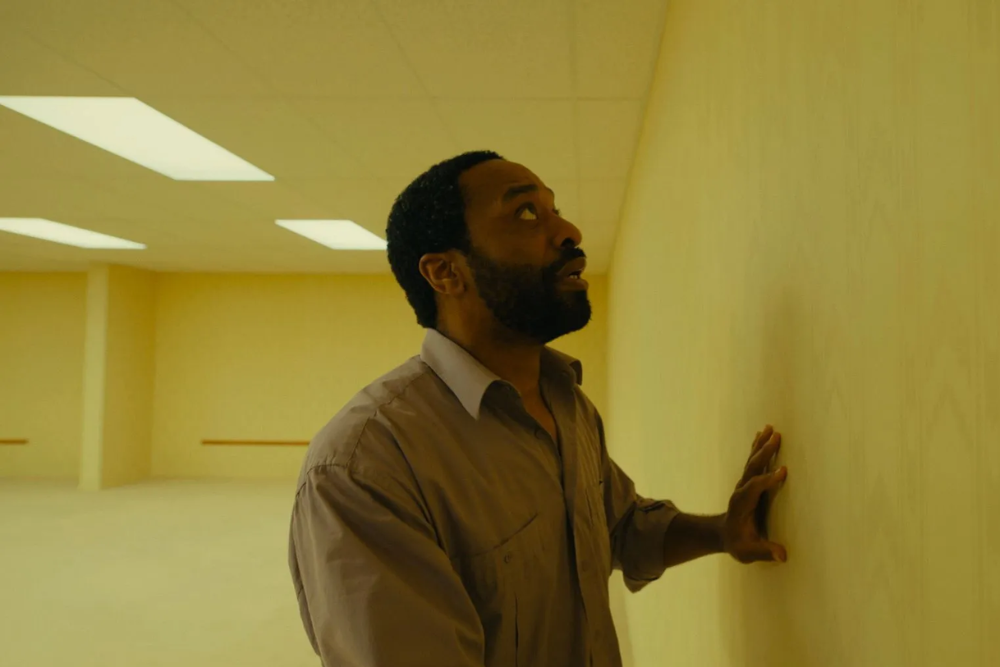
“Backrooms” and “Obsession” may signal a major change in what young moviegoers want — and in the films Hollywood chooses to make next, according to Sony Pictures Classics co-president Michael Barker.
Speaking at the Zurich Summit on Saturday, Barker compared the impact of Kane Parsons’ “Backrooms” and Curry Barker’s “Obsession” to the industry disruption caused by Dennis Hopper’s “Easy Rider” in the 1970s.
“‘Easy Rider’ came out in the middle of the Vietnam War, in the middle of a right-wing presidency,” Barker said. “It spoke to young people; they responded in huge numbers, and it affected the movies that were gonna be made afterwards.”
He added: “I think this is that moment, this summer with ‘Obsession’ and ‘Backrooms.’”
The comparison comes after both films exceeded box-office expectations and attracted large numbers of Gen Z moviegoers. Their directors are in their 20s and emerged from YouTube, making the films recurring subjects of discussion among major producers and executives at industry events over the past three months.
Kane Parsons Pushes Back on the Horror Label
Parsons joined Barker on the Zurich Summit panel alongside Mattel Studios president and chief content officer Robbie Brenner and Academy of Motion Picture Arts and Sciences CEO Bill Kramer.
The filmmaker is already working on a sequel to “Backrooms,” the A24 film that grossed $400 million. However, Parsons said he did not approach the adaptation of his own YouTube analog web series as a horror movie.
“I don’t view it as a horror project,” Parsons told the audience. “I think that’s just naturally in the path of least resistance from a marketing perspective and is what seems comfortable to people as a framing device.”
Parsons said he intends to avoid being constrained by those classifications as his career continues.
“I’m gonna try to stay as oblivious to those labels as possible,” he said. “I think I have more creative control now with future projects. So those sort of structures will probably be a little less forceful, I think, in the future.”
Although Parsons did not want to frame the conversation entirely around age, he said there is a clear current “appetite” for seeing films in theaters. He described “Backrooms” as having a “pre-existing but decentralized IP presence online” and suggested that audiences are seeking novelty and distance from familiar cultural properties that continually repeat themselves.
YouTube Fandoms Move Into Cinemas
Kramer called “Backrooms” an important example of a fan community making the journey from YouTube to movie theaters, describing it as the first time the Academy had seen that kind of movement.
“Young people want to go back to movie theaters,” Kramer said. “Fandoms shift; theatrical can inform a fandom, YouTube can inform a theatrical fandom. It’s all connected in a way that I don’t think we thought was possible.”
He called that interconnected relationship a major lesson from the summer and said the return of younger audiences gave him “great hope for the film industry.”
The panel also challenged the idea that younger viewers are interested only in brief, rapidly consumed entertainment. When Parsons raised the perception that people around his age gravitate toward short-form material, Kramer called that characterization “reductive,” and Parsons agreed.
Parsons argued that algorithmically encouraged viewing habits are not necessarily something people enjoy. He said viewers do not love having their attention pulled into a cycle dominated by short content. By contrast, entering a closed room without outside interference “lowers the tempo in a way that is refreshing,” he said.
YouTube’s expanding connection to traditional entertainment also featured elsewhere in the discussion. Kramer addressed the multi-year agreement giving the platform exclusive global rights to stream the Oscars live and free worldwide. That deal begins in 2029 and continues through 2033.
Asked whether the arrangement was favorable, Kramer smiled and answered, “A very good deal.” He also noted that the Academy is a nonprofit and said the agreement would help sustain its work.
A “Barbie” Sequel Remains a Hope, Not a Confirmation
The conversation also turned to another possible follow-up. Brenner was asked about a sequel to Greta Gerwig’s “Barbie,” but stopped short of confirming that one is moving forward.
“Look, we all wanna have a ‘Barbie’ sequel,” she said. “I mean, who doesn’t wanna see the sequel to ‘Barbie’? And I’m sure at some point in time there will be one. We all want it to happen. We’ll see.”
What Happens Next?
Hollywood is now trying to determine how to build on the momentum created by “Backrooms” and “Obsession,” particularly their success in bringing Gen Z audiences into cinemas. Parsons, meanwhile, is moving ahead with the “Backrooms” sequel while signaling that increased creative control may allow him to resist the conventional labels placed on his work.
Whether this summer ultimately changes the industry as profoundly as “Easy Rider” did remains Barker’s assessment rather than a settled conclusion. But the combination of unexpected box-office strength, online fandom and renewed theatrical interest among younger viewers has already made “Backrooms” and “Obsession” central to the industry’s conversation.