
Netflix-owned Eyeline Studios is combining generative AI with live-action filming and traditional visual effects to transform locations, reconstruct crowds and alter lighting after a performance has been recorded.
The studio is also researching technology that could give filmmakers control over camera placement after a shoot, potentially allowing them to reconsider perspective while preserving an actor’s original work.
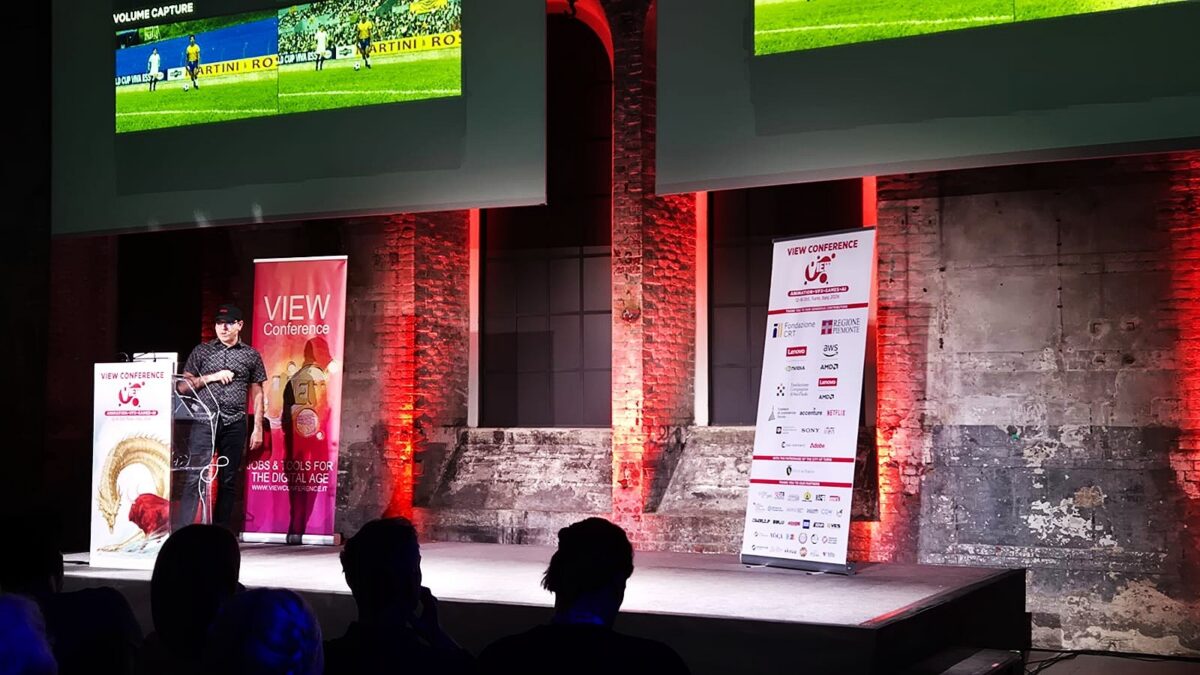
Mohsen Mousavi, Eyeline’s VP of Virtual Pioneering, outlined the technology Tuesday at the View Conference in Turin. He described Eyeline’s method as “hybrid production,” stressing that the studio is not attempting to generate complete films through text instructions.
“We’re not prompting our way into shots and movies. That’s not who we are,” said Mousavi, whose credits include the final season of “Game of Thrones.”
From Partial Sets to Rebuilt Environments
Eyeline begins its process before filming. A generative art department works alongside traditional artists to explore designs, while the studio’s “sparse set” system lets performers work on incomplete physical sets with comparatively flat lighting.
Digital surroundings and new lighting can then be created around the photographed actors without replacing their performances. Mousavi characterized that work as “an extension of the traditional art department” rather than a substitute for it.
Eyeline’s related volumetric-capture process is designed to provide further options after filming. Demonstrations included footage captured in one place and converted into a different environment, with some settings built without green screens.
“It gives us both freedom of light and freedom of camera after shooting performances,” Mousavi said. He emphasized that the actor’s identity and performance should remain intact throughout the process.
For Mousavi, producing an initially convincing AI image does not resolve the challenges of professional filmmaking. He estimated that generative models can deliver roughly “60, 70%” of the desired result, but said “getting to the 100% is what matters the most.” The percentages were not presented as formal measurements, but as a description of the demanding work required to achieve consistency, sufficient resolution and detailed creative control.
How Eyeline Has Used the Technology
Parts of Eyeline’s hybrid system have already been used on Netflix projects. For “Brazil ’70: The Third Star,” a drama centered on the national team’s 1970 World Cup victory, the studio helped construct the large, emotionally reactive stadium crowds needed to recreate the tournament.
That crowd work blended filmed material, sprites, conventional computer graphics and generative methods rather than relying exclusively on AI. Mousavi said creating the same result through traditional visual-effects techniques “would have been very, very difficult to do within that budget.”
Eyeline also contributed digitally built material to Netflix’s five-part historical documentary “The American Experiment.” Mousavi demonstrated background extensions, generative dust and other elements combined with practical footage from that production.
Additional examples included techniques that can change a performer’s apparent age while retaining the original acting. Eyeline also presented a research short examining how camera positions and lighting might be modified after filming.
Experimental Tools Remain a Work in Progress
Not every technology shown has been used on a completed production. Mousavi drew a distinction between deployed techniques and Eyeline’s ongoing experiments, including work on controllable generative fluids.
Current generative fluid simulations remain difficult to predict and direct, he acknowledged. Eyeline wants artists to control qualities such as water velocity, viscosity and turbulence through keyframes, while adding foam or spray without changing the underlying simulation.
“Often in visual effects, what you really want to do is that you want to break the physics of the fluid,” Mousavi said, explaining that a production may need to depart from physical accuracy to obtain a particular creative result.
Other demonstrations showed a Gaussian-splat 3D capture being shifted visually from winter to autumn, as well as AI-assisted relighting of filmed human performances. One Eyeline system gathers training material with 40 synchronized RED V-Raptor cameras, although the studio has also created more portable capture gear.
Its research additionally includes an effort to build a navigable 4D scene from footage recorded with a single camera. Mousavi cautioned that such experiments should not be confused with systems already used on finished shows.
Much of Eyeline’s technology comes from its own research and models rather than ready-made generators. The studio also works with external partners and specially recorded training data, but Mousavi did not name the providers of its foundation models.
ShowBiz Take
Eyeline’s presentation draws an important line between generating an appealing image and delivering footage that can withstand the requirements of a finished production. The studio’s focus is not simply on what AI can create, but on whether cinematographers, production designers and visual-effects artists can direct, revise and integrate the result.
That distinction is central to the hybrid-production pitch. Eyeline is retaining photographed performances while using generative systems alongside physical sets, conventional CG and established VFX methods. Its examples from “Brazil ’70: The Third Star” and “The American Experiment” also show that some of these techniques have moved beyond research, even as more ambitious camera, lighting and simulation tools remain experimental.
The work arrives as Netflix broadens its AI efforts. The company has acquired Ben Affleck’s filmmaking technology business InterPositive, and the streamer said in July that approximately 300 titles had already used some form of generative AI.
What Happens Next?
Eyeline still faces substantial technical hurdles. Mousavi identified high dynamic range, 4K finishing and consistency across frames as continuing challenges. He also rejected the idea that the technology should operate as a “black box,” arguing that filmmakers must be able to shape the output.
“The goal is to make it completely cohesive,” he said, whether an element was captured by a camera, made through traditional visual effects or produced with generative technology.