
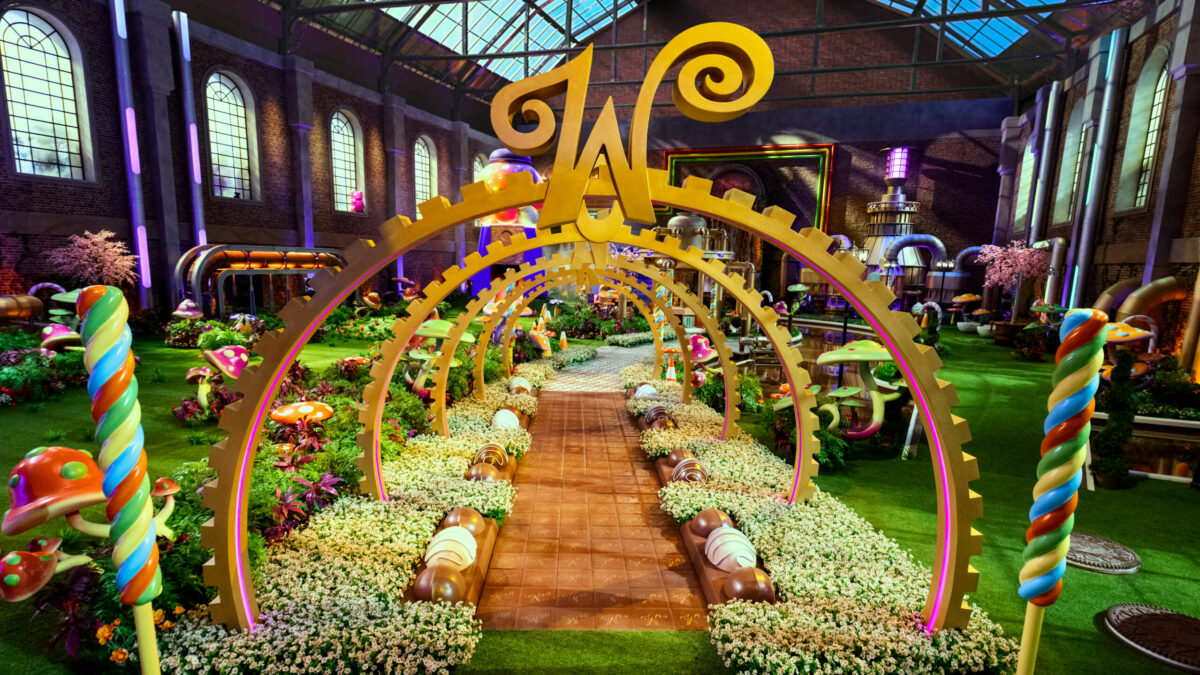
Netflix’s “Wonka’s Golden Ticket” may dress itself in chocolate rivers and golden wrappers, but its most attention-grabbing ingredient is far less sweet: an artificial intelligence-generated version of Gene Wilder’s voice.
Wilder, who played Willy Wonka in the 1971 film “Willy Wonka & the Chocolate Factory,” died in 2016 at age 83. A disclaimer on the competition series states that the production received permission from his estate to recreate his voice with AI.
That approval addresses the estate’s involvement, but it does little to make the result feel less unsettling. The synthetic Wilder serves as the show’s host, delivering instructions and attempting jokes in the actor’s recognizable nasal tone. The technology can imitate the sound, but the first seven episodes repeatedly expose its inability to reproduce the comic timing and human spontaneity behind Wilder’s performance.
The result is a strange digital resurrection that overwhelms nearly everything else in the series — including its $3 million prize.
A Familiar Story Becomes a Reality Competition
“Wonka’s Golden Ticket” is loosely based on Roald Dahl’s “Charlie and the Chocolate Factory,” transforming its dangerous factory tour into an unscripted contest. Participants compete in pairs through challenges that mix physical discomfort with strategic decision-making.
Some competitors are spun in circles, while social elements require players to decide who could face “termination.” The contestants consistently attribute the design of the tour to “Wonka,” treating the unseen AI host as the controlling presence behind the experience.
The show also stages a montage in which the contestants appear to discover golden tickets in chocolate bars. Once inside the factory, participants heighten the drama around each obstacle, producing lines such as, “Everything became different when my brother was trapped in the gumball machine.”
The grand prize is presented not only as $3 million, but also through the peculiar description of “a six-figure income for 30 years.” Despite the emphasis on potentially life-changing money, the contestants never pull focus from the artificially generated host. The ensemble comes across as pleasant, but the first seven episodes do not produce an obvious breakout personality.
The show’s basic premise also carries an unavoidable contradiction. Dahl’s story puts children through grotesque and perilous trials, making competition over a scarce prize part of its cautionary framework. Turning that material into straightforward reality entertainment — even without the original story’s risk of bodily harm — strips away much of the warning and packages the spectacle as a game.
An Elaborate Factory With Clashing Styles
The production design is the series’ strongest achievement. “Wonka’s Golden Ticket” recreates recognizable spaces including the chocolate river, the Wonkavision studio and the “half office,” while expanding the factory with original environments.
Among the additions are a hallway that appears to shrink and a beehive-inspired room with floors covered in honey. The scale and detail are impressive, creating a vivid setting for the competition.
Yet the series struggles to blend its retro source material with contemporary reality-TV conventions. Challenge instructions arrive through 1950s-style videos with a “Fallout”-like aesthetic, while communal sleeping quarters more commonly associated with shows such as “Love Island” feel awkwardly inserted into the fantasy candy factory.
The Oompa Loompas remain part of the environment as well. Some are portrayed by actors with dwarfism, while others are average height or unusually large, giving the factory workers a wider range of body types.
Netflix acquired The Roald Dahl Story Company, which monetizes the late author’s work, in 2021. The company has also greenlit a drama series based on Dahl’s short stories. While that project moves through the pipeline, “Wonka’s Golden Ticket” keeps Dahl’s work visible through a very different kind of television format.
The comparison to Netflix’s “Squid Game: The Challenge” is difficult to avoid. Both shows convert stories built around cruel, high-stakes competition into large-scale unscripted entertainment, removing lethal consequences while preserving the imagery and structure of the original ordeals.
But the AI Wilder voice gives “Wonka’s Golden Ticket” an especially ghoulish edge. Its presence raises questions the first seven episodes never convincingly answer: why was recreating a dead performer necessary, and does the familiarity of his voice outweigh the discomfort of hearing it manipulated for a game show?
What Happens Next?
The first seven episodes of “Wonka’s Golden Ticket” are now streaming on Netflix. A two-part finale is set to arrive Sept. 30.