
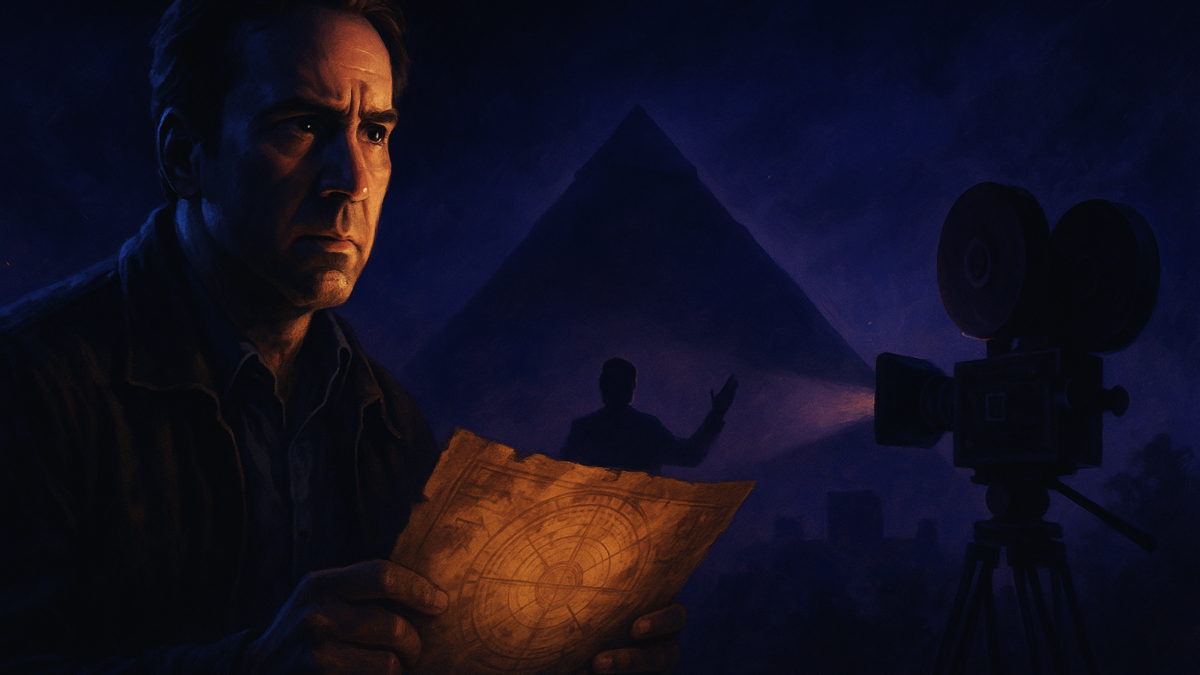
Disney’s long-dormant National Treasure franchise has taken its most concrete step forward in years, with director Jon Turteltaub confirming that National Treasure 3 is officially in development and that Nicolas Cage is expected to return as treasure hunter and historian Benjamin Franklin Gates.
Turteltaub, who directed both 2004’s National Treasure and 2007’s National Treasure: Book of Secrets, said the new film has a script that has been written and approved by Disney. Jerry Bruckheimer, who produced the earlier movies, is also attached, reuniting the core creative figures behind one of the studio’s most durable live-action adventure properties.
The update does not mean cameras are ready to roll immediately. Like many studio projects in the current marketplace, National Treasure 3 remains subject to scheduling, budgeting, talent availability and the shifting priorities of a company balancing theatrical releases with streaming ambitions. Still, the confirmation represents a significant breakthrough for a sequel that has been discussed for well over a decade without moving decisively into production.
For fans, Cage’s return is the central development. His portrayal of Gates — an earnest, puzzle-solving adventurer with a deep reverence for American history and a knack for impossible clues — became one of the actor’s most broadly accessible roles. While Cage has spent recent years on a critically admired run of independent and genre projects, including work that has reasserted his reputation as one of Hollywood’s most unpredictable performers, National Treasure remains one of his biggest mainstream franchises.
The first two films were major commercial performers for Disney. The original National Treasure turned historical conspiracy, family-friendly action and old-fashioned clue-hunting into a box office hit, while Book of Secrets expanded the mythology and ended with an unresolved tease involving the mysterious “Page 47” of the president’s book. That dangling thread has lived on as a fan obsession, especially as sequel chatter repeatedly surfaced and faded.
A Franchise Disney Never Fully Put Away
The timing of the new movement is notable. Hollywood studios are once again leaning heavily on known intellectual property, particularly brands that can play across generations. National Treasure sits in a commercially appealing lane: recognizable but not overexposed, nostalgic but not tied to superheroes or fantasy universes, and flexible enough to support theatrical spectacle without requiring the visual-effects spending of larger tentpoles.
Disney has already tested the brand in the streaming era with the Disney+ series National Treasure: Edge of History, which introduced a new cast and expanded the franchise’s mythology. The show kept the property active but did not replace audience demand for Cage’s Benjamin Gates. A third feature would signal that the studio still sees value in the original formula, particularly as theatrical distributors search for adventure films that can draw families and adults without relying solely on animation or comic-book branding.
That matters because the mid-budget, star-driven adventure movie has become increasingly rare. The original National Treasure films arrived at a moment when studios were still regularly backing live-action theatrical movies built around movie stars, puzzles and practical chase sequences. Today, those projects often migrate to streaming or require an established brand to justify a wide release. National Treasure 3 benefits from having both a known title and a returning star with renewed cultural currency.
Cage’s involvement also gives the project a marketing advantage. In the years since Book of Secrets, the actor has become the subject of a full-scale career reassessment, embraced by younger audiences through viral fascination and by critics through performances in films such as Pig and Dream Scenario. A return to Benjamin Gates would not simply be a sequel play; it would be positioned as a major studio homecoming for an actor whose career has never followed a predictable path.
The Creative Challenge
The biggest question for Turteltaub and Bruckheimer is how to modernize the franchise without stripping away its appeal. The National Treasure movies worked because they treated their historical riddles with sincerity, even when the plotting veered into the outrageous. Their tone was lighter than The Da Vinci Code, more family-oriented than Indiana Jones, and built around the pleasure of watching smart characters connect impossible dots.
A third film will need to account for nearly two decades of change in audience expectations, technology and the political climate surrounding American history. A story built around founding documents, secret societies or government mysteries now lands in a different cultural environment than it did in 2004. That gives the filmmakers an opportunity to deepen the franchise’s perspective, but it also requires a careful balance: too much reinvention could alienate fans, while too little could make the sequel feel like a relic.
Disney’s approval of a script suggests that the studio believes there is a viable path forward. No official plot details, production start date or full cast list have been announced. It also remains unclear whether original co-stars such as Diane Kruger, Justin Bartha, Harvey Keitel or others will be part of the next chapter. Bartha appeared in Edge of History, helping maintain continuity with the films, but the feature’s final ensemble has not been confirmed.
Bruckheimer’s continued attachment is another important signal. The producer has a long history of shepherding large-scale commercial entertainment, and his recent success in helping revive legacy brands has made him a key figure in Hollywood’s current sequel economy. His presence gives National Treasure 3 institutional continuity at a time when studios are especially cautious about revivals that depend on tone, casting and audience trust.
Why It Matters
The confirmation of National Treasure 3 is more than a nostalgia headline. It reflects the broader industry push to reactivate recognizable franchises that can function outside the superhero cycle. If Disney can bring Cage back in a story that feels event-sized and contemporary, the film could fill a valuable space in the marketplace: a four-quadrant adventure built on mystery, history and star appeal.
It also gives Disney a chance to reestablish a live-action theatrical brand at a time when the company is reassessing how best to deploy its biggest properties. Not every legacy title can support a comeback, but National Treasure has retained enough goodwill to make a third installment feel less like a forced revival and more like unfinished business.
What Happens Next
The next major steps will be locking the final production plan, confirming the returning cast beyond Cage, and setting a timetable that works for Disney, Turteltaub, Bruckheimer and the actors. Until the studio formally dates the film or announces a start of production, the project remains in the development stage.
Even so, after years of speculation, National Treasure 3 is no longer just a fan wish or an occasional interview tease. With a script approved and Cage back in the fold, Benjamin Gates is closer than ever to reopening the map.