
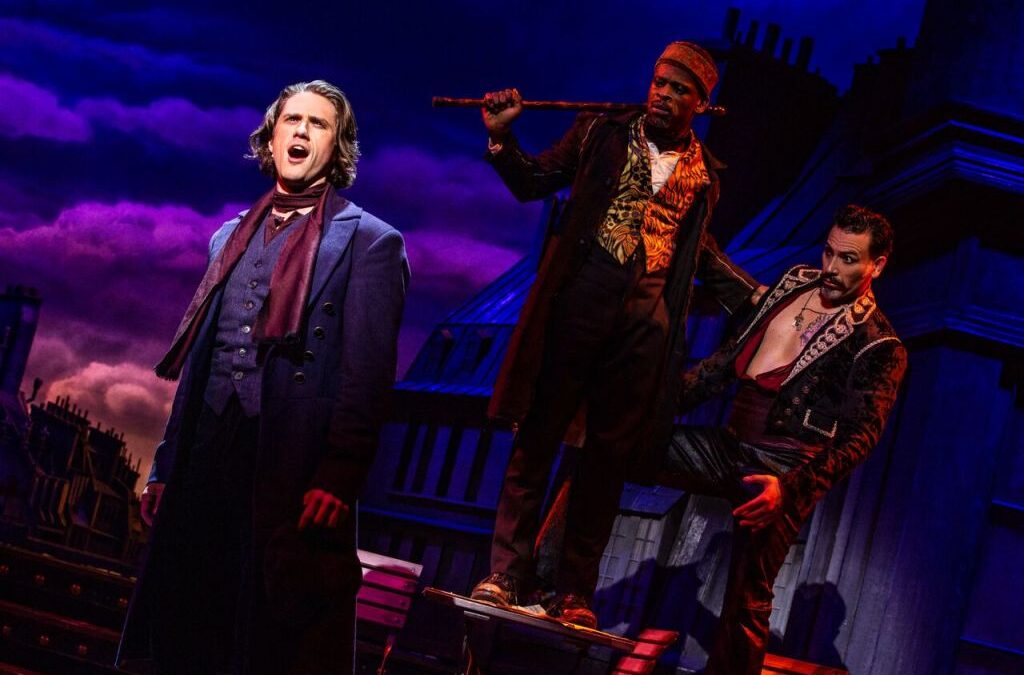
Moulin Rouge! The Musical took its final Broadway bow over the weekend with a last burst of commercial power, turning its farewell frame into one of the standout stories in the latest Broadway box office cycle.
For the week ending Aug. 30, 2026, the Tony-winning musical drew heightened demand at the Al Hirschfeld Theatre as longtime fans, tourists and repeat customers moved to catch the production before the curtain came down. The closing-week surge gave Broadway a timely late-summer boost and underscored the enduring appeal of a show that arrived as a high-gloss screen-to-stage gamble and departs as one of the defining commercial musicals of the post-2010s era.
The strong finish matters because closing weeks are not always guaranteed windfalls. Some long-runners limp to the end after discounting, softened advance sales or cast turnover. Moulin Rouge!, by contrast, exited with the kind of urgency producers hope for when a recognizable title becomes an event again in its final days. The last chance to see the Broadway staging helped convert sentiment into ticket sales, reminding the industry that a well-managed farewell can still create meaningful box office momentum.
Based on Baz Luhrmann’s 2001 film, the stage adaptation opened on Broadway in 2019 and quickly established itself as a premium attraction. Its mix of pop catalog spectacle, ornate design and immersive nightclub energy made it an easy sell for tourists while also giving theatergoers a production that felt big in the traditional Broadway sense. The show later won the Tony Award for best musical, among other honors, and became a major example of how familiar movie intellectual property can be reshaped for the stage without feeling like a simple copy of the source material.
Its Broadway run also became a case study in resilience. Like the rest of the industry, Moulin Rouge! was halted by the pandemic shutdown, then returned into a market that had changed dramatically. International tourism was slower to recover, group sales became less predictable, and production costs climbed across the sector. Maintaining a large-scale musical with an expensive physical production and a substantial company became a tougher proposition than it had been before 2020.
That is part of why the final week’s box office performance is notable. It was not merely nostalgia for a familiar title; it was a signal that audiences still respond to lavish, appointment-style Broadway entertainment when the marketing hook is clear. In an environment where producers are increasingly cautious about capitalization, running costs and recoupment timelines, the show’s late strength offers a useful reminder that spectacle remains one of Broadway’s most durable currencies.
The broader weekly grosses also arrive during a transitional stretch for the commercial theater business. Late August can be uneven, with summer tourists departing, families turning attention to the school calendar and new fall productions still preparing to enter the marketplace. A major closing can concentrate attention and spending, but it also leaves a vacancy that the industry will watch closely as landlords and producers position the theater for its next tenant.
Moulin Rouge! leaves behind more than an empty stage. Its run helped validate the current generation of film-based musicals that rely on brand recognition while aggressively updating the theatrical package around music, design and casting. Broadway has long mined Hollywood titles, but the show’s success came from leaning into excess rather than apology: it embraced the cinematic flamboyance of Luhrmann’s movie while building a live experience that audiences could not simply stream at home.
That distinction has become increasingly important as Broadway competes with concerts, sports, premium streaming and international travel for discretionary spending. The shows that break through now often offer a sense of occasion. Moulin Rouge! delivered that in abundance, from its red windmill and elephant set pieces to its mash-up songbook and high-velocity choreography. Even critics who debated the emotional depth of the adaptation generally acknowledged its technical confidence and audience-friendly polish.
The closing also highlights the life cycle of modern Broadway hits. A successful production today is not limited to its New York run. Touring companies, sit-down productions, international stagings, licensing prospects and cast recordings can extend the value of a property long after Broadway grosses stop being reported. For producers and rights holders, the end of the Broadway engagement may mark a shift in strategy rather than the end of the brand.
For the actors, musicians, crew members and front-of-house staff who kept the production running, the final performance marks the end of a significant chapter. Long-running shows become workplaces, training grounds and communities, particularly for replacement casts and backstage professionals who sustain the production after the original opening-night excitement fades. A strong final week does not erase the economic realities behind a closing notice, but it does allow a production to depart with public enthusiasm still visible.
Broadway will now absorb both the revenue bump and the loss of a proven draw. Theaters depend on a mix of new titles, established hits and limited engagements to maintain momentum. When a recognizable attraction exits, the pressure increases on incoming productions to capture attention quickly, especially heading into the fall corridor, when awards hopefuls, star vehicles and commercial musicals begin competing for media oxygen and premium ticket buyers.
What Happens Next
The Al Hirschfeld Theatre’s next booking will be closely watched, as any incoming production will inherit a venue associated in recent years with large-scale musical spectacle. Meanwhile, Moulin Rouge! is expected to continue generating value beyond Broadway through touring and international life, keeping the title in circulation for audiences who never made it to New York.
For Broadway producers, the takeaway is clear: even in a cost-conscious market, audiences will still pay for a theatrical event that feels urgent, recognizable and visually singular. Moulin Rouge! may have ended its Broadway run, but its closing-week performance ensures it leaves the boulevard with its commercial reputation intact.