
Why This Matters
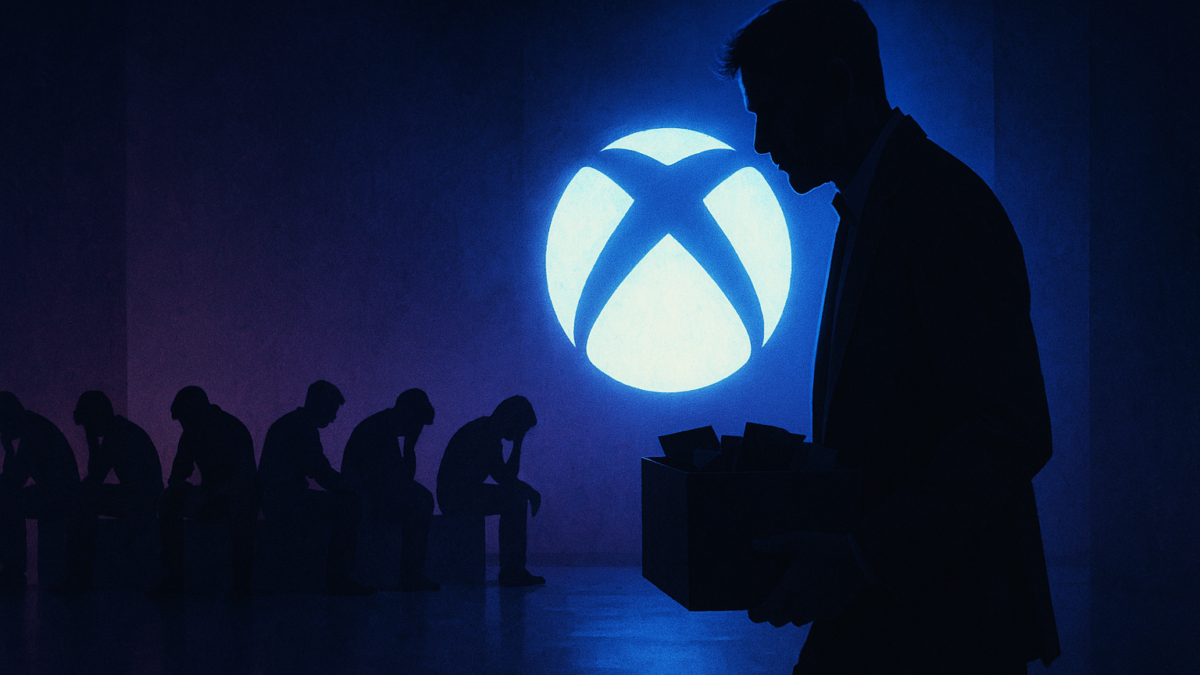
Microsoft’s decision to eliminate about 4,800 jobs, including a major contraction inside Xbox, marks one of the most consequential restructurings to hit the games business this year. While the total reduction represents roughly 2% of the company’s global workforce, the impact is far more concentrated in gaming, where approximately 3,200 positions are expected to be cut over the coming fiscal year.
For Xbox, this is not a routine trim. It signals a deeper reset of a division that has spent years chasing scale through subscriptions, studio acquisitions and cross-platform ambitions, while facing persistent questions about hardware momentum and the economics of blockbuster game development. The planned spin-off or sale of four game studios underscores how aggressively Microsoft is now reassessing what it owns, what it builds and what it can justify funding.
The move also lands at a moment when Microsoft is pouring vast resources into artificial intelligence, data centers and cloud infrastructure. That makes the layoffs especially notable: the company is not pulling back because it lacks capital. Rather, it is shifting capital toward the businesses it believes will define the next decade. For employees and creators inside Xbox, that means even successful franchises and experienced teams are not necessarily insulated from corporate reallocation.
Gaming remains one of the entertainment industry’s most valuable sectors, but it is also one of its most volatile. Large publishers are under pressure to deliver bigger games with longer lifespans, while audiences have become more selective about where they spend time and money. Microsoft’s cuts suggest that even a trillion-dollar technology giant is unwilling to keep subsidizing every part of its gaming operation at the same level.
The significance extends beyond Microsoft. Xbox is a major buyer, funder and distributor of interactive entertainment. When it reduces headcount, sells studios or narrows its development priorities, the ripple effects travel through contractors, middleware companies, marketing agencies, esports partners, streamers and licensing businesses. The decision could also affect the pipeline of new intellectual property at a time when film and television companies are increasingly looking to games for adaptable worlds and built-in fan bases.
Industry Context
The layoffs are part of a broader correction across the games sector after the pandemic-era boom gave way to slower growth, higher costs and more cautious consumers. Over the past two years, publishers and platform holders have cut thousands of jobs, canceled projects and closed or consolidated studios. The pattern has become familiar: companies expanded rapidly when engagement spiked, then moved to protect margins once growth normalized.
Microsoft’s situation is more complex because Xbox has been reshaped by one of the biggest acquisitions in entertainment history. The company’s purchase of Activision Blizzard gave it control of franchises including “Call of Duty,” “World of Warcraft,” “Diablo” and “Candy Crush,” dramatically increasing its gaming footprint. That deal was intended to strengthen Xbox’s content arsenal and accelerate its subscription and mobile strategies. But integrating a company of that size inevitably creates overlapping roles, competing priorities and pressure to show investors that the combined operation can become more efficient.
At the same time, the console business is no longer the simple center of gravity it once was. Xbox has leaned into a model that treats games as services available across consoles, PCs, cloud platforms and, increasingly, rival devices. Game Pass remains a central pillar of that strategy, but subscription economics in gaming are still evolving. Unlike streaming video, where audiences are accustomed to monthly access libraries, premium games often require years of development and hundreds of millions of dollars before they ever generate revenue.
That tension has become harder to ignore. The biggest releases can be enormously profitable, but misses are punishing. Delays, live-service failures and rising production values have made the business more capital-intensive. Meanwhile, players continue to spend large amounts of time inside a small number of established ecosystems, from “Fortnite” and “Roblox” to annualized sports titles and enduring multiplayer franchises. New games face a crowded market and a steep climb for attention.
Microsoft’s heavy investment in AI adds another layer to the restructuring. Across the tech industry, companies are rebalancing workforces as they spend more on machine learning infrastructure and automated tools. In entertainment, AI has become both a business opportunity and a labor flashpoint. Game development already uses advanced tools for testing, localization, animation support and production workflows, but the prospect of broader automation has raised concerns among artists, writers, engineers and designers about job security and creative control.
For Xbox, the challenge is to convince the market that the cuts are not merely defensive. The company must show that a leaner structure can still produce hit games, nurture creative talent and support long-running franchises. If the restructuring is perceived as weakening the studio system, it could undercut confidence among developers at precisely the moment Microsoft needs exclusive and high-profile content to justify its gaming strategy.
What Happens Next?
The immediate focus will be on which teams are affected, how the studio sales or spin-offs are structured and whether any announced or unannounced games are delayed, scaled back or canceled. Microsoft has indicated that the reductions will unfold over the coming fiscal year, which means the full impact may become visible gradually rather than in a single announcement.
Employees will be watching for clarity on severance, internal transfers and whether certain groups can be absorbed elsewhere inside Microsoft. Developers outside the company will be looking for opportunities to acquire talent, while competitors may move quickly to recruit experienced producers, engineers and creative leads from affected teams.
Investors are likely to evaluate the cuts through the lens of margins and strategic discipline. If Microsoft can reduce costs while keeping its biggest franchises on schedule, the restructuring may be framed as a painful but necessary adjustment. If it results in creative disruption or further uncertainty around Xbox’s identity, the decision could deepen questions about the division’s long-term direction.
The next major test will be messaging. Microsoft must reassure players that the Xbox ecosystem remains vibrant, reassure creators that it still values original game development and reassure Wall Street that its gaming business can coexist with its massive AI ambitions. In an industry built on long production cycles and fragile creative momentum, the true consequences of this overhaul may not be measured in the next quarter, but in the games that do—or do not—reach audiences over the next several years.