
Why This Matters
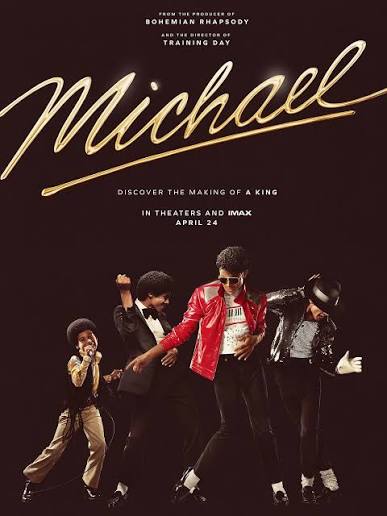
The biographical drama centered on Michael Jackson has crossed a remarkable commercial threshold, reaching $977 million at the global box office and moving past Oppenheimer as the top-grossing biopic in film history. For a genre that has often been viewed as awards-season territory rather than blockbuster real estate, the result is a major signal to studios: audiences will still show up in massive numbers for star-driven life stories when the subject carries genuine cultural weight.
Directed by Antoine Fuqua and starring Jaafar Jackson as his late uncle, the film’s performance is significant on several levels. It validates the long-standing commercial appetite for Jackson’s music, image and complicated legacy, while also turning Jaafar Jackson into one of the year’s most closely watched breakout performers. Casting a family member in the role was always going to draw scrutiny, but the box office suggests that audiences embraced the decision, or at least found it compelling enough to make the film an event.
The $977 million worldwide haul gives the film bragging rights over Christopher Nolan’s Oppenheimer, which previously set the benchmark with $965 million. That comparison is especially striking because Oppenheimer became a global phenomenon without relying on franchise branding, superheroes or conventional spectacle. For the Jackson film to overtake it underscores how powerful a familiar cultural figure can be when paired with a theatrical campaign built around nostalgia, music and curiosity.
The milestone also carries added weight because music biopics have become one of Hollywood’s most durable prestige-commercial hybrids. The genre offers studios a valuable combination: recognizable intellectual property, built-in soundtrack appeal and cross-generational awareness. In this case, the subject was not merely a famous recording artist but one of the most recognizable entertainers in modern history, giving the movie a global entry point few biopics could match.
Industry Context
Hollywood has spent the past decade recalibrating its definition of a theatrical hit. Superhero fatigue, uneven franchise returns and the rising cost of tentpole production have pushed studios to look harder at films that can feel like events without carrying the same visual-effects burden. Biopics, once treated primarily as awards vehicles, have increasingly become a serious commercial category.
Recent hits helped pave the way. Bohemian Rhapsody turned Queen’s catalog into a worldwide box office engine. Elvis reaffirmed that a stylish director, a transformative lead performance and a deep bench of beloved songs could bring older audiences back to cinemas while attracting younger viewers through social media discovery. Oppenheimer, though not a music biopic, proved that adult-driven historical drama could play at blockbuster scale when marketed as a must-see theatrical experience.
The Jackson film benefited from many of those same dynamics, but on an even larger canvas. Michael Jackson’s reach has always been unusually international, with songs, videos and stage imagery that cut across language barriers. That global familiarity likely helped the picture travel beyond the usual domestic-heavy pattern of many prestige dramas. The result is a rare biopic that did not simply perform well overseas, but appears to have been built for worldwide consumption from the start.
Fuqua’s involvement also positioned the movie as more than a straightforward cradle-to-fame portrait. The director, known for action, crime drama and muscular character-driven filmmaking, brought a commercial sensibility to material that could easily have become overly reverent or too narrowly focused on awards appeal. That balance between spectacle and biography is increasingly important in a marketplace where audiences expect theatrical scale, even from dramas.
At the same time, the film’s success does not erase the complexities surrounding its subject. Jackson’s legacy remains one of the most debated in popular culture, defined by extraordinary artistic achievement as well as decades of controversy. Any major screen treatment was bound to face questions over what it included, what it minimized and how it framed the man behind the icon. The commercial outcome shows that public interest remains enormous, but it does not mean the conversation around the film will be simple or settled.
For studios and rights holders, the lesson will be clear: music catalogs and celebrity life rights are likely to become even more competitive assets. Theatrical films can also drive renewed streaming, publishing and music consumption, making a successful biopic a multi-platform business rather than a one-off box office play. When a movie nears the billion-dollar mark, it becomes not just a hit, but a case study.
What Happens Next?
The immediate question is whether the film can push past the $1 billion mark, a threshold that would place it in an even more exclusive class and further strengthen the argument for adult-skewing event cinema. With $977 million already banked worldwide, the gap is narrow enough that holdover business, premium formats and any strategic re-expansion could make the difference.
Awards season will also be closely watched. Box office success does not automatically translate into major nominations, particularly for a film built around such a polarizing figure. Still, Jaafar Jackson’s performance is likely to remain central to the awards conversation, and below-the-line categories such as costumes, makeup, sound and production design could be strong areas of attention. Music-driven films often benefit from crafts recognition, especially when they recreate iconic performances and eras with precision.
For Jaafar Jackson, the movie marks a career-defining arrival. The challenge now will be whether he chooses to build a screen career outside the shadow of his family name or remains associated primarily with this singular role. Hollywood will be watching closely, because few debut opportunities come with this level of visibility or pressure.
For the broader industry, expect a fresh wave of development activity around major entertainers, athletes and public figures whose stories carry international recognition. Studios will be looking for the next subject who can combine nostalgia, controversy, music, fashion and emotional identification into a theatrical package. Not every life story can support a global blockbuster, but this result will encourage executives to try.
The film’s achievement ultimately reinforces a message the industry has been hearing more often: audiences do not only want franchises. They want reasons to gather, debate and experience something culturally familiar on a grand scale. In this case, one of pop music’s most enduring figures has delivered one of cinema’s most surprising box office landmarks.