
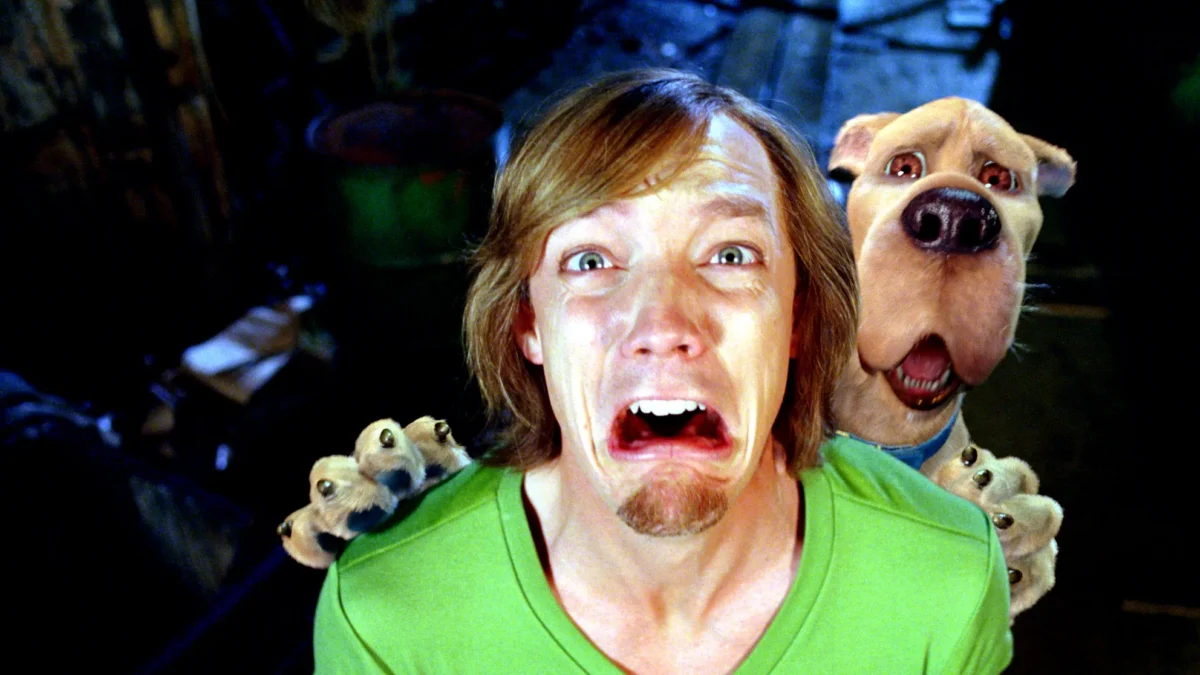
Source: This story originated with Variety.
Matthew Lillard says the collapse of his blockbuster ambitions after “Scooby-Doo 2: Monsters Unleashed” prompted a dramatic financial reset for his family, including selling their home and cars and moving toward a more affordable lifestyle.
Speaking with Variety’s Nick Stango for the publication’s “Know Their Lines” video series, Lillard reflected on the intense expectations he placed on the live-action “Scooby-Doo” franchise — and the difficult period that followed when its second installment disappointed.
Lillard landed the role of Shaggy in 2002’s “Scooby-Doo,” starring opposite Freddie Prinze Jr. as Fred, Sarah Michelle Gellar as Daphne and Linda Cardellini as Velma. The movie earned $275 million worldwide, leading Lillard to believe the role would propel him into the next phase of his career as a major movie star.
“I felt a ton of pressure to not suck,” Lillard told Variety. “It was the first big movie that I was in and it was a big opportunity for me.”
That early success did not produce the long-running trajectory he anticipated. After 2004’s “Scooby-Doo 2: Monsters Unleashed,” Lillard said his career entered a prolonged downturn. At the time, he feared he might become “one of those guys from the ’90s that never comes back.”
His disappointment became tied to the franchise itself. Lillard described his relationship with the movies as one of both affection and resentment, recalling that he blamed “Scooby-Doo” when he struggled to find work.
A major payday followed by a painful reset
The sequel delivered the largest paycheck of Lillard’s career, and that money ultimately helped him survive the difficult stretch that came afterward. While he resented the project for a time, he said he never regretted accepting it.
“The reality is that if I didn’t have the money I made in the second film, I wouldn’t have made it through,” Lillard said.
Even with that financial cushion, Lillard and his wife eventually made significant changes. He said they sold their cars and home, downsized their lives and arranged their expenses so they could live affordably. His wife also returned to work.
The experience forced Lillard to reconsider how he saw his place in the industry. Before the sequel, he said, he viewed himself as a prominent film actor because he was making multiple movies. The career slowdown challenged that self-image.
“I was always a character actor, and I thought I was more than that,” he told Variety, describing what followed as a “real humbling of Matthew Lillard” for which he is now grateful.
In an interview with Business Insider last year, Lillard similarly discussed the expectations surrounding “Scooby-Doo 2.” He believed the sequel would be a major success and make him No. 1 on call sheets for the next decade. Instead, he was unable to secure work as a leading man.
Lillard acknowledged that he had become consumed by the pursuit of celebrity. “I was caught up in this drive to be quote-unquote famous,” he said. Letting go of that goal became part of rebuilding his career as a character actor.
That shift brought opportunities he had not expected. Lillard continued voicing Shaggy in various animated “Scooby-Doo” movies while taking supporting parts in films including the Oscar-winning “The Descendants” and Clint Eastwood’s “Trouble With the Curve.”
ShowBiz Take
Lillard’s account offers a striking contrast between the public appearance of franchise success and the private consequences of unmet expectations. The first “Scooby-Doo” was a substantial worldwide earner, and the sequel gave him his biggest career payday. Yet the outcome he expected — a decade as a leading man — never arrived.
What makes his reflection especially revealing is that he does not cast the franchise as either a triumph or a disaster. He once blamed it for his stalled momentum, but the sequel’s paycheck also provided crucial support when work disappeared. The same experience that prompted resentment eventually pushed him to reassess his ambitions, accept his strengths as a character actor and rebuild on different terms.
For Lillard, the aftermath of “Scooby-Doo 2” was not simply a professional disappointment. It became a financial and personal turning point, one that required his family to downsize and led him toward a career identity he now views with gratitude.