
Why This Matters
Marvel Studios used its return to San Diego Comic-Con to send a clear message to fans, exhibitors and the broader entertainment business: the company is still betting big on event movies, legacy characters and the kind of theatrical spectacle that once made its Hall H presentations feel like industry holidays.
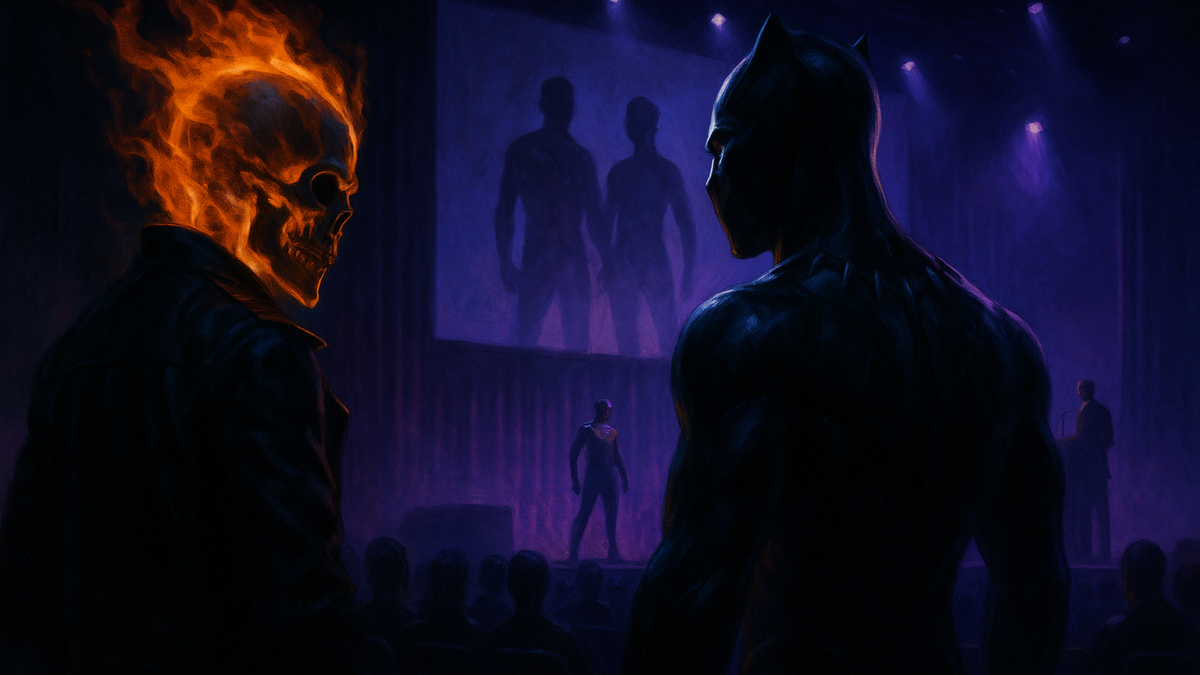
The studio’s Saturday presentation offered two major signals about its next era. First, Marvel confirmed a new “Ghost Rider” feature with Ryan Gosling attached to star and Shawn Levy set to direct, pairing one of Hollywood’s most bankable leading men with a filmmaker coming off major franchise momentum. Second, the studio laid out plans for “Black Panther 3,” dated for Dec. 15, 2028, with David Jonsson joining the Marvel universe as a new T’Challa, the son of the character previously played by the late Chadwick Boseman.
That combination of fresh casting, emotional franchise continuity and carefully timed spectacle is exactly the kind of news Comic-Con was built to deliver. For Marvel, however, the stakes are higher than a single crowd-pleasing panel. After years of rapid expansion across film and streaming, the studio has been working to recalibrate audience expectations, tighten its release strategy and restore the sense that each new project is an essential chapter rather than simply another entry in a crowded pipeline.
“Black Panther” remains one of Marvel’s most culturally significant properties. Ryan Coogler’s 2018 film became a global box office phenomenon and a landmark for representation in mainstream superhero cinema. Its sequel, “Black Panther: Wakanda Forever,” carried the additional burden of responding to Boseman’s death while preserving the world of Wakanda for future stories. Introducing a new T’Challa through the next generation gives Marvel a path to honor the original performance while allowing the franchise to move forward.
Jonsson’s casting also points to Marvel’s continued interest in rising talent with dramatic range. The actor has built momentum through acclaimed film and television work, and placing him at the center of Wakanda’s future suggests the studio is thinking beyond a one-off appearance. If the character is positioned as a central figure in the next phase of Marvel storytelling, “Black Panther 3” could become both a continuation and a reset.
The “Ghost Rider” announcement carries a different kind of importance. The character, a supernatural antihero with horror-western roots, gives Marvel access to a darker corner of its mythology at a time when comic book films are looking for tonal variety. Gosling’s involvement immediately elevates the project beyond a standard franchise revival, while Levy’s presence signals an approach likely to blend scale, humor and accessible genre filmmaking.
Industry Context
Marvel’s Comic-Con presentation arrives during a complicated moment for superhero entertainment. The genre remains one of the most reliable engines for global theatrical revenue, but audiences have become more selective. Familiar logos alone no longer guarantee the automatic turnout studios enjoyed during the peak years of interconnected franchise storytelling.
That shift has forced major players to become more deliberate. The emphasis now is on distinct creative packages, recognizable stars and projects that can be sold as events. In that respect, “Ghost Rider” is a savvy move. Gosling brings prestige, comedy chops and global appeal, while the character offers imagery that can cut through a crowded marketplace: flaming motorcycles, infernal mythology and a protagonist who operates closer to horror than traditional superhero adventure.
Levy’s hiring is equally telling. He has demonstrated an ability to handle effects-driven properties while keeping them broad enough for mainstream audiences. For Marvel, which has often balanced auteur voices with house-style demands, Levy represents a director who understands franchise machinery and fan service without losing sight of pace and personality.
“Black Panther 3,” meanwhile, represents the longer play. A 2028 release date places the film deep into Marvel’s upcoming calendar, giving the studio years to shape the character’s introduction, develop the political and emotional landscape of Wakanda and potentially connect the new T’Challa to wider Avengers-level storytelling. It also allows the company to preserve the franchise’s prestige positioning rather than rush it back into theaters.
The first-look footage from “Avengers: Doomsday” helped round out the presentation, giving fans a reminder that Marvel’s ensemble machinery is still central to its plans. Even as individual franchises evolve, the Avengers brand remains the connective tissue that can turn separate films into a larger box office proposition. Showing footage at Comic-Con allows Marvel to reignite speculation, dominate social conversation and reassure fans that the macro-story is still moving.
San Diego Comic-Con has long functioned as both a fan celebration and an unofficial shareholders’ showcase for the superhero business. A strong Hall H reception can generate weeks of online conversation, build confidence among theater owners and help reset the narrative around a studio’s direction. For Marvel, that matters. The company is no longer simply managing momentum; it is actively rebuilding anticipation.
The announcements also reflect a broader Hollywood trend: franchises are increasingly using legacy as a launchpad rather than a conclusion. Studios want continuity, but they also need new performers and new emotional access points. A younger T’Challa allows Marvel to keep one of its most important names alive inside the story without recasting Boseman’s version directly, a choice that could prove meaningful to fans who remain deeply protective of the actor’s legacy.
What Happens Next?
The immediate next step will be turning Comic-Con enthusiasm into sustained momentum. Marvel will likely keep details of both films tightly controlled while allowing casting, production schedules and creative teases to surface in carefully managed waves. Expect “Ghost Rider” to draw particular attention as fans look for clues about tone, rating ambitions and how deeply the film will engage with Marvel’s supernatural mythology.
For “Black Panther 3,” the conversation will be more emotional and more closely scrutinized. Marvel will need to communicate how the new T’Challa fits into Wakanda’s future, how the film honors Boseman’s legacy and what kind of hero Jonsson’s character is meant to become. The long runway to December 2028 gives the studio room to build that story thoughtfully.
In the shorter term, “Avengers: Doomsday” will serve as the next major test of Marvel’s renewed event strategy. If the footage shown at Comic-Con translates into broader audience excitement, it could help reestablish the sense of urgency that defined the studio’s most dominant years.
Marvel’s latest presentation did not merely add titles to a release calendar. It sketched out a future built on reinvention, remembrance and star-driven spectacle. Now the studio has to prove that the promise of Hall H can still become the kind of worldwide moviegoing moment that made Marvel the industry’s defining franchise machine.