
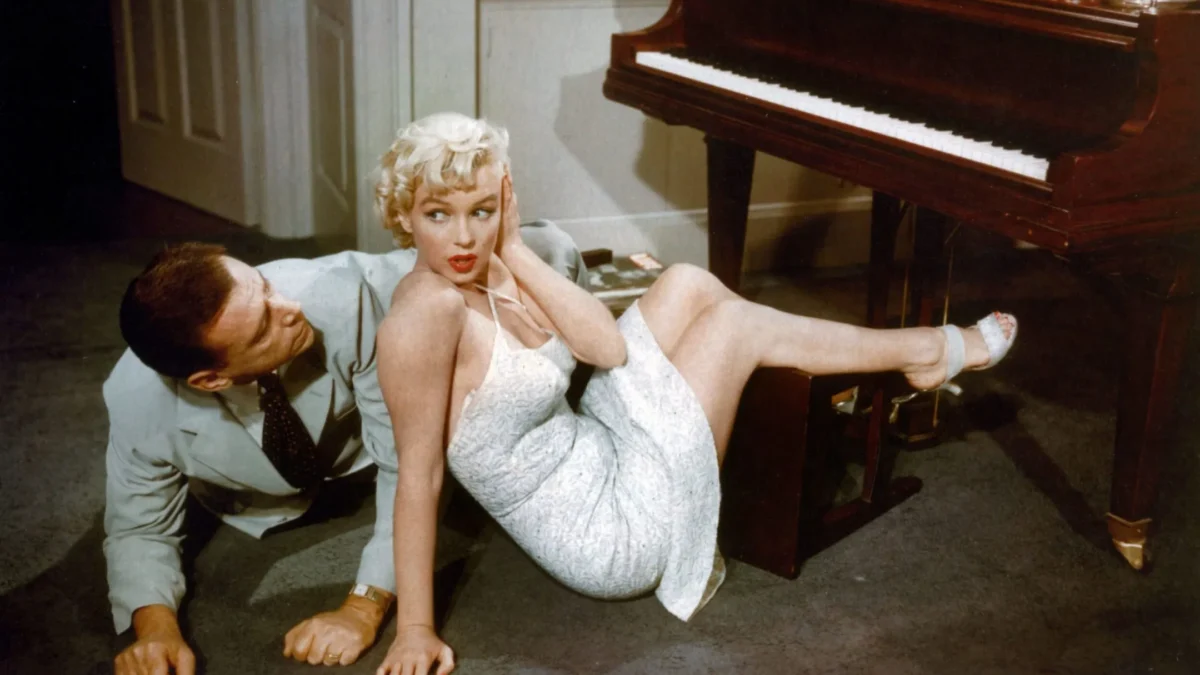
The Torino Film Festival is putting Marilyn Monroe’s dramatic range — not simply her enduring image — at the center of a 24-film retrospective marking the centenary of her birth in 2026.
Artistic director Giulio Base began developing the tribute soon after the previous festival and announced it shortly before the 2025 edition closed. The early reveal allowed Torino to stake its claim to the anniversary while giving the festival team a central theme around which to construct its next program.
“I really wanted to be the first to announce a retrospective,” Base says. “I knew this would be the anniversary year, and I knew others might be thinking the same.”
Building a portrait beyond the famous films
The lineup includes several of Monroe’s best-known movies, among them “The Seven Year Itch,” “How to Marry a Millionaire” and “Some Like It Hot.” But Torino is not limiting the retrospective to her own screen appearances.
Andrew Dominik’s “Blonde” and the Pier Paolo Pasolini and Giovanni Guareschi documentary “La Rabbia” are also part of a broader examination of how Monroe’s life, struggles and public image have been interpreted. That expanded approach was partly practical: Her relatively short career did not provide enough substantial leading roles to fill the entire schedule.
Base said the team did not want to program films in which Monroe appeared only briefly or without meaningful impact. Instead, the festival widened its focus to include works that celebrate her or investigate her life, dreams, traumas, problems and perceived faults.
“Screening a movie where she has only a scene that isn’t even relevant would be a pity,” he says. “So we decided to understand her complete legend.”
The result is intended to trace Monroe’s influence across the six decades since her death. That reach can be seen in selections connected to festival guests of honor Luc Besson and Mira Sorvino: Besson’s “Dogman” and Sorvino’s “Norma Jean & Marilyn” both feature in the program’s exploration of the star’s cultural afterlife.
Torino’s wider Monroe theme also intersects with honoree Pamela Anderson through their shared platinum-blond screen imagery. Another unexpected connection appears in the festival’s opening film, Roland Joffé’s “November 1963,” starring fellow Torino honoree John Travolta.
One sequence in the film takes its characters to a nightclub where a Marilyn impersonator is performing. Base recalled his excitement at discovering the moment, saying it helped bring the festival’s various programming choices together as “a complete piece and not just a mosaic.”
An icon designed to open the festival’s doors
For Base, the retrospective is also part of an effort to make Torino feel accessible beyond dedicated film circles. When he took over as director, he says, the event had a reputation for being prestigious but niche. Recognizable stars offered a way to welcome audiences who might otherwise feel disconnected from a specialist festival program.
Torino previously built retrospectives around Marlon Brando and Paul Newman. Base argues that major stars can provide an inviting point of entry for moviegoers who do not have extensive knowledge of film history.
“It’s important to have an icon, a symbol, a totem, that makes us feel we’re all equal,” he says.
Monroe’s case presents a different challenge from those of Newman and Brando. She did not reach old age, and her untimely death became an important part of how her legend developed. Base has therefore structured the retrospective to serve both audiences encountering her work for the first time and viewers whose impressions may be shaped primarily by her celebrity image.
He also wants the program to challenge assumptions about Monroe’s abilities and intellect. Recalling acting teacher Lee Strasberg’s description of her as the female Marlon Brando, Base characterized Monroe as profound, literate and intellectually curious — a reader whose poetry, notes and diaries revealed dimensions that contrasted with the comic persona audiences often embraced.
“I hope the new generations will discover the great actress beyond the big icon,” he says.
ShowBiz Take
Torino’s approach matters because it refuses to treat a centenary as a simple greatest-hits presentation. By placing Monroe’s own movies beside later interpretations and films that reflect her continuing influence, the festival is examining both the performer and the mythology that grew around her.
It also gives Base a highly recognizable figure through whom to pursue his broader goal of opening a once-niche event to more moviegoers. Monroe’s fame may draw audiences in, but the festival’s stated ambition is to leave them with a deeper appreciation of her work.
What Happens Next?
Base already has ideas for 2027, although he is not ready to identify the subject or shape of another anniversary tribute. “I have ideas for 2027 already, but I won’t say anything now,” he says. “It’s too soon, and it’s not so simple, like with Marilyn.”