
The Fast & Furious franchise may be stuck in neutral, but Louis Leterrier is charging full speed ahead.
The French filmmaker behind Fast X and its long-gestating follow-up, Fast Forever, is releasing the genre-blending thriller, The Last House, on Aug. 7 via Netflix. He’s also about to wrap production on a sci-fi action thriller called Liminal for Apple. On top of those features, the fourth season of Lupin, the Netflix series he co-showruns, drops in October. He even launched a production company known as Carrousel Studios with his Lupin lead, Omar Sy, and The Last House EP, Thomas Brenski.
The Last House chronicles the Delgado family — led by Wagner Moura’s Jason and Greta Lee’s Ann — as they try to raise their two children inside their house that has been mysteriously sealed shut, leaving them with no way out. One might assume that a film set almost entirely within a single residential home would be far easier to pull off than the globe-trotting spectacle of the Fast franchise and the constant management of its massive movie star ensemble. Yet Leterrier says the genre exercise about coexistence and mercy was the most challenging film of his career.
“The Last House was the most difficult film I’ve ever done. You have no idea. It was awful,” Leterrier tells The Hollywood Reporter. “I tried to make everything practical. We built a real house … and a whole neighborhood on stage. And as the movie evolves, the house evolves. So it was very technical and very difficult, but I loved every second of it. I love it now [that we’re done]. Every day, the cast and crew looked at each other and were like, ‘Oof, this is a tough one.’”
As for the 11th, and series-capping, installment of the Fast Saga, Leterrier insists he’s still attached regardless of his busy schedule. As has been widely reported, he confirms that Fast Forever’s budget remains the biggest hurdle.
When Furious 7 (2015) and The Fast of the Furious (2017) became billion–dollar grossers — largely due to China driving nearly $400 million-worth of ticket sales — the creative team continued to up the ante, adding more and more ambitious sequences, as well as star power. However, the last three entries, including the spinoff Hobbs & Shaw, have regressed to an average around $730 million worldwide, and China’s attendance, in particular, has fallen 45 percent to 65 percent. Thus, the producers have to find a creative way to split the difference given how unpredictable the box office is these days.
In any event, Leterrier is eager to get started despite not reading a script yet, but he also can’t spin his wheels until the Fast brain trust and studio get their ducks in a row.
“I can’t wait, but I also cannot wait. Directors don’t idle well, so I have to direct [other projects until then]. I love this franchise, and I hope we get to finish in the best way possible,” Leterrier says. “I’m contracted. [If] we go, we go. We’re lucky to be having a great year [at the box office], but it’s different now. Movies have evolved and tastes have evolved and the box office has evolved. So we have to align our budgetary needs to the reality of the box office. We know that, and it’s fine. Everybody does that. It’ll be fine.”
Below, during a conversation with THR, Leterrier also discusses the inspirations behind The Last House, as well as its format shift from 35 mm to digital midway through the piece.
****
We last spoke for Fast X, and you obviously went all over the world to film that movie. Did the rigor of that globe-trotting production make a contained movie like The Last House all the more appealing?
Yeah, absolutely. But I didn’t know that my wish would become a nightmare. The Last House was the most difficult film I’ve ever done. You have no idea. It was awful.
How come?
Because I tried to make everything practical. We built a real house with wild walls and a liftable ceiling, and we could light it easily. It was one-way concrete and wood. We built a whole neighborhood on stage. The garden, rain and animals were real. There was one dog, but the rest were wild animals that acted like wild animals. And as the movie evolves, the house evolves. So it was very technical and very difficult, but I loved every second of it. I love it now [that we’re done]. (Laughs.) Every day, the cast and crew looked at each other and were like, “Oof, this is a tough one.”
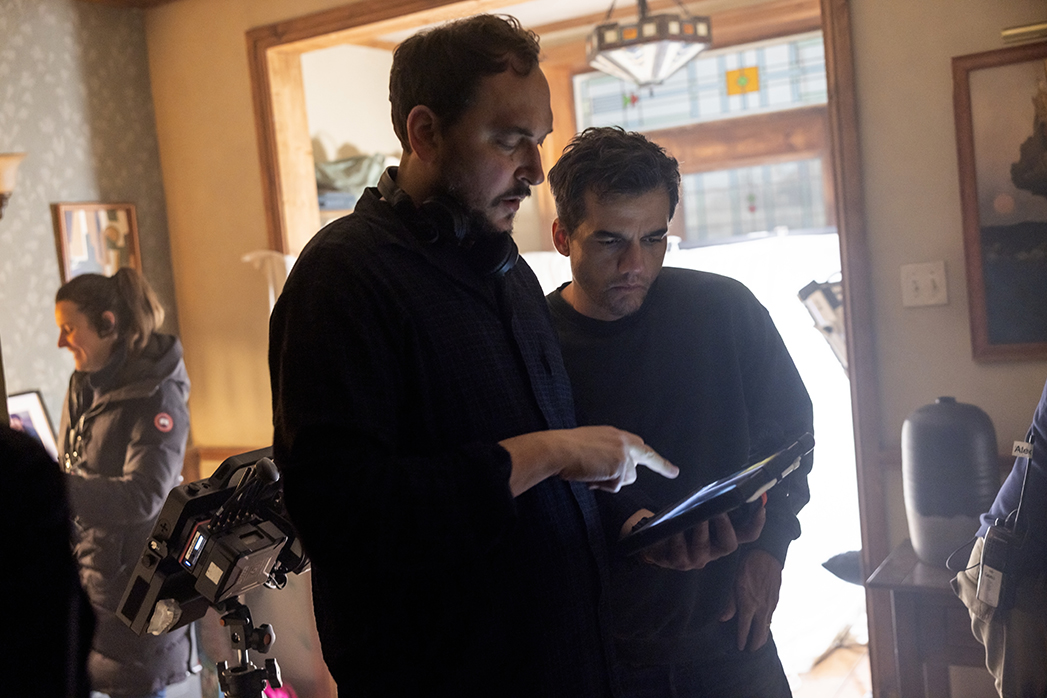
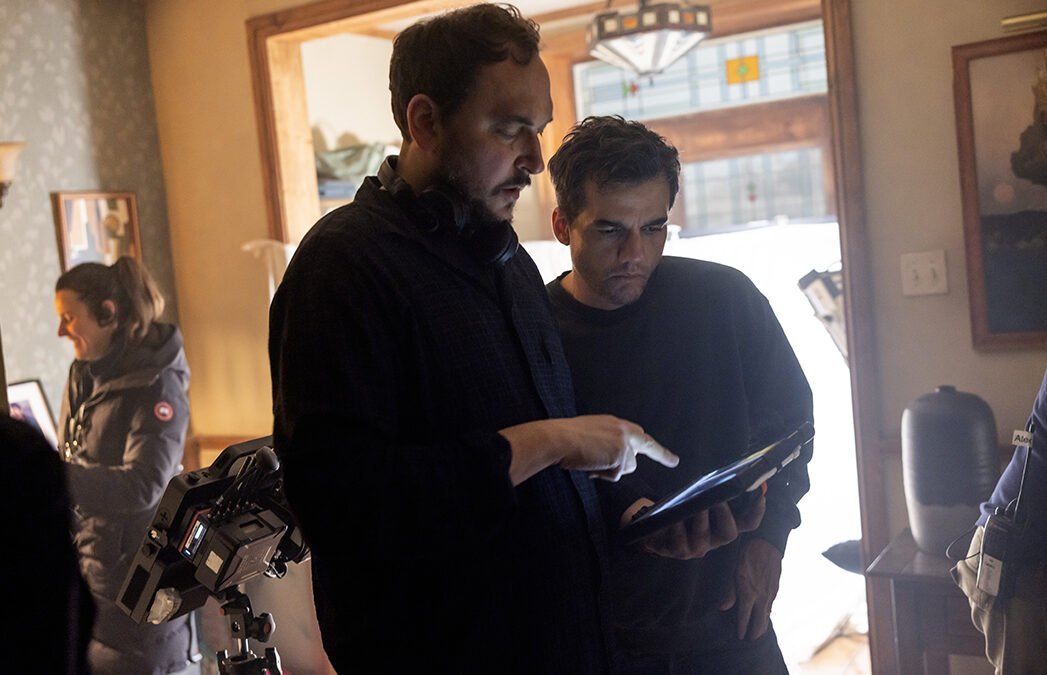
Director Louis Leterrier and star Wagner Moura on the set of The Last House
Chris Baker/Netflix
Most directors start their careers with something tied to a single location, but you did two decades of globe-trotting before finally doing a contained movie.
We’re better when given a box, and I literally gave myself a box. If you’re given parameters that are a little contained, you think about your shots and the acting a bit more or a bit differently. Obviously, I do this whenever I work on a big canvas, but it’s not as compromised. You have to trust your savviness and your instinct a little bit more than just putting five cameras on something and going.
I had to be very specific on this one because it was smaller and the budget was much smaller. It’s one of the smallest movies I’ve made, but it needed to be to make my first very personal movie. This one spoke to me when I read the first act. The script is quite different from the final movie, but when I read it, I was like, This movie is talking about me as a human being, as a father, as a family member and as a member of society. So I was willing to let go of the super giant production to go a little tighter.
What were your points of reference?
I wanted to capture that feeling of a dark 1980s Amblin or Spielberg movie: Close Encounters of the Third Kind, Poltergeist and E.T. These movies spoke about us, and they certainly spoke to me because I experienced the world through giant screens. So I tried to capture that feeling with this one — and by mixing formats. In the [intimate character-driven] first half of the film, we used spherical lenses on 35mm [à la E.T.], and then anamorphic C-series lenses on digital in the [more adventurous] second half.
The Last House makes the COVID pandemic look like a staycation. The Delgado family are literally stuck inside their house, and they have to survive on what they already have on hand. Did the writer Matthew Robinson birth this script during the pandemic?
I think the first act was born shortly after the pandemic. Matthew Robinson wrote it during a two-week fever dream. So the first act stayed pretty much the same, but then it evolved a little bit. I didn’t want to make a COVID movie, but I did want to make a movie that spoke about our universal experience during the pandemic. The first month was surviving physically and feeding yourself and trying to protect yourself. But it very quickly evolved into surviving psychologically, mentally and emotionally. I think we’re still reeling from it. As a society, we don’t interact the way we used to interact before COVID. That’s where our movie begins, and we can jump through the exposition much quicker to get to the characters.
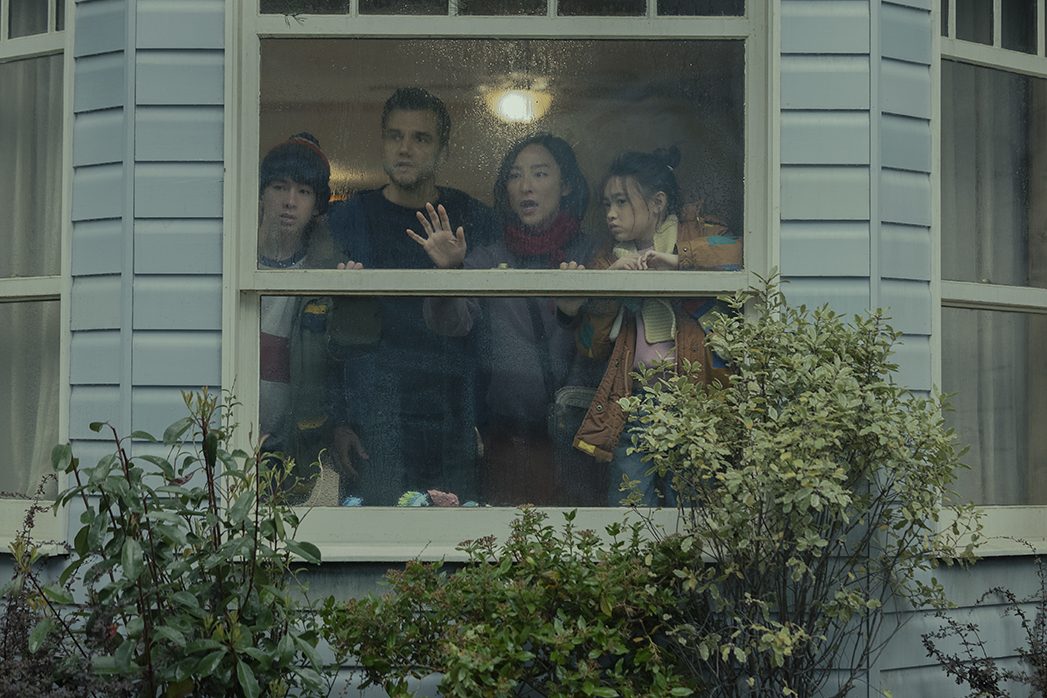
Noah Alexander Sosnowski as Graham, Wagner Moura as Jason, Greta Lee as Ann, Riley Chung as Ruth in The Last House
Chris Baker/Netflix
As I was watching, I kept wondering if you shot sequentially because the story and structure really support that ultra-rare scenario. I’ve since learned that you did actually shoot in order. Was that a requirement for you?
It would’ve been impossible to do it otherwise because we only had one house. It was shot in sequence, but we planned it backwards. We peeled back layer after layer. Again, because I’m an insane person, I was all about the practicality of everything. I didn’t want anything to be brought into the house later that wasn’t in the house at the beginning. So I couldn’t come up with an act two idea, such as, Let’s put a car here or a bike there. Everything that they use and consume had to be seen from the start.
We consulted survival experts to calculate how much wood they could remove from the walls to heat themselves or build something they needed over the course of [six or seven] years. And everything in the house worked. The hunting traps were built practically out of Dyson vacuum cleaners and skateboards. We could literally go hunting if we wanted. We didn’t, obviously, because those wild animals were fine, but the traps worked perfectly. Everything was just done so perfectly. Our production designer, Kevin Jenkins, and his team worked so hard at making the house and the contents of the house so perfectly real.
Thanks to Jane Petrie’s costume department, the sweatshirt that Greta Lee wears in the beginning becomes something else in the middle and then becomes a fishing line at the end. We had one sweater, and we just took it apart.
Not to mention, our poor actors had to gain weight and then lose weight and muscle to feel really weak. Then they had to gain weight again and be aged up. All of that stuff took a toll on them, but they did it willingly and amazingly.
Fast Forever, or Fast 11, has taken so long that you’ve made two other movies in that time. Are you still going to wait it out? Or have you run out of patience?
No, I love Fast. I worked very hard in coming up with the idea for the end and everything. I was so lucky to be a part of the franchise. So I can’t wait, but I also cannot wait. Directors don’t idle well, so I have to direct. (Leterrier snaps fingers a few times to signify how he needs to keep directing projects.) I created a studio in Europe. We wrote and shot a season of Lupin, my show in Europe. I did two movies [The Last House and Liminal], and I’m doing another one. So I cannot wait. But I love this franchise, and I hope we get to finish in the best way possible.
So it’s a maybe at this point in time?
No, I’m contracted. [If] we go, we go. We’re lucky to be having a great year [at the box office], but it’s different now. Movies have evolved and tastes have evolved and the box office has evolved. So we have to align our budgetary needs to the reality of the box office. We know that, and it’s fine. Everybody does that. It’ll be fine.
***
The Last House premieres Aug. 7 on Netflix.