
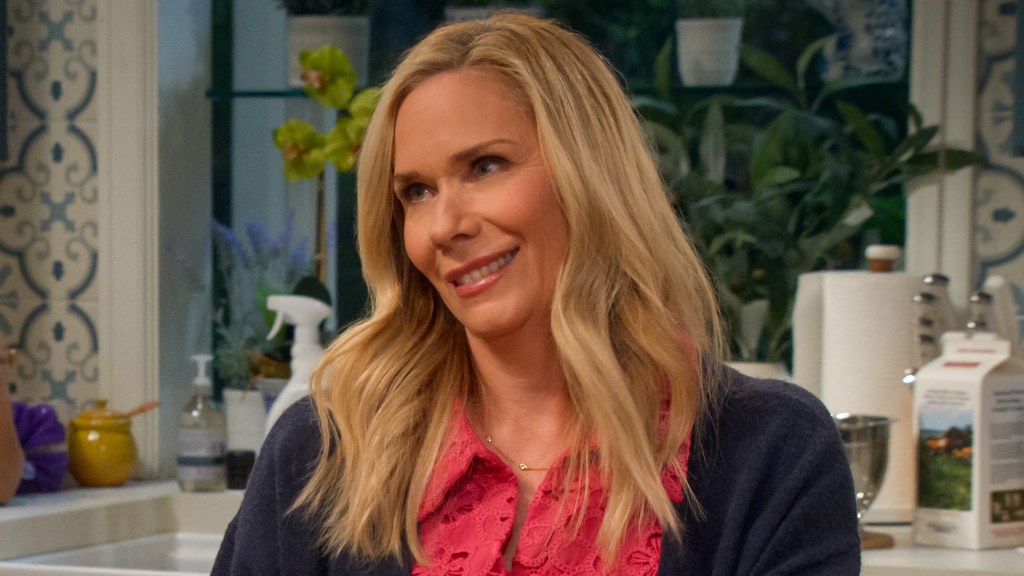
Leanne Morgan is using the rollout of Season 2 of her Netflix comedy to spotlight the team behind the scenes, praising the Los Angeles-based writers who helped translate her distinctly Southern point of view into a scripted series without sanding down what makes it specific.
With the new season of Leanne now streaming, Morgan has made clear that the show’s voice was not built by simply dropping regional expressions into a sitcom template. Instead, she says the process required patience, trust and what she described as “grace” as the room worked to capture the rhythms, humor and emotional directness that have long defined her stand-up.
For Morgan, whose comedy career has been built on stories about marriage, motherhood, menopause, family expectations and life below the Mason-Dixon line, authenticity is not a decorative detail. It is the product. The Netflix series leans into that same appeal, placing a woman with Morgan’s sensibility at the center of a streaming comedy at a time when the industry continues looking for performers who arrive with an established audience and a recognizable worldview.
The result is a notable case study in how a mainstream Hollywood comedy can be shaped around a performer whose voice comes from outside the traditional sitcom pipeline. Morgan did not emerge from the club scene in Los Angeles or New York in the way many television comics have. Her fan base grew through touring, social media clips and specials that resonated strongly with women who rarely saw their lives reflected as the engine of a TV comedy.
Capturing a Regional Voice
Writing for a performer like Morgan comes with a particular challenge. Southern humor is often misread on television as a collection of accents, food references and exaggerated manners. Morgan’s appeal, however, is rooted less in caricature than in observation: the way families communicate without saying the thing directly, the way politeness can mask panic, and the way a single aside can carry both affection and judgment.
That is where Morgan says the writers’ work became essential. The room had to find a way to serve a scripted structure while leaving space for the cadence that fans expect from her. Sitcom dialogue typically prizes efficiency; Morgan’s comedy often builds through storytelling, repetition and the slow reveal of a domestic truth. Bridging those modes is not simple, particularly when the creative team is working in a city far removed from the culture being portrayed.
Her praise for the writers also points to a larger issue in television comedy: voice is increasingly valuable, but increasingly difficult to preserve. Streamers want shows that feel personal and brand-specific, yet the machinery of production can push those shows toward familiar beats. When a series depends on a comic persona, the writers’ room has to function as both a joke engine and a translator, making sure the character sounds like the star without turning every scene into a stand-up routine.
Why It Matters for Netflix
For Netflix, Leanne fits into a broader strategy of building scripted projects around comedians and performers with loyal followings. The platform has invested heavily in stand-up, giving it a direct view of which comics can draw repeat viewers. Turning that connection into a narrative series is a natural next step, but it is also a tricky one. A successful special does not automatically become a successful sitcom.
Morgan’s series arrives at a moment when television comedy is searching for durability. Broadcast networks once dominated the family sitcom space, while cable and streaming pushed toward darker, more serialized half-hours. In recent years, the pendulum has shifted again, with audiences showing renewed interest in accessible comedies built around character, family and recognizable life stages.
That makes Morgan’s show more than a star vehicle. It represents a bet that there is still room for broad comedy that does not feel generic, and that middle-aged women — particularly those outside coastal cultural centers — remain an underserved audience with significant viewing power.
The success of that approach depends on tone. If the series feels too polished, it risks losing the intimacy that made Morgan popular. If it leans too heavily on niche references, it risks narrowing its appeal. The writers’ ability to meet Morgan in the middle is therefore central to the show’s creative identity.
A Different Kind of TV Star
Morgan’s rise also reflects a changing definition of who gets to anchor a television comedy. For decades, female comics were often pushed into narrow categories: young singles, workplace strivers, eccentric side characters or maternal figures supporting someone else’s story. Morgan brings a different profile — a woman whose life experience is not backstory but the main event.
That distinction matters in an industry still working to broaden representation beyond age, geography and class stereotypes. Morgan’s humor speaks to women who have raised families, navigated long marriages, endured personal reinvention and still want to be treated as funny, complicated and central. The series gives that audience a lead character whose concerns are not framed as outdated, but as deeply current.
It also gives Hollywood another reminder that specificity can travel. A Southern voice, when handled with care, does not need to be translated into something neutral. The details are often what make the material feel universal.
What Happens Next
With Season 2 now available, the immediate question is how strongly viewers respond to the show’s continued refinement of Morgan’s voice. Streaming comedies often need time to find their rhythm, and a second season can be where a performer-driven series either deepens its identity or reveals its limits.
If the new episodes connect, Leanne could strengthen the case for more star-specific comedies built around performers with regional roots and devoted audiences. For Morgan, it is an opportunity to prove that the voice that filled theaters can also sustain a continuing television world.
For the writers she is crediting, the season stands as a reminder that authenticity on screen is rarely accidental. It is written, rewritten and earned — sometimes with a little grace.