
Japanese cinema’s rising international profile took center stage Tuesday as Kering Women in Motion hosted a packed talk at Toho Cinemas Roppongi Hills, held in connection with the Tokyo International Film Festival.
Director Kore-eda Hirokazu, whose work includes “Shoplifters,” opened the event by reflecting on a notable change in how Japanese movies are discussed at film festivals around the world.
“In recent years, I’ve been hearing people at international film festivals say, ‘Japanese films are really interesting right now.’ That’s a sentiment we didn’t hear 10 years ago,” Kore-eda said.
He credited filmmakers including Hamaguchi Ryusuke and Fukada Koji, along with directors in their 20s and 30s who have taken their projects overseas, for steadily building recognition. Kore-eda also framed that growing attention as a responsibility, saying the older generation must consider how to carry the momentum forward and expand it further. Film fans encountering those works also have an important part to play, he added.
Japanese Cinema Through an International Lens
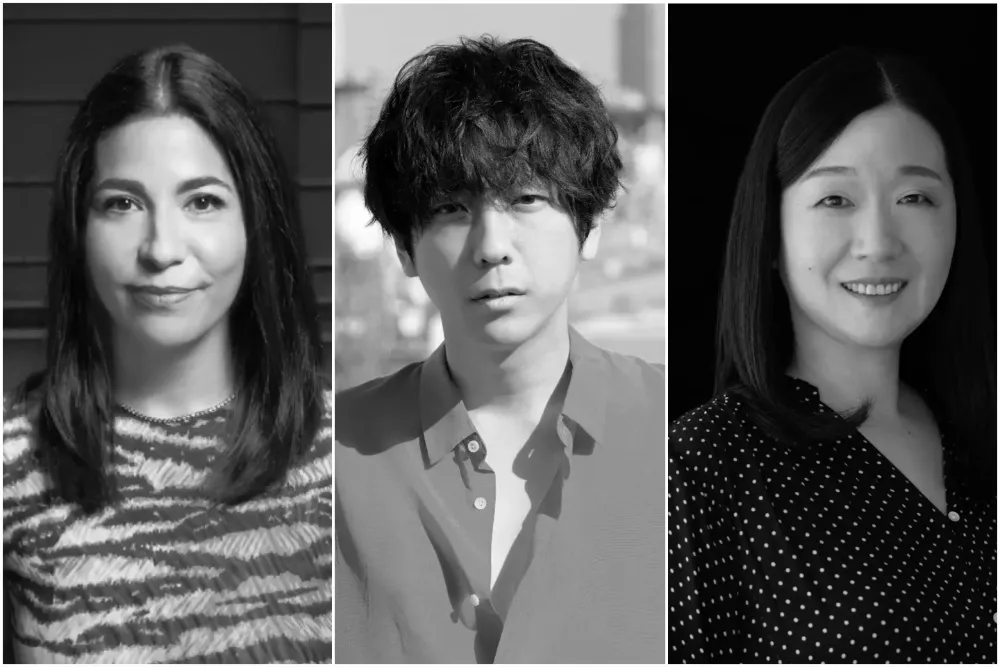
The discussion brought together Arashi singer and actor Ninomiya Kazunari, producer Murata Chieko and Amy Homma, director and president of the Academy Museum of Motion Pictures and Academy Collection. Journalist Tatsuta Atsuko facilitated the conversation, which covered the current state and future of Japanese film as well as diversity and inclusion across the industry.
Homma spoke about how her own identity shaped her understanding of culture and history.
“I’m a Japanese-American woman and I’m a Jewish American woman — and both of those cultures and ethnicities carry deeply long lineages of history,” she said. “I’m very lucky to have been raised with the awareness that multiple truths can exist at the same time.”
That perspective extended to the way Homma views national film traditions. American, Japanese and French film history can exist alongside one another without any one of them becoming more important than the others, she said.
For Homma, watching cinema outside a viewer’s own experience can deepen both empathy and cultural understanding. Taking a wider view of film history, she argued, gives audiences an opportunity to learn about lives beyond their own.
Lessons From Working Across Cultures
Ninomiya recalled the experience of appearing in Clint Eastwood’s Academy Award-winning World War II drama “Letters from Iwo Jima,” the starring role that first brought him international attention. The production exposed him to differences in working methods while also creating new opportunities to learn as an actor.
One distinction was the international crew’s readiness to ask questions, including how particular objects were used. According to Ninomiya, those exchanges could produce solutions through conversation rather than relying on a top-down explanation that risked leaving people confused.
Murata brought a producer’s perspective to the panel. She produced the 2025 kabuki-themed hit “Kokuho,” which drew strong reviews abroad and earned a Best Makeup and Hairstyling Oscar nomination.
Her creative goal, Murata said, is to make work that moves, amuses and brings tears to the largest possible audience. Reaching people on that scale requires tolerance for different cultural viewpoints, she added, warning that the worst outcome would be a world in which such tolerance becomes difficult.
Individuality as an Industry Strength
Homma also addressed inclusion from the standpoint of leading museum teams working across areas ranging from research to marketing. Her priority, she said, is identifying the best person for each role while ensuring that people’s cultural differences and distinctive qualities are recognized as assets.
“I don’t want anyone to shy or hide their individualism,” Homma said.
She described diversity across gender expression, ethnicity and age as a foundation of a strong team. Rather than centering a single outlook, Homma said the goal should be “plural thinking, not individual thinking.”
ShowBiz Take
The event placed Japanese cinema’s growing global visibility within a broader conversation about what sustains creative momentum. Kore-eda’s remarks made clear that increased international interest did not appear overnight: he linked it to filmmakers repeatedly bringing their work abroad and accumulating recognition over time.
Just as importantly, the panel connected that success to openness behind the scenes and among audiences. Ninomiya’s account emphasized the value of questions and collaborative problem-solving, while Murata and Homma focused on cultural tolerance, individuality and multiple perspectives.
The central challenge now, as Kore-eda described it, is how to pass the current momentum to another generation and widen its reach. For the filmmakers, performers, producers, cultural leaders and moviegoers represented in the conversation, the future of Japanese cinema is not only about gaining attention overseas, but also about creating the conditions for more voices and experiences to be understood.