
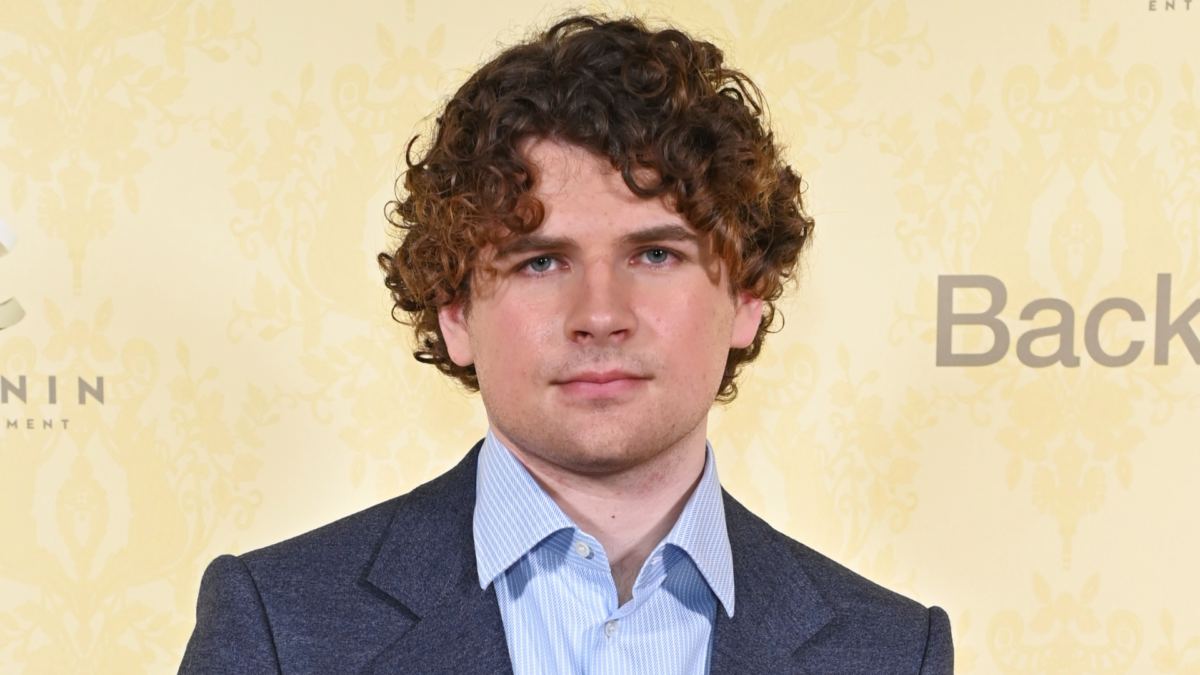
Kane Parsons says the first trailer for Backrooms tapped into years of online awareness — along with a pointed question from viewers wondering what Hollywood might do to the material.
Reflecting on the A24 film’s release at the Zurich Film Festival Summit on Saturday afternoon, the 21-year-old director said there was no firm sense beforehand of how audiences would respond. That changed when footage finally arrived and people familiar with his viral YouTube series became curious.
The trailer, Parsons recalled, “activated a desire to see: ‘How did Hollywood mess this up?’” Even simple curiosity helped draw attention, he said, adding that he believes the film honored the central idea viewers already knew.
That interest translated into major theatrical business. Released in May, Parsons’ feature directorial debut generated $401 million at the global box office. Its performance was highlighted during the Zurich discussion as evidence that younger audiences still have a strong appetite for going to the movies.
Why Parsons Does Not See ‘Backrooms’ as Traditional Horror
Despite the way the movie was positioned, Parsons said he does not regard Backrooms as a conventional horror project.
“I didn’t direct it like a horror film. I don’t view it as a horror project,” he said. In his view, horror offered a comfortable marketing framework and represented “the path of least resistance” when presenting the film to audiences.
Parsons indicated that he wants to remain detached from genre labels as he moves forward. He also suggested that having greater control over future projects could make those established structures less forceful.
Backrooms stars Renate Reinsve as therapist Dr. Mary Kline, who enters an alternate dimension after one of her patients disappears inside it. Chiwetel Ejiofor also stars. The movie adapts the YouTube series Parsons launched while he was a teenager.
Discussing its online roots, Parsons described Backrooms as a pre-existing but decentralized intellectual property. He argued that audiences are seeking something new and a break from what he characterized as cyclical cultural icons that repeatedly consume themselves.
YouTube’s Connection to Theatrical Audiences
Parsons appeared in the summit session “The Theatrical Box Office Resurgence! How to Get Audiences’ Attention in the Era of Social Media and Online Platforms?” He was joined by Academy CEO Bill Kramer, Mattel president and chief content officer Robbie Brenner and Sony Pictures Classics co-president Michael Barker.
The conversation examined the health of the 2026 box office during a year in which YouTube natives Parsons and Obsession filmmaker Curry Barker have risen to Hollywood prominence.
Kramer said one of his major lessons from the summer was realizing how closely YouTube and moviegoing could be connected. The relationship had emerged “in a way that I don’t think we thought was possible,” he said, calling the return of young people to cinemas a source of hope for the film industry.
As another sign of that demand, Kramer said more than half of ticket buyers at the Academy Museum are under 40 and that every screen sells out. Addressing Parsons directly, he credited the filmmaker with helping attract new fans during the summer.
The panel also challenged the idea that people around Parsons’ age simply prefer short-form material. Kramer called that characterization “reductive,” and Parsons agreed.
Although the pattern may be supported statistically, Parsons argued that short-form content is algorithmically incentivized and effectively weaponized. He said he does not believe most people enjoy having their attention pulled into a cycle dominated by increasingly brief content.
For Parsons, the response to Backrooms points instead to an audience willing to follow an idea from an online series into a full theatrical feature. The film’s $401 million global haul gave the panel a concrete example of social-media-era awareness feeding moviegoing rather than replacing it.
What Happens Next?
Parsons offered no confirmation that Backrooms will continue with a sequel. Asked about the possibility in Zurich, he kept his answer brief: “We’ll see.”
The 22nd Zurich Film Festival runs from Sept. 24 through Oct. 4.