
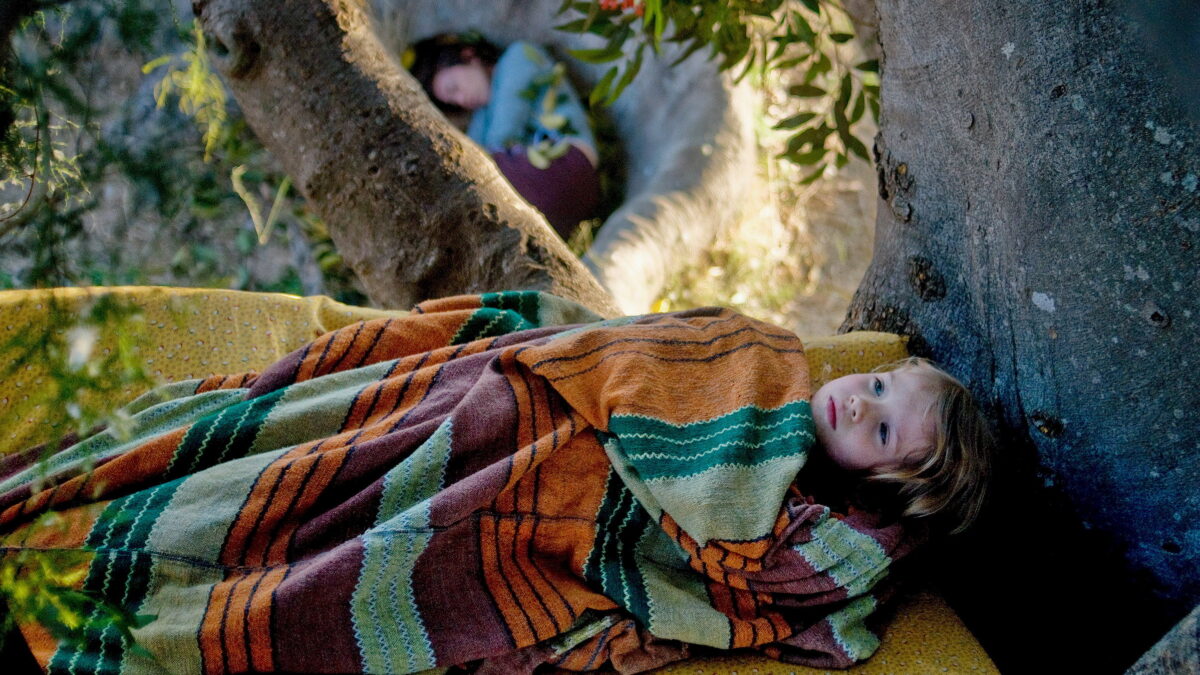
Julie Bertuccelli says her long-planned adaptation of Henning Mankell’s novel “Italian Shoes” collapsed after an unnamed Canadian producer took the project from her, bringing years of work to a painful end. The French filmmaker is now writing a new feature that she intends to shoot in India.
Bertuccelli discussed both projects during “From Witness to Change: The Social Responsibility of Documentary Cinema,” a masterclass at the International Film Festival of India in Goa. Indian filmmaker Haobam Paban Kumar moderated the session.
Answering a question from the audience, Bertuccelli said she began developing “Italian Shoes” five years earlier. She wrote the screenplay and cast the film, which was expected to shoot in Canada, before the pandemic stopped the production.
“In fact there is a bad Canadian producer who stole the film from me,” she said. Bertuccelli did not identify the producer and declined to provide the full account of what happened.
She said she ultimately had to cancel the adaptation after devoting approximately four or five years to it. “They stole from me, they stole, you know, the movie and I could not do it,” she said. “So it was very hard.”
Bertuccelli used the experience to offer encouragement to other directors in the room, describing filmmaking as a struggle that requires artists to continue working through doubt and depression. A director, she argued, must keep pursuing that creative desire rather than stop.
A New Story Set in India
Her next fiction project centers on a French woman living in Mumbai who is gradually losing her sight. Facing blindness, she embarks on one final journey with her son, who is half Indian and half French.
Bertuccelli said she plans to return to India to make the film. The IFFI visit marked her first time in the country, although she told the audience that she had admired its culture for years.
The filmmaker is also completing another documentary alongside “The Violin Lesson.” That film follows Rachel Routier, a violin teacher in Pantin, outside Paris. It aired on France Télévisions in September and is headed to French cinemas.
Bertuccelli hopes to present “The Violin Lesson” in Mumbai in the coming weeks, accompanied by either “The Tree” or “Since Otar Left.” “The Tree,” starring Charlotte Gainsbourg, closed the Cannes Film Festival in 2010 and screened at IFFI more than 15 years ago. Bertuccelli was unable to attend that earlier festival appearance because she was eight months pregnant.
Documentary, Responsibility and AI
Much of the Goa conversation focused on Bertuccelli’s belief that documentary filmmaking can directly affect people’s lives. Asked whether the form carries a social responsibility, she replied: “For sure there is a big responsibility because the film can change the life of somebody, you know?”
She cited “School of Babel,” her documentary following a class of children who had recently arrived in France. According to Bertuccelli, screenings for school groups changed how young viewers regarded immigrant classmates. She also said the film helped protect such classes while some were being closed.
Bertuccelli has supported documentary cinema beyond her own directing work. During two terms as president of La Scam, the French authors’ society for documentary makers, she created Cannes’ Golden Eye documentary prize. Indian recipients have included Payal Kapadia’s “A Night of Knowing Nothing” and Shaunak Sen’s “All That Breathes.”
She also founded La Cinémathèque du documentaire in Paris, which hopes to organize a retrospective devoted to Indian documentary.
On artificial intelligence, Bertuccelli acknowledged that the technology may be useful for limited jobs, including some sound work, but voiced strong objections to its broader use. She raised concerns about memory, independent thought, authors’ rights and AI’s ecological impact.
Documentary, in her view, offers an essential defense of reality because audiences enter into an understanding that what they are seeing contains truth. She predicted that “the 21st century will be the one of documentary.” Closing the session with a reference to the Lumière brothers’ operators filming everyday life around the world, she declared: “Cinema was born documentary and it will die documentary.”
ShowBiz Take
Bertuccelli’s account places a major professional setback beside a clear statement of persistence. The “Italian Shoes” adaptation had progressed through writing and casting before the pandemic and the later dispute ended her involvement, according to the director. Yet her response is not to step away from fiction filmmaking: she is developing another international story, this time built around Mumbai and a French-Indian family.
The India project also connects naturally with the broader themes of her IFFI appearance. Her comments linked filmmaking to cultural observation, social consequence and the obligation to keep working despite uncertainty. At the same time, her documentary projects and institutional work show that her next feature is only one part of an ongoing commitment to cinema grounded in real lives.
Bertuccelli spent about 15 years assisting directors including Krzysztof Kieślowski, Bertrand Tavernier and Otar Iosseliani before making her own documentaries. Her fiction debut, “Since Otar Left,” was shot in Georgia and won the Critics’ Week grand prize at Cannes and the César for best first film. Her documentary credits also include “Latest News From the Cosmos” and “Jane Campion, the Cinema Woman.”
What Happens Next?
Bertuccelli is continuing to write the Mumbai-set feature and plans to make it in India, though no production schedule or cast was announced. More immediately, she hopes to bring “The Violin Lesson” and one of her earlier fiction films to Mumbai in the coming weeks, while the documentary proceeds toward its French theatrical release.