
Why This Matters
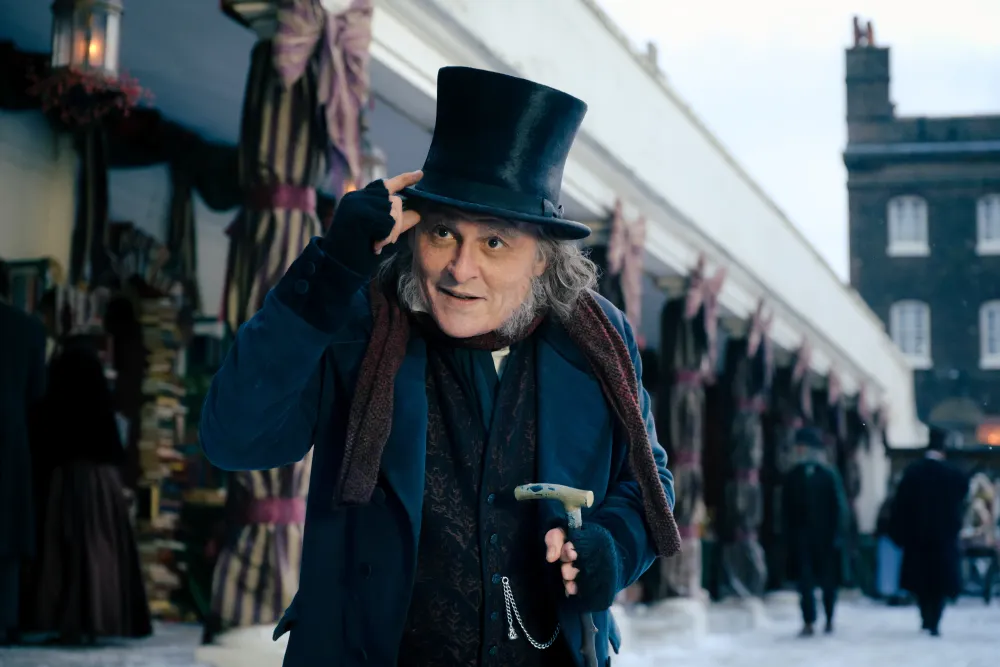
Paramount Pictures’ decision to cast Johnny Depp as Ebenezer Scrooge in its upcoming feature Ebenezer: A Christmas Carol marks a significant turning point for one of Hollywood’s most closely watched careers. The studio’s announcement, accompanied by the reveal of a first title poster, signals more than a single casting choice: it indicates that a major legacy studio is once again willing to place Depp at the center of a broad commercial release.
For Depp, the role represents his most prominent Hollywood studio vehicle since the fallout from his highly publicized legal battles with ex-wife Amber Heard. Those disputes, which included competing allegations, court proceedings and intense media scrutiny, reshaped the actor’s professional standing and led to a prolonged absence from the kind of large-scale studio projects that once defined his career.
Before that rupture, Depp was one of the industry’s most bankable and recognizable leading men, with a résumé that included the Pirates of the Caribbean franchise, Alice in Wonderland, Charlie and the Chocolate Factory and Fantastic Beasts: The Crimes of Grindelwald. His persona — eccentric, theatrical and commercially potent — made him a go-to performer for films built around heightened characters and global audience appeal.
Scrooge is an especially pointed role for a comeback of this scale. Charles Dickens’ miser is one of literature’s most famous redemption figures, a character defined by isolation, public judgment and the possibility of transformation. While studios rarely acknowledge symbolic casting in blunt terms, the choice is unlikely to be viewed as accidental by audiences, exhibitors or industry observers.
The move also matters because it reflects a broader recalibration in Hollywood’s risk tolerance. For years, studios have treated controversial stars cautiously, particularly when expensive marketing campaigns and family-skewing intellectual property are involved. Paramount’s investment suggests that the company believes Depp still carries substantial audience interest — and that potential backlash can be managed within a carefully controlled rollout.
Industry Context
Depp’s re-emergence at a major studio comes at a moment when Hollywood is aggressively mining familiar stories, public-domain characters and recognizable IP. A Christmas Carol remains one of the most adaptable properties in Western culture, with versions spanning prestige drama, animation, musical comedy, television specials and modern retellings. The Scrooge role gives actors a chance to lean into theatricality while operating inside a story with built-in awareness across generations.
That familiarity is commercially valuable. Studios are under pressure to reduce uncertainty at the box office, particularly as theatrical attendance remains uneven and streaming economics continue to shift. A Christmas-season release built around a known tale, a high-profile star and a visually marketable lead character offers Paramount a package that can be sold internationally without extensive explanation.
The casting also arrives after Depp spent recent years rebuilding visibility outside the traditional Hollywood studio pipeline. He appeared in European productions, attended major film festivals and resumed public appearances tied to music, fashion and film. Those steps kept him in the cultural conversation while allowing the industry to gauge public appetite without immediately committing to a major domestic studio campaign.
Hollywood has a long history of rehabilitating stars whose careers have been disrupted by scandal, controversy or legal turmoil, though the path back is never uniform. Some returns are driven by awards recognition, others by international box office strength, and others by the enduring loyalty of a fan base. Depp’s case is distinct because it unfolded during an era when celebrity legal proceedings became social media events, with public opinion moving rapidly and often combatively across platforms.
For Paramount, the decision will be measured not just by opening-weekend numbers but by the tone of the conversation around the film. Marketing a holiday movie built on redemption while navigating the baggage of its star will require precision. The studio will likely emphasize the Dickens material, the visual world of the film and Depp’s performance rather than the off-screen narrative that has followed him for years.
The project may also be watched closely by other studios considering whether to work with talent carrying reputational complications. If Ebenezer: A Christmas Carol performs strongly and avoids becoming overwhelmed by controversy, it could encourage more risk-taking. If the campaign becomes dominated by debate over Depp rather than the movie itself, it may reinforce the caution that has kept major companies at a distance.
What Happens Next?
The immediate focus will be on the rest of the creative package. Paramount has confirmed the film and Depp’s starring role, but further announcements regarding the director, supporting cast, release date and production schedule will determine how aggressively the studio intends to position the project. A prestige filmmaker or strong ensemble could help frame the movie as an event rather than simply a comeback vehicle.
Production design and tone will also be key. A darker, gothic interpretation could align with Depp’s established screen strengths, while a more family-oriented approach would test how broadly Paramount believes the film can play. The first trailer will be especially important, as it will provide the clearest indication of whether the studio is leaning into spectacle, sentiment or a more character-driven reinvention.
Expect the campaign to be closely managed. Depp’s press participation, festival appearances and interview strategy will likely be calibrated to keep attention on the film while avoiding unnecessary relitigation of past controversies. In the current media environment, even a holiday release can become a referendum on celebrity, accountability and audience forgiveness.
For Depp, the stakes are considerable. A successful studio return could reopen doors to franchise roles, prestige dramas and larger-scale commercial projects. A muted response would not necessarily end his screen career, but it would suggest that his strongest future may remain outside the center of the Hollywood studio system.
For Paramount, the film is both a seasonal bet and a reputational calculation. By placing Depp in one of the most enduring roles in English literature, the studio is inviting audiences to separate the performer’s screen presence from the turbulence that surrounded his career. Whether moviegoers embrace that invitation will become one of the more closely watched entertainment industry stories as Ebenezer: A Christmas Carol moves toward production.