
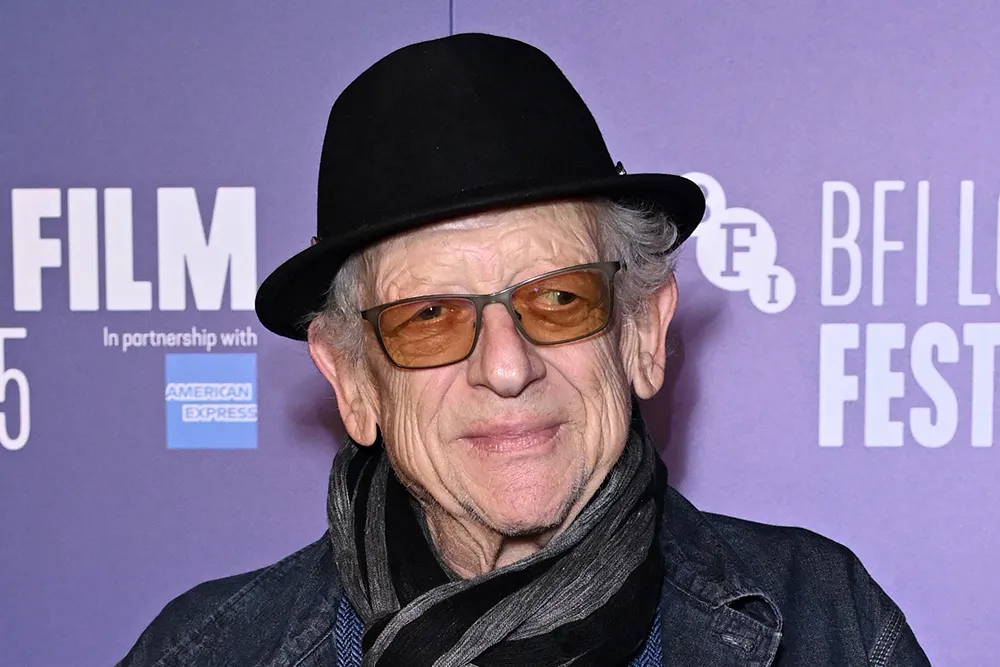
Jeremy Thomas, the London-born independent producer whose career stretched across more than half a century and more than 80 feature films, has died. He was 77.
Thomas was a defining figure in international independent cinema, known for backing ambitious filmmakers and building a body of work that crossed borders, genres and sensibilities. He founded the Recorded Picture Company and later Hanway Films, using both companies to support films from established auteurs and bold directorial voices.
His most celebrated triumph came with Bernardo Bertolucci’s “The Last Emperor,” which won the best picture Oscar in 1988. The film remains one of the central achievements in a producing career that also included collaborations with directors whose work helped shape modern art-house and independent film.
Among Thomas’ many credits were Jonathan Glazer’s debut feature “Sexy Beast,” David Cronbenberg’s “Crash,” Christopher Hampton’s “A Dangerous Method” and Nagisa Oshima’s “Merry Christmas Mr. Lawrence.” His producing partnerships extended to Jim Jarmusch, Takashi Miike, Werner Herzog, Terry Gilliam, Richard Linklater, Karel Reisz, Phillip Noyce, David Mackenzie, Jerzy Skolimowski, Ben Wheatley and Wim Wenders, with several of those filmmakers working with him across multiple films.
A producer still active on the festival circuit
Thomas’ work remained visible at major festivals up to the end of his life. Most recently, he produced Herzog’s “Bucking Fastard,” starring Rooney and Kate Mara, which premiered at the Venice Film Festival last week.
Another recent project, “Bad Lieutenant: Tokyo,” his latest collaboration with Miike, is due to world premiere at the current Toronto Film Festival on Sep. 14.
Thomas’ long relationship with cinema’s international festival world was also reflected in documentaries about his life and his collaborators. In 2021, he came to Cannes as the subject of Mark Cousins’ documentary “The Storms of Jeremy Thomas,” which recounted his many trips to the festival and his work as a producer. He also recently appeared in Luca Guadagnino’s documentary “Joie De Vivre,” which premiered in Venice and focuses on the cinema, art and life of Bertolucci.
In 2006, Thomas received a European Film Award for Outstanding European Achievement in World Cinema, one of the major honors recognizing his impact beyond the British film industry.
From cutting rooms to Cannes
Thomas was born in London in 1949 into a filmmaking family. His father, Ralph Thomas, directed many “Doctor” films, while his uncle, Gerald Thomas, directed all of the “Carry On” films.
He entered the industry immediately after leaving school, working in cutting rooms on films including “The Harder They Come” and “Family Life.” He eventually rose to edit Ken Loach’s 1973 TV short “A Misfortune.”
Although Thomas initially wanted to direct, he moved into producing. His first producer credit was the 1976 feature “Mad Dog Morgan,” made in Australia for director Phillipe Mora.
After returning to the U.K., Thomas produced Skolimowski’s 1978 horror film “The Shout,” the first film under his newly launched Recorded Pictures Company banner. The movie went to Cannes, competed for the Palme d’Or and won the Grand Prix de Jury prize, signaling the beginning of Thomas’ long association with ambitious international cinema.
Across the decades that followed, Thomas built a career defined less by a single genre than by a commitment to filmmakers with strong personal visions. His filmography connected him with directors from Europe, Asia, Australia and beyond, and his companies became associated with independent production on a global scale.
With more than 80 features to his name, an Oscar-winning landmark in “The Last Emperor,” and recent films still moving through Venice and Toronto, Thomas leaves behind one of the most distinctive producing legacies in modern cinema.