
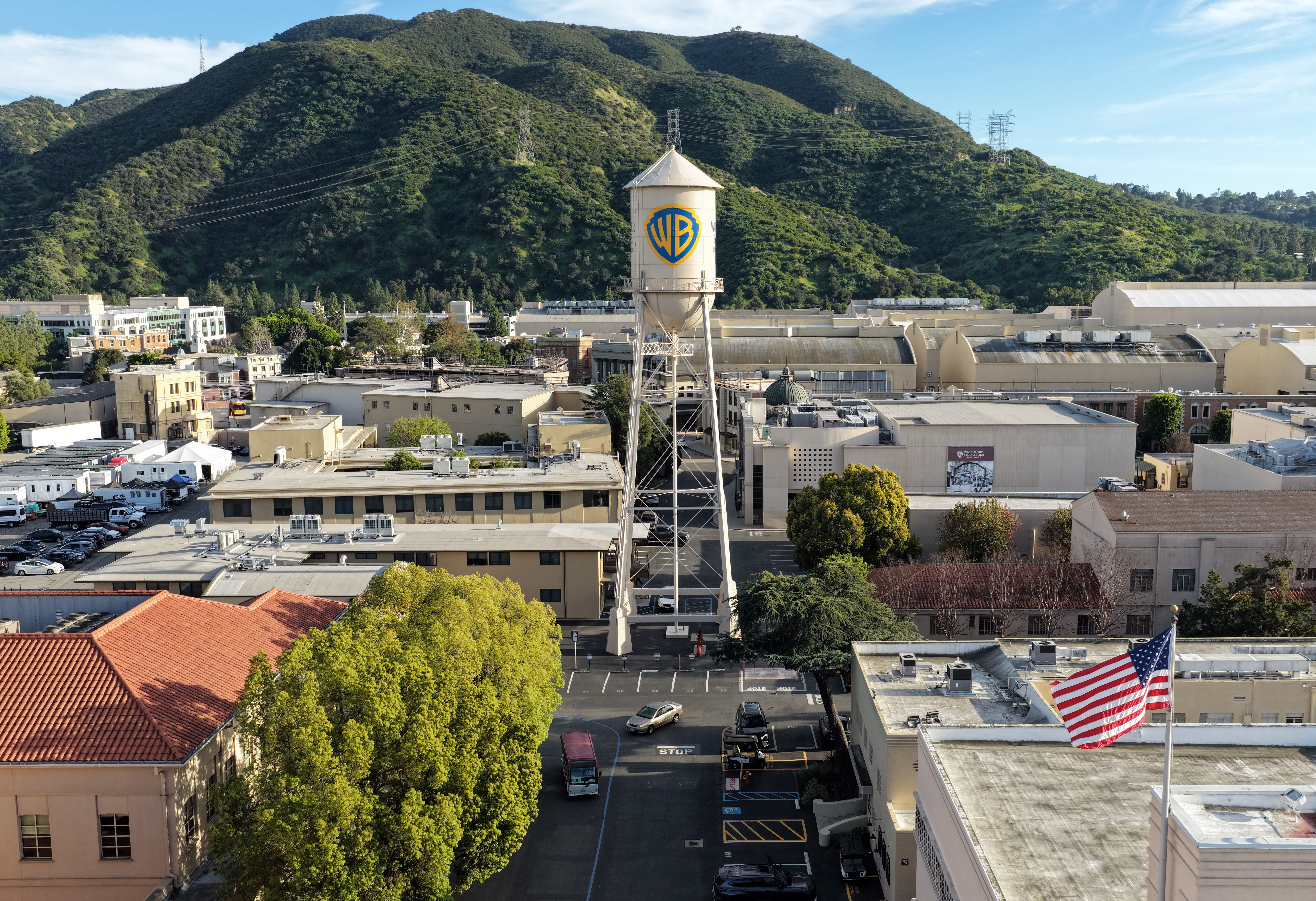
David Ellison’s pursuit of Warner Bros. Discovery has become a high-stakes test of whether Hollywood’s next era of consolidation can survive political scrutiny, financing pressure and industry anxiety over who gets to control some of entertainment’s most valuable assets.
In recent weeks, the Paramount Skydance chief executive has seen what once appeared to be a fast-moving path toward a transformational transaction grow more complicated. The proposed $111 billion deal, which would combine Paramount Skydance with Warner Bros. Discovery, has drawn fresh attention from regulators and industry observers wary of placing film studios, streaming platforms, news operations and major television networks under one enlarged corporate roof.
The pressure point now is not simply whether Ellison can pay for Warner Bros. Discovery. It is whether he can persuade government officials, Wall Street, talent representatives and Hollywood labor groups that the combination would stabilize two legacy media companies rather than accelerate the contraction already reshaping the business.
Ellison, the son of Oracle co-founder Larry Ellison, has spent years positioning Skydance as a next-generation studio with franchise credentials and technology-sector backing. His company built its reputation through partnerships on films including entries in the “Mission: Impossible,” “Top Gun” and “Star Trek” franchises before moving deeper into animation, television and games. The merger with Paramount elevated Ellison from producer-financier to studio chief. A successful Warner Bros. Discovery acquisition would vault him into a far larger league.
That leap would be historic. Warner Bros. Discovery controls Warner Bros. Pictures, HBO, Max, CNN, DC Studios, TNT Sports and a deep library stretching from classic cinema to prestige television. Paramount brings its own collection of brands, including CBS, Nickelodeon, MTV, BET, Comedy Central and Paramount Pictures. Together, the two companies would represent one of the most powerful content portfolios in the world, with enormous leverage in theatrical distribution, streaming, licensing, sports and advertising.
That is precisely why the deal is becoming harder to sell.
Regulatory Concerns Move to the Forefront
California Attorney General Rob Bonta’s interest in challenging the acquisition has complicated the narrative that the transaction could move quickly toward completion. California has a unique stake in the matter: the studios, the workforce, the production economy and many of the creative guilds most affected by consolidation are centered in the state.
Any serious antitrust challenge could slow the timeline and force Ellison’s team to make concessions. Regulators could examine whether the deal would reduce competition for creative talent, limit the number of buyers for films and television series, increase bargaining power against unions or give the combined company excessive control over key programming categories.
The federal regulatory environment also remains unpredictable. Both Democratic and Republican administrations have become more skeptical of large media and tech combinations, albeit for different reasons. News ownership, sports rights, streaming dominance and perceived political influence have all become flashpoints in Washington. A company that includes CBS News and CNN under the same corporate umbrella would almost certainly invite intense examination.
Ellison’s camp has an argument: legacy media companies are under siege from Netflix, YouTube, Amazon, Apple and other deep-pocketed digital rivals. Traditional studios are facing declining cable revenue, expensive streaming transitions and a weaker theatrical marketplace than they enjoyed before the pandemic. From that perspective, scale is not a luxury; it is a survival mechanism.
But critics of consolidation see the same facts differently. They argue that the industry’s answer to disruption has too often been layoffs, fewer buyers, reduced risk-taking and diminished opportunity for mid-budget films and scripted television. A Paramount-Warner combination could create efficiencies, but those efficiencies may come at the expense of jobs and creative diversity.
Why the Deal Matters
The battle over Warner Bros. Discovery is about more than one executive’s ambition. It is a referendum on the future architecture of Hollywood.
For decades, the entertainment business was built around a handful of major studios competing for talent, franchises and audiences. Streaming fractured that model, then forced companies to spend billions building global platforms. Now the industry is trying to reverse-engineer profitability after years of costly subscriber growth. Warner Bros. Discovery has already been aggressive in cutting expenses and licensing content. Paramount has wrestled with many of the same pressures, including the economics of its streaming service and the long-term value of its cable networks.
A combined company could create a formidable streaming library, uniting HBO originals, Warner Bros. films, DC properties, CBS programming, Paramount franchises and children’s content. It could also give the company more flexibility to license titles, bundle services and negotiate with distributors.
Still, bigger does not automatically mean healthier. The WarnerMedia-Discovery merger was itself pitched as a way to create scale, yet the company has spent much of its recent history managing debt, restructuring operations and searching for a streaming formula that can satisfy investors. Paramount’s own road has been turbulent. Adding another mega-merger on top of those transitions would require delicate execution and a clear strategy that goes beyond cost reduction.
For Ellison personally, the stakes are enormous. He entered the studio leadership ranks with the aura of a disciplined dealmaker backed by significant resources. If he can land Warner Bros. Discovery, he would become one of the most consequential figures in modern media. If the effort stalls, it could expose the limits of financial backing in an industry where politics, labor and public interest concerns can still derail even the most ambitious plans.
Hollywood is watching closely because the outcome could determine whether another wave of mergers follows. If regulators allow Paramount Skydance and Warner Bros. Discovery to combine, other companies may feel pressure to seek partners of their own. If the deal is blocked or heavily conditioned, it could signal that the era of unchecked media consolidation has reached a new boundary.
What Happens Next
Ellison’s team will need to continue making the case that the transaction benefits consumers, workers and the broader entertainment ecosystem. That likely means engaging with state and federal officials, preparing detailed antitrust arguments and addressing concerns from guilds, lawmakers and competitors.
Warner Bros. Discovery shareholders will be watching for certainty on price, timing and regulatory risk. Talent and employees will be watching for signs of restructuring. Rivals will be watching for weakness.
The proposed deal remains one of the most consequential media transactions in years, but its path is no longer defined only by ambition and capital. The next phase will hinge on whether Ellison can turn a bold takeover vision into a politically and economically defensible plan for Hollywood’s future.