
India could finish 2026 with its strongest box office performance since the pandemic, according to Girish Johar, Zee Studios’ head of distribution and revenues. The forecast remains conditional, however, with Johar saying the result depends on the final weeks of the year unfolding as expected.
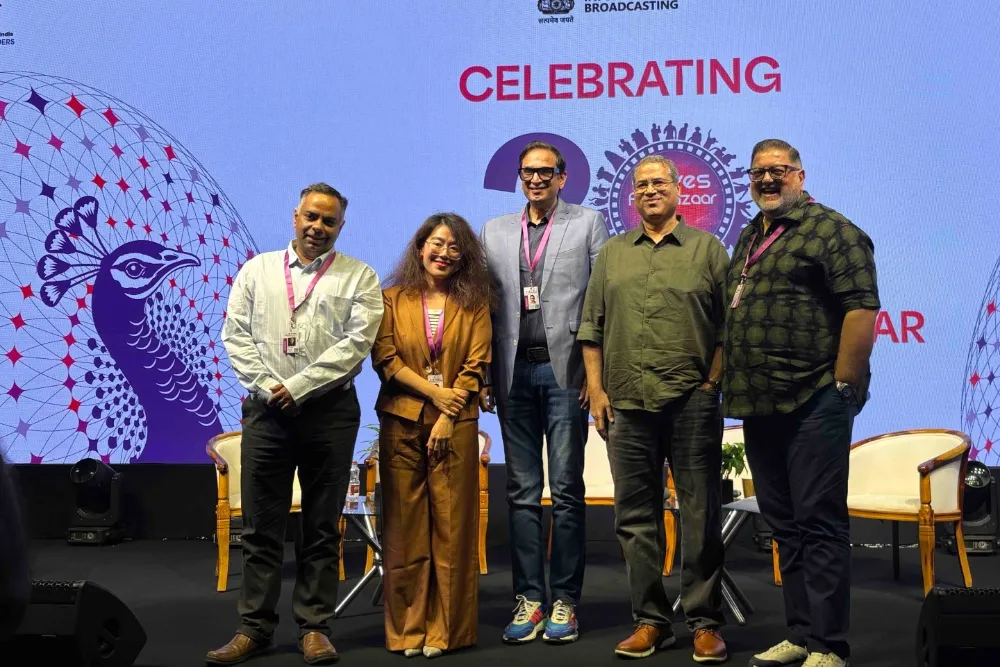
Johar delivered the assessment at WAVES Film Bazaar, the market held alongside the 57th International Film Festival of India in Goa. His comments came during “One Film, Multiple Paydays: Extracting a Film’s Full Value,” a panel examining how producers can build value through theatrical exhibition, streaming, satellite, music and other platforms.
Producer Vikramjit Roy moderated the discussion, which also included BookMyShow cinemas COO Ashish Saksena; Aashish Singh, a producer at Shah Rukh Khan’s Red Chillies Entertainment; and Esther Li, a producer at Hong Kong-based Mirage Films.
Content, Not Stars, at the Center
Johar argued that audiences now demonstrate loyalty to content, intellectual property and characters, rather than treating stars as the decisive ingredient in a movie’s success. He said the right release route—cinemas or streaming—depends on the filmmaker’s perspective, the material itself and the production budget.
That assessment was accompanied by a warning for smaller films seeking wider visibility. Johar said efforts to jump rapidly from 200 screens to 1,000 screens can end up hurting a movie rather than helping it.
He also connected India’s box office momentum to what he described as streaming fatigue. The continued desire for a shared, big-screen experience can benefit theaters when audiences are offered relatable stories, he said.
“At the end of the day, we all want a social gathering, we all want to watch movies on the big screen,” Johar said. He added that relatable storytelling can produce “a huge upswing in box office.”
How Producers Seek Multiple Returns
Singh framed intellectual property as more than a legal or creative asset, describing it as an “insurance policy for the future.” If producers and creators handle IP successfully, he said, it can continue generating income over many years and potentially benefit future generations.
He acknowledged that producers commonly acquire IP through buy-outs because they take on the financial risk. Ownership and revenue-sharing arrangements, however, remain open to negotiation. Singh also advised writers to register their material with the Screenwriters Association.
According to Singh, studios seek to recover between 60% and 70% of a movie’s budget through pre-sales. Those deals may develop over time and can draw on a project’s star or genre, with potential revenue coming from streaming, satellite and music rights. He noted that satellite sales have become difficult.
The panel also explored ways independent filmmakers can locate audiences without trying to market every title to the entire country. Saksena said BookMyShow provides producers with audience data and market intelligence, indicating where a film is gaining traction and where additional promotion may be required.
BookMyShow does not view a film as a brief, one-time online offering, Saksena said. He encouraged independent filmmakers to consider transactional video-on-demand through BookMyShow Stream and screening opportunities at the company’s Red Lorry Film Festival.
“You cannot pitch every film to everyone in India,” Saksena said, emphasizing the need for segmented and targeted campaigns.
Indian Films and the International Audience
Li brought an international perspective to the conversation by pointing to the reception in China for Indian movies including Aamir Khan’s wrestling drama “Dangal” and the Vijay Sethupathi-led “Maharaja.” She said Chinese viewers responded to the films’ social concerns, inspirational elements and distinctive humor.
She also highlighted the romantic quality of Indian movie love stories and the emotional appeal of experiencing them in a theater. For independent filmmakers pursuing audiences beyond their home market, Li recommended developing a recognizable creative identity through a distinct voice, visual approach and film language, while retaining emotions with which viewers can connect.
Despite individual successes abroad, speakers said Indian cinema is still awaiting an international breakthrough comparable to Bong Joon Ho’s 2019 Korean film “Parasite,” which won the best picture Oscar. They suggested that a success on that scale could help unlock new markets.
ShowBiz Take
Johar’s box office forecast matters because it arrives within a broader conversation about how movies now earn money and build longevity. The panel’s message was not that theatrical exhibition, streaming or rights sales can succeed in isolation. Instead, each film requires a release and revenue strategy shaped by its budget, content and likely audience.
The possibility of India recording its biggest post-pandemic box office year also reinforces Johar’s view that streaming has not erased demand for communal moviegoing. At the same time, the warnings against excessive screen expansion and overly broad marketing show that bigger distribution is not automatically better. Targeting the right viewers—and preserving the long-term value of IP—remains central to turning one film into multiple paydays.
What Happens Next?
India’s final 2026 box office result will depend on how the remaining weeks perform. Beyond the year-end total, the industry continues to face two larger challenges identified by the panel: finding sustainable revenue across platforms and producing an Indian film capable of opening international markets on the scale speakers believe “Parasite” achieved.