
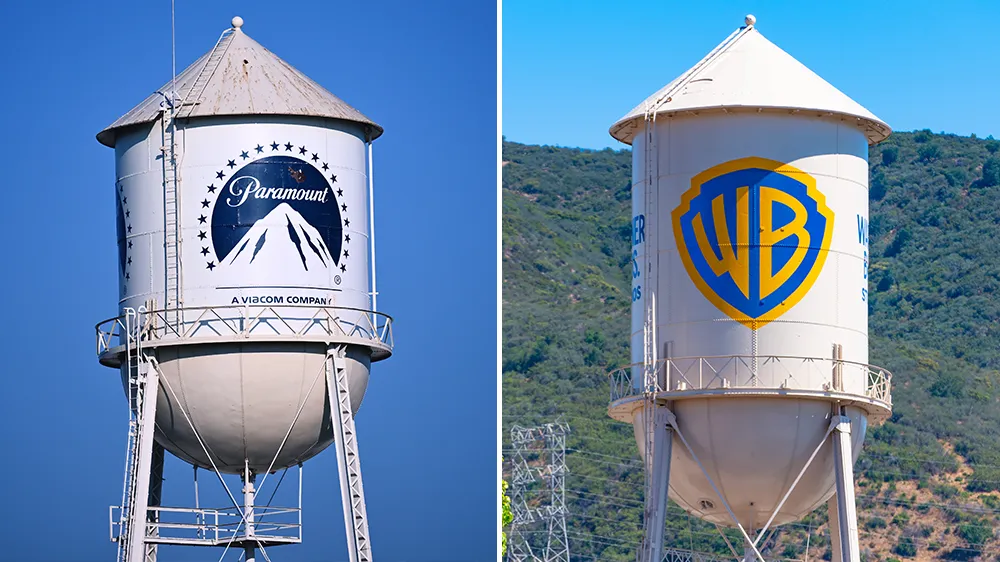
Los Angeles County has opened an official inquiry into the projected employment fallout from the proposed combination of Warner Bros. Discovery and Paramount, adding a new layer of scrutiny to a deal already burdened by litigation, delays and mounting financial pressure on David Ellison’s camp.
According to people familiar with the matter, county officials are examining estimates that roughly 4,500 positions could be eliminated if the two legacy media companies are ultimately folded together. The review is expected to focus on the local impact of those cuts, potential compliance with worker-notification rules and whether public agencies were given adequate visibility into a consolidation that would reshape one of Southern California’s signature industries.
The probe does not, on its own, stop the transaction. But it lands at a particularly sensitive moment. What once appeared to be a dramatic but straightforward studio chess move has become a sprawling corporate serial, complete with a formal complaint, court proceedings, a postponed closing timeline and questions about how long Ellison can continue absorbing the carrying costs tied to the deal’s limbo.
For Hollywood workers, the headline number is the part that cuts through the financial jargon. A reduction of 4,500 jobs would represent far more than a balance-sheet adjustment. It would ripple through studio lots, back-office operations, marketing departments, distribution units, technology teams and the wider ecosystem of vendors that depend on major entertainment companies for steady work.
Yet the response so far has been muted compared with the scale of the potential damage. Wall Street has largely treated the projected cuts as the inevitable math of consolidation. In investor language, layoffs are often described as “synergies,” “efficiencies” or “cost optimization.” In Los Angeles, they are families, mortgages, health insurance plans and careers built across decades of studio upheaval.
A deal caught between strategy and survival
The logic behind the proposed Warner-Paramount combination is familiar across the entertainment business. Traditional media companies are under pressure from cord-cutting, theatrical volatility, streaming losses and a weakened advertising market. Scale has become the default answer to almost every problem. Bigger libraries, bigger franchises, bigger global reach and deeper cost-cutting opportunities are all pitched as necessary to compete with Netflix, Disney, Amazon and Apple.
Warner Bros. Discovery brings an enormous film and television library, cable assets, HBO and the Max streaming platform. Paramount brings a century-old studio, CBS, Nickelodeon, MTV, Comedy Central, BET, Showtime and Paramount+. Together, the companies would control a vast catalog of intellectual property and a significant share of television and film production infrastructure.
That is precisely why regulators, unions and local officials are paying attention. A combined company could wield significant power over talent deals, production spending, distribution windows and licensing. It could also reduce the number of major buyers for writers, producers, directors and below-the-line workers at a moment when employment across the sector has already been bruised by the pandemic, the 2023 strikes and a broader pullback in content spending.
The projected job losses are not surprising to industry veterans. Overlapping corporate functions are almost always targeted after media mergers: finance, legal, communications, ad sales, human resources, technology, domestic distribution and streaming operations. The more troubling question is whether the contraction would extend into creative development, production management and studio operations that directly support film and television output.
The Ellison pressure point
The mounting uncertainty has also turned attention back to David Ellison, whose ambitions for a larger role in Hollywood’s old-guard studio system have been central to the maneuvering around Paramount. People close to the process have described the delay as expensive, with financing commitments, advisory fees, debt considerations and operational uncertainty compounding by the day.
That financial pressure matters because the longer the process drags on, the more aggressive the final integration plan may become. If a deal closes after months of legal and regulatory friction, the combined entity will face immediate demands to prove the transaction was worth the cost. In practical terms, that usually means swift cuts.
For employees, the lack of clarity can be as destabilizing as the layoffs themselves. Executives may reassure teams that nothing changes until closing, but workers inside merger targets know the pattern. Hiring slows. Projects stall. Vendors wait. Senior managers begin quietly mapping which departments are essential and which can be merged, outsourced or eliminated.
The county inquiry gives local officials a chance to force more transparency around those plans. Los Angeles has a direct stake in the outcome. Entertainment is not merely a glamour business for the region; it is a major employer and a cornerstone of the tax base, tourism economy and small-business network that supports production.
Why the reaction has been so subdued
Part of the reason the projected cuts have not sparked broader outrage is merger fatigue. The entertainment business has been through a decade of consolidation: Disney-Fox, Discovery-WarnerMedia, Amazon-MGM and a string of smaller acquisitions and divestitures. Layoffs have become so routine that each new round is treated as painful but expected.
Another factor is the industry’s preoccupation with survival. Studios are trying to manage streaming losses, linear TV decline and theatrical uncertainty all at once. Investors reward austerity. Executives talk about discipline. Even creative communities, while deeply concerned, are often focused on whether projects are being greenlit at all.
But the human consequences are accumulating. Thousands of skilled entertainment workers have already left the business or relocated as production levels remain uneven. A 4,500-person reduction tied to a single corporate combination would reinforce a larger trend: Hollywood is becoming smaller, more centralized and less forgiving, even as global demand for content remains strong.
The county’s investigation may not derail the transaction, but it ensures the employment impact cannot be treated as a footnote. If public officials demand documents, timelines or testimony, the companies involved may be forced to explain not just how much money they expect to save, but what those savings will cost the region that built them.
What Happens Next
The immediate focus will be on the county inquiry, the pending legal proceedings and whether the merger timeline slips again. Regulators are expected to examine competition issues, while local officials look more closely at job protections and notification requirements.
For workers, the waiting game continues. Until the deal is approved, blocked or renegotiated, departments across both companies will operate under a cloud of uncertainty. If the combination moves forward, the first concrete answers will likely come through integration teams, revised org charts and formal layoff notices.
The larger question is whether Hollywood will treat the loss of thousands of jobs as an unavoidable cost of doing business — or as evidence that the industry’s consolidation era has reached a breaking point.