
Peter Farrelly’s I Play Rocky arrives at the Toronto Film Festival as a full-circle Hollywood origin story: a biopic about the making of Rocky, the 1976 film that turned Sylvester Stallone into a major star and became one of the industry’s enduring behind-the-scenes legends.
Screening in Toronto’s Special Presentations section, the Amazon MGM Studios release revisits how an unknown actor-writer held firm on an unlikely demand: he would not sell his screenplay unless he could star in it. The film, directed by Farrelly from a screenplay by Peter Gamble, is set for release on November 6, 2026.
At the center is Anthony Ippolito, playing Stallone in a performance designed to carry more than surface resemblance. The film frames Stallone as a struggling actor working whatever jobs he can find while trying to break through, before the idea for Rocky emerges and becomes a test of stubborn belief as much as creative ambition.
Farrelly has said he would not have made the movie without Stallone’s blessing, which he received. That approval sits behind a film built around one of Hollywood’s most oft-repeated underdog tales: Stallone being offered major money for his script and refusing to give up the role he had written for himself.
The making of an underdog classic
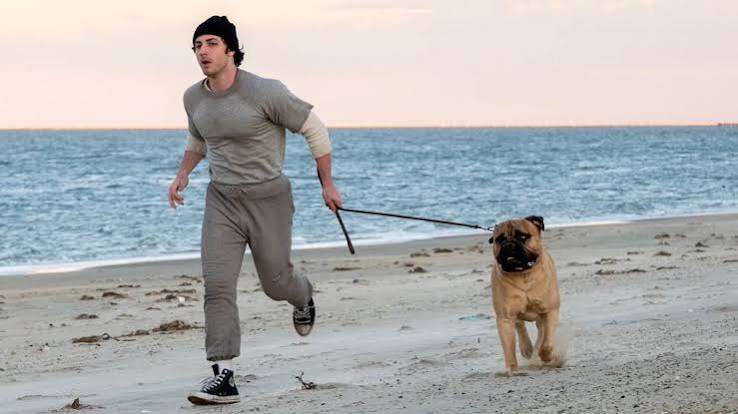
I Play Rocky begins with Ippolito’s Stallone auditioning for a nameless role and follows the character through the lean, formative period before Rocky. The film shows him doing menial work, taking a soft-porn audition that the source material identifies as having really happened, finding the puppy he names Butkus, and meeting his eventual wife Sasha, played by AnnaSophia Robb, at the movie theater where he works.
The story’s industry machinery clicks into place when Stallone meets producers Irwin Winkler and Robert Chartoff, played by P.J. Byrne and Toby Kebbell. The meeting does not begin as a breakthrough: they inform him that Jan Michael Vincent got the part in question, meaning the role of his brother will go to someone else. On the way out, Stallone slips a script titled Paradise Alley into a stack marked “weekend reading.” Their assistant sees through the move but reads the script anyway, praises it, and gets the producers’ attention.
From there, I Play Rocky tracks the rapid birth of the screenplay that would change Stallone’s life. Sitting in a bar and wondering how he will survive, he watches a Muhammad Ali fight, finds the idea for Rocky, writes it in longhand in three and a half days, and gives it to Sasha to type. Winkler and Chartoff respond strongly to the material and take it to a skeptical studio executive, Sandy Maddux, played by Tracy Letts as a composite of studio figures from the period.
Maddux’s resistance is summed up in one blunt line: “Boxing pictures? Nobody makes boxing pictures.” But the studio’s greater obstacle is Stallone himself. He will not sell the script unless he is allowed to star. As the offers climb, he refuses to yield, at one point declaring, “I won’t sell it for $1 million. Not $10 million.”
The compromise, as depicted in the film, brings the budget down to $1 million and includes clauses intended to allow Stallone to be replaced if the production falls behind schedule, with Ryan O’Neal or an actor at that level waiting as the presumed alternative. That tension turns the production itself into an underdog story mirroring the film being made.
Recreating the shoot
Once I Play Rocky moves into the production of Rocky, Farrelly and Gamble lean into the mechanics of moviemaking. The film recreates the Philadelphia shoot with attention to the cinematography, production design, costumes, music and editing, while also using the chaos of production as comedy and suspense.
One sequence set at a Philadelphia meat-packing plant finds the crew shooting without permits and scrambling to hide the equipment, cast and crew when a local union head learns what is happening. Another revisits the famous run up the Philadelphia steps, connecting it to one of the first uses of the Steadicam, with the source material noting that the original was used.
The film’s emotional centerpiece comes during the recreation of a scene involving Burgess Meredith’s Mickey, played here by Robert Morgan. With director John Avildsen, played by Jay Duplass, pushing for a stronger emotional hook, Stallone creates a five-minute take on the spot. In I Play Rocky, that moment requires Ippolito to play scripted spontaneity as if it is being invented in real time.
The supporting cast also includes Kiki Seto as Talia Shire and Stephan James as Carl Weathers, taking on figures tied to the original Rocky ensemble. Matt Dillon is also listed among the cast.
A franchise origin story with a release date
The film arrives in a year marking the 50th anniversary of Rocky, which went on to spawn five sequels and three Creed spinoff films with Michael B. Jordan. Rather than focusing on the later franchise, I Play Rocky narrows in on the beginning: the screenplay, the fight to star in it, and the improbable production that followed.
There is also a final-credit payoff. The movie saves one moment it does not recreate: Johnny Carson introducing Stallone on The Tonight Show to promote Rocky. Carson references the story of Stallone turning down hundreds of thousands of dollars to insist on starring in the movie himself, then says, “If someone were to actually make a movie about the making of Rocky nobody would believe it.”
I Play Rocky is produced by Toby Emmerich, Christian Baha, Peter Farrelly, Paul Currie and Michele Weiss. The film runs 2 hours and 8 minutes.