
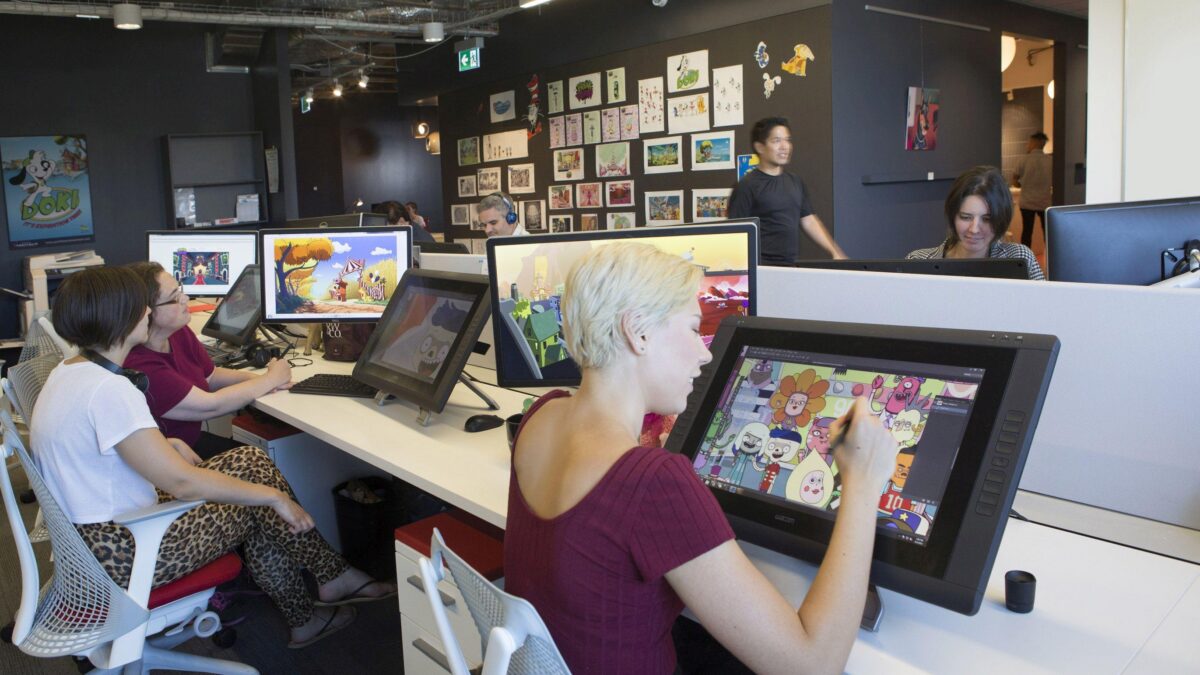
Animated movies may look effortless on screen, but every scene is the result of years of planning, creativity, and technical expertise.
Unlike live-action films, where actors perform in front of cameras, animated features are built frame by frame by teams of artists, writers, designers, and technicians working together.
From the first sketch to the final rendered image, creating an animated film is one of the most complex production processes in the entertainment industry.
Every Animated Film Begins With an Idea
Like any movie, an animated feature starts with a story.
Writers and directors develop the screenplay before artists begin creating the visual world where the story will take place.
Early development often includes:
- Character concepts
- World-building
- Story outlines
- Visual research
- Mood boards
These ideas form the creative foundation for the entire production.
Storyboards Bring the Script to Life
Before animation begins, artists create storyboards.
A storyboard is a series of illustrated panels that show how each scene will unfold.
Storyboards help filmmakers:
- Plan camera angles
- Develop pacing
- Test visual storytelling
- Identify potential problems before production
Many scenes are revised multiple times during this stage.
Designing the Characters
Character designers determine how every major character will look.
They explore details such as:
- Facial expressions
- Clothing
- Body proportions
- Color palettes
- Movement styles
The goal is to create characters that are both visually memorable and capable of expressing emotion.
Building Digital Worlds
Modern animated films rely heavily on computer-generated imagery (CGI).
Artists build three-dimensional environments, props, and characters using specialized software.
These digital models allow filmmakers to create detailed worlds that can be viewed from virtually any camera angle.
Bringing Characters to Life
Animation is where the magic truly happens.
Animators carefully create every movement, from subtle facial expressions to dramatic action sequences.
They focus on:
- Timing
- Body language
- Emotion
- Weight and balance
- Realistic movement
Even a few seconds of finished animation may require days of work.
Lighting, Effects, and Rendering
Once animation is complete, additional artists add lighting, shadows, textures, and visual effects.
The final step is rendering, where powerful computers generate every completed frame of the movie.
Rendering can take hours for a single frame, depending on the complexity of the scene.
Sound Is Just as Important
Animation is only half the experience.
Voice actors, composers, sound designers, and editors work together to create a believable world.
Their contributions include:
- Dialogue
- Music
- Sound effects
- Ambient audio
- Final mixing
Together, these elements give animated characters their unique personalities.
Years of Collaboration
Animated features often require hundreds of artists and technicians working together over several years.
Large productions involve specialists in story development, animation, modeling, lighting, effects, editing, music, and production management.
The collaborative nature of animation makes it one of entertainment’s most ambitious creative achievements.
More Than Cartoons
Animated films are enjoyed by audiences of every age.
They tell emotional stories, introduce unforgettable characters, and push the boundaries of visual storytelling.
Whether created with hand-drawn techniques, stop-motion animation, or advanced computer graphics, animated movies continue to demonstrate how imagination and technology can work together to create extraordinary entertainment.
Related ShowBiz Originals
- How Movie Studios Actually Make Money
- How Entertainment Companies Decide Which Projects Get Greenlit
- How Casting Directors Help Shape Every Movie and TV Show
- Why Talent Agencies Still Run Hollywood
About ShowBiz Originals
ShowBiz Originals delivers exclusive analysis, commentary, and insights covering the business of entertainment across film, television, music, theatre, modeling, gaming, fashion, and live events.