
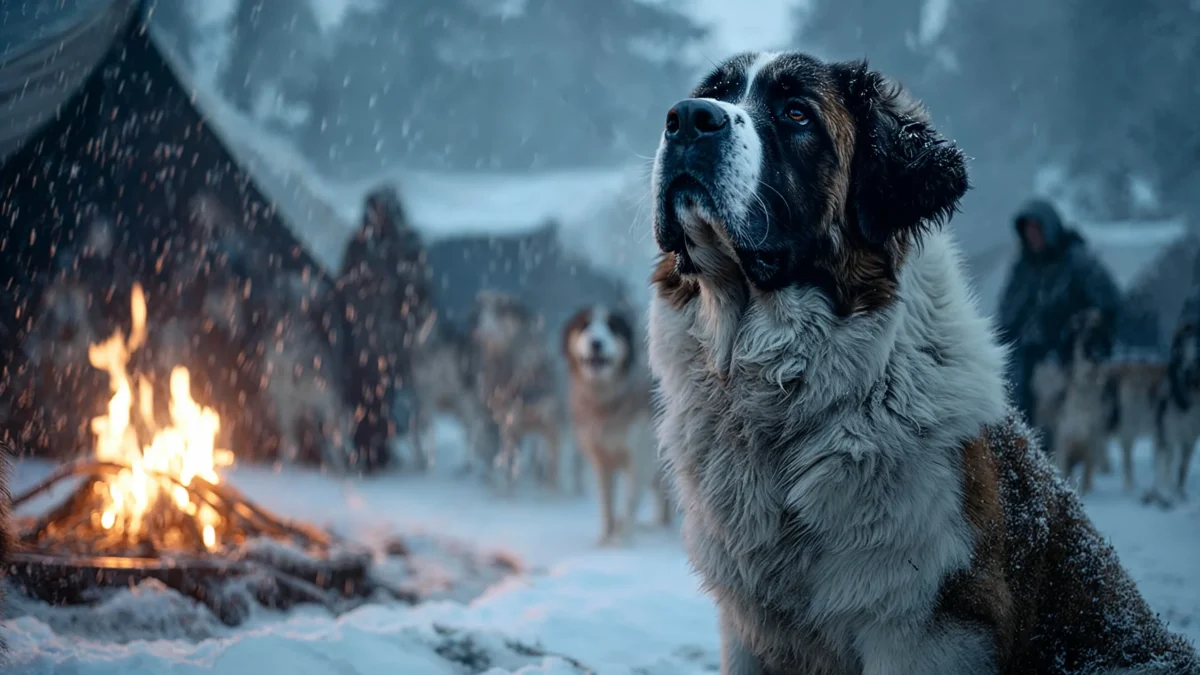
David Barron, the British producer whose credits include six Harry Potter films, is moving into generative artificial intelligence with a new screen version of Jack London’s The Call of the Wild.
Barron has agreed to produce the project, which will use generative AI alongside CGI and traditional visual effects. Simon Rumley, whose credits include Crushed and Red White & Blue, has written the adaptation and will direct.
The film will be generated at nmatic, with CGI and conventional VFX being used to realize its more complicated sequences. Chris Catchpole, Carl Lyttle and Toby White are leading the prompting and technical work at the company.
Buck’s story takes center stage
Published in 1903, London’s novel follows Buck, a pampered St. Bernard removed from his privileged home in California’s Santa Clara Valley. After being sold into the harsh world of the 1890s Klondike Gold Rush, the dog begins to discover the wild instinct that has long existed within him.
The filmmakers are presenting their version as the first faithful adaptation of the book, based on their decision to tell the story through Buck’s subjective experience. They believe the technology will allow them to tackle the scale, terrain and violent animal encounters that are central to London’s story.
Barron said the novel’s epic scope, difficult Alaskan geography and visceral clashes between dogs and wolves had previously made a faithful cinematic treatment financially and logistically unattainable.
“But technology has finally caught up with London’s vision, and we believe now is the time to do justice,” Barron said.
The production marks Barron’s entry into generative AI filmmaking. His involvement also brings a producer with experience across six Harry Potter movies to a project built around a combination of emerging technology and established visual-effects methods.
A frequently adapted novel gets a new approach
The Call of the Wild has reached the screen several times before. Those adaptations include a 2020 Michael Green film starring Harrison Ford. The latest version is distinguishing itself not simply through another retelling of the plot, but through its plan to frame the action from Buck’s point of view.
That creative choice is closely tied to the project’s technical strategy. Rather than relying exclusively on one filmmaking method, the production will combine AI-generated material with CGI and traditional VFX where greater complexity is required.
Barron is producing alongside Mark Sandell, whose credits include A Liar’s Autobiography, and Nick Price. Rumley will handle both the screenplay and direction, while Catchpole, Lyttle and White oversee nmatic’s prompting and technical operation.
The project’s central ambition is to use that mix of tools to deliver the scale of London’s 1903 novel while keeping Buck’s internal journey at the heart of the film.