
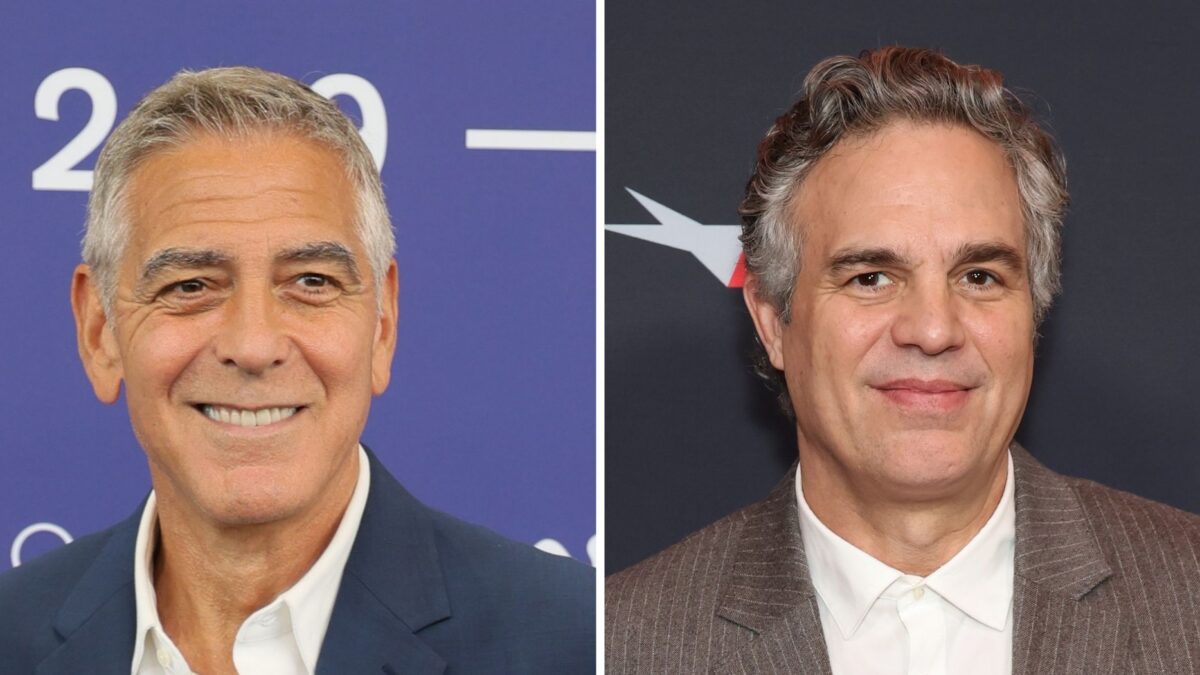
George Clooney has publicly backed Mark Ruffalo after the actor became the target of accusations that his criticism of Paramount’s pursuit of a merger with Warner Bros. carried antisemitic undertones, calling the charge “ridiculous” and defending Ruffalo’s “ability to speak freely.”
Clooney’s comments add a high-profile voice to a growing Hollywood dispute that has moved beyond the mechanics of a potential studio combination and into broader questions about political speech, corporate power and how quickly public criticism can be reframed in the entertainment industry’s charged climate.
Ruffalo, an Oscar-nominated actor long known for his activism as much as his screen work, had raised concerns about the implications of Paramount’s divisive attempt to combine with Warner Bros., a prospect that has unsettled portions of the creative community. As debate around the proposed deal intensified, some critics sought to characterize Ruffalo’s remarks as antisemitic. Clooney rejected that framing, making clear that he viewed the backlash as an effort to punish an artist for weighing in on an issue with major consequences for the business.
The intervention is notable because Clooney is not only one of the industry’s most recognizable stars, but also a producer, director and longtime advocate for humanitarian causes. His defense of Ruffalo signals that influential figures in Hollywood are watching the merger debate not simply as a financial story, but as a flashpoint for how dissent is handled when billions of dollars and powerful corporate interests are involved.
“Mark has the ability to speak freely,” Clooney said, according to comments circulated amid the controversy, dismissing the antisemitic claims as “ridiculous.” The statement was brief, but its message was pointed: disagreement over a corporate transaction, even when strongly worded, should not automatically be treated as prejudice or bad faith.
That distinction matters in an industry still navigating the fallout from years of political polarization, labor unrest and heightened sensitivity around identity, representation and global conflict. Hollywood has always been a place where stars use their platforms, but the stakes have changed in the streaming era. Public statements can instantly become reputational crises, and corporate battles can quickly draw in actors, filmmakers, unions, investors and advocacy groups.
A Merger Fight With Cultural Stakes
Paramount’s interest in joining forces with Warner Bros. has been met with sharp skepticism from parts of the creative sector. Supporters of consolidation argue that legacy studios need scale to compete against Netflix, Amazon, Apple and other tech-backed platforms with deep pockets and global reach. They point to rising production costs, a fragile theatrical marketplace and streaming losses as evidence that older entertainment companies need to bulk up or risk being marginalized.
Opponents see a different picture. To many writers, actors, producers and below-the-line workers, another major merger raises familiar concerns: layoffs, fewer buyers for projects, reduced risk-taking and the further shrinking of an already consolidated Hollywood ecosystem. The industry is still absorbing the consequences of previous combinations that promised efficiency but often delivered cost-cutting, shelved projects and narrower development pipelines.
That is the environment in which Ruffalo’s criticism landed. For performers and filmmakers, the question is not abstract. A merger between two major studio brands could affect who gets hired, what gets made, how films are distributed and which voices have access to mainstream platforms. It could also reshape the leverage of talent in negotiations at a time when guilds have only recently fought to preserve residuals, staffing levels and protections around artificial intelligence.
Clooney’s defense underscores a point many in the creative community have made privately: artists have a legitimate stake in the future ownership structure of the companies that employ them. Speaking about mergers, studio leadership or consolidation is not outside the lane of actors and filmmakers. It is part of the business they work in.
Why Clooney’s Support Resonates
Clooney and Ruffalo occupy similar space in Hollywood as actors who have balanced mainstream commercial work with outspoken public engagement. Both have taken positions on political and humanitarian issues over the years, sometimes drawing praise and sometimes criticism. Clooney’s decision to speak up for Ruffalo therefore reads less like a routine celebrity endorsement and more like a defense of a principle: that public figures should be able to challenge powerful institutions without being branded in ways that can chill debate.
The antisemitism accusation is particularly serious, especially at a time when Jewish communities have faced rising threats and when conversations around the Middle East, media ownership and corporate influence can become volatile. That gravity is precisely why Clooney’s rejection of the claim carries weight. By calling the allegation “ridiculous,” he is arguing that such charges should not be used casually or as a shortcut to discredit criticism.
The episode also reflects a broader anxiety inside Hollywood. Studios and streamers increasingly operate under intense public scrutiny, while talent must calculate the professional risks of commenting on business affairs. In the past, stars often stayed quiet on mergers unless directly affected. Today, silence can be read as complicity, while speaking out can invite organized backlash.
For Paramount and Warner Bros., the controversy is an unwelcome distraction from the already complicated task of selling any combination to shareholders, regulators and creative partners. Large entertainment mergers are judged not only by balance sheets but by whether they can maintain the trust of filmmakers and audiences. If the perception takes hold that criticism of the deal is being delegitimized rather than answered, it could deepen resistance among the very talent the merged company would need.
Ruffalo has built a career that spans prestige dramas, independent films and blockbuster franchises, including his long-running role as Bruce Banner in the Marvel Cinematic Universe. Clooney’s career has likewise moved across studio films, awards fare and producing ventures. Their involvement gives the dispute visibility beyond trade circles and places the merger debate in front of fans who may not normally track corporate entertainment news.
What Happens Next
The immediate question is whether other prominent Hollywood figures will follow Clooney in defending Ruffalo or whether the controversy will fade as the merger discussion moves back into boardrooms and regulatory channels. If Paramount continues to pursue a combination with Warner Bros., scrutiny from talent, labor groups and lawmakers is likely to intensify.
For Ruffalo, Clooney’s support may help blunt the most damaging characterizations of his remarks. For the industry, the moment is a reminder that consolidation is not merely a Wall Street story. It is a creative, cultural and political one — and the people whose work gives these companies their value are increasingly unwilling to stay silent about who controls them.