
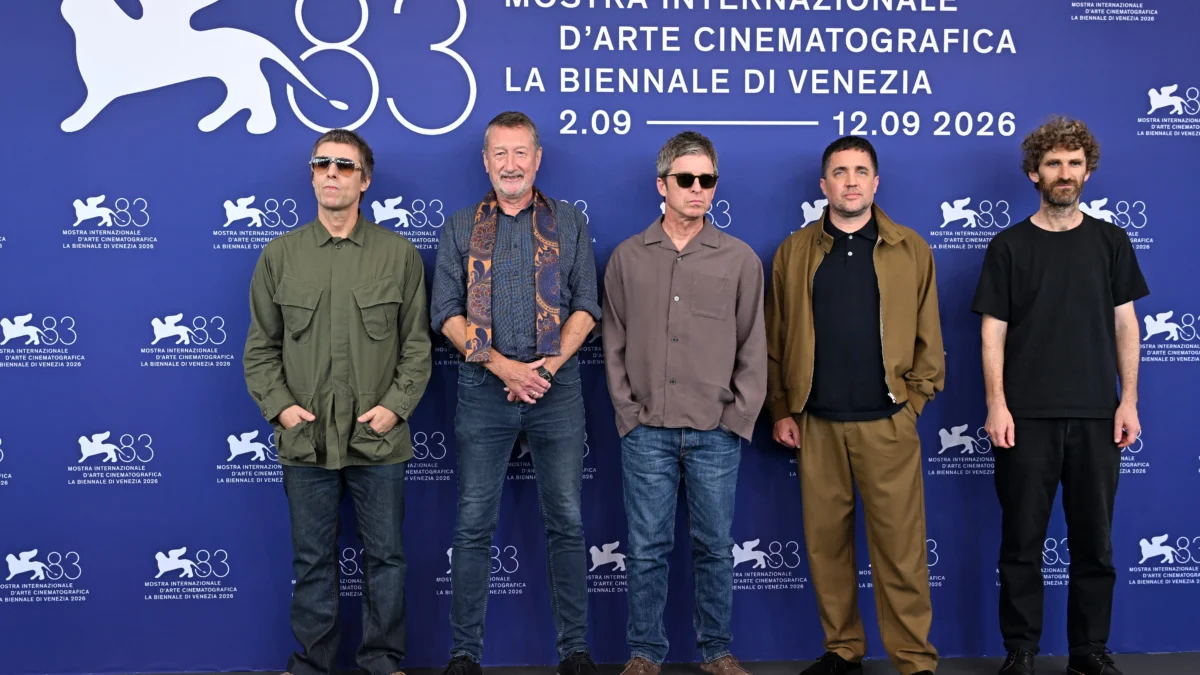
Noel and Liam Gallagher appeared for cameras in Venice but did not take questions at the press conference for their new documentary, Oasis: Don’t Look Back in Anger, leaving the film’s creative team to discuss the project without them.
The brothers, who reunited after a 15-year split and recently completed the Live ’25 tour featured in the documentary, posed at a photo call before skipping the press event. In their place, Steven Knight, who created the documentary, joined directors Dylan Southern and Will Lovelace to speak about a film built around Oasis’ return to the stage and the renewed relationship between the Gallaghers.
The documentary tracks Oasis across 12 concerts on three continents during the Live ’25 tour, described in the source material as the band’s first live appearances since its acrimonious 2009 split. The tour generated more than $400 million in box office revenue.
Knight, known for creating Peaky Blinders, said he had not previously made a documentary but was drawn to the scale and meaning of the reunion. He said a conversation with Noel Gallagher helped frame the central question of the film: why the response to the tour announcement had been so intense across generations.
“And speaking first of all to Noel, and he saying that they were astonished at the response to the announcement of the tour, because there was such demand for tickets, it was apparent that only the generation who had originally loved Oasis, but the next generation had discovered the music and had, you know, a strong attachment to it,” Knight said. “And the question was, why did that happen?”
A reunion captured in real time
Beyond concert footage, Oasis: Don’t Look Back in Anger includes previously unseen backstage and rehearsal material, along with Noel and Liam Gallagher’s first joint interviews in more than 20 years. Southern and Lovelace, whose previous music documentaries include Shut Up and Play the Hits and No Distance Left to Run, described the project as an opportunity to observe the brothers’ relationship as it changed during the tour.
Lovelace said the filmmakers “captured [the Gallaghers’] relationship coming back together,” noting the public fascination around whether the reunion would hold after 15 years apart.
“The whole world was interested in that, after 15 years apart, would it work and what was it going to be like?” Lovelace said. “It was a privilege to be able to see that relationship get closer together, both in rehearsals, but then also throughout the tour.”
Southern said the film set out to document what was unfolding, rather than impose a narrative after the fact. “We wanted to document the very genuine thing that was happening,” he said. “The excitement coming from the crowd was integral in them coming back together. The music brought them back together. They reunited on stage.”
Knight said the team did not know what to expect when filming began because Noel and Liam had not spoken to each other in 15 years. He recalled the atmosphere around their first rehearsal-room encounter, emphasizing that the cameras were present as the relationship developed during the tour.
“So, the first time that Liam walks into the rehearsal room, the first time that they’re going to perform together for however many years, they haven’t spoken to each other,” Knight said. “Liam walks in [and says] ‘Okay, should we start? Should we go? And they go, 1234, bang. And so that’s the way it began.”
Knight said the relationship continued to evolve on the road, adding that “their kids become friends” and describing the result as “a family again.” He said the outcome matched what the filmmakers had hoped to explore from the beginning: “a film about reconciliation, redemption, and forgiveness.”
Fans at the center of the story
While the documentary uses archive footage from the Gallaghers’ 1990s era, the filmmakers said the core of the movie is the Live ’25 concert experience and the fans who attended. Southern and Lovelace followed several committed Oasis fans from around the world, using their stories to examine why the band’s music still resonates internationally.
Lovelace said that approach involved “going out and searching out the most interesting people in most interesting places.” He added that the film looks at why music that originated in Manchester has reached listeners far beyond its original audience.
“You know, this music was born in Manchester, but you’re suddenly in South Korea, and there are young people who weren’t born when the music was written, who have a deep connection to it,” Lovelace said.
Knight also said Noel and Liam Gallagher have seen the finished film and were “beyond satisfied.” He described the viewing as emotional for them, while adding that they were unlikely to discuss that reaction in detail publicly.
Asked whether the brothers’ reconciliation appeared temporary or whether another split might happen, Lovelace offered an optimistic assessment. “Is it going to happen again? It doesn’t appear to be,” he said. “You know, they seem to get on pretty well.”
What Happens Next?
Following Venice, Disney will give Oasis: Don’t Look Back in Anger a limited theatrical run. The film is set to open in select Imax and U.S. cinemas on Sept. 11, before streaming later this year on Hulu in the U.S. and exclusively on Disney+ internationally.