
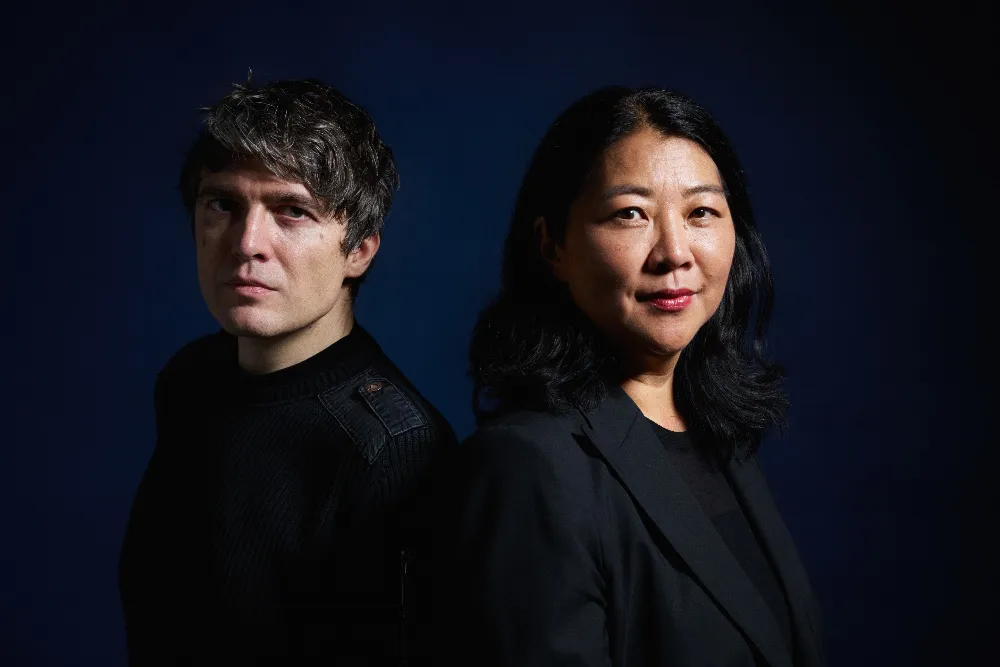
Yoko Higuchi-Zitzmann and Mark Wachholz are entering the AI production race with Dreamkite Studios, a new Munich- and Berlin-based AI-native film studio built around premium films, high-end television series and IP-driven short-form content.
The company will use generative AI alongside traditional filmmaking, with professional directors and actors involved in AI-first and hybrid productions. Dreamkite said its ambition is to become “one of the leading European premium film studios at the forefront of the rapidly evolving AI entertainment ecosystem, combining exceptional human storytelling, leading creative talent and a strong focus on European sovereignty and IP library.”
Higuchi-Zitzmann serves as CEO and founder of the studio, while Wachholz is chief creative director and co-founder. Their launch positions Dreamkite as a European-facing production banner designed to bring together established media experience, AI-native creative talent and IP development at a moment when the entertainment business is increasingly testing new production models.
Higuchi-Zitzmann is the former CEO of Telepool, which was then part of Will Smith’s Westbrook. Her previous roles also include managing director of Matthias Schweighöfer’s Pantaleon Films and head of international acquisitions, sales and co-productions at Constantin Film. Her credits and career include internationally successful titles such as the Oscar-winning “La Vie En Rose,” “Asterix at the Olympic Games,” “My Blind Date With Life,” which sold to 54 countries, and the RTL+ event series “Herzogpark.”
Wachholz brings a different track into the company. He has worked for more than 20 years as a writer across television, video games and fantasy novels, and over the past three years has become a prominent creative figure in AI filmmaking. His 2025 AI film “The Cinema That Never Was” drew attention from filmmakers including Alex Proyas and John Gaeta and won major international AI film prizes, including Grand Prizes at the Omni International AI Film Festival, whose jury was headed by George Miller, and the Artefact AI Film Festival, chaired by Cédric Klapisch.
At Dreamkite, the company said Wachholz will “shape the studio’s core creative and aesthetic vision and develop ambitious original projects together with its international network of AI filmmakers and creative talent.”
“Human creativity is the most valuable thing we have, and AI is a powerful new tool for outstanding storytelling,” Higuchi-Zitzmann said. “Dreamkite Studios brings together exceptional creative talent, premium IP and cutting-edge technology to build a new generation of European entertainment. We want to use this technology responsibly, strengthen European sovereignty and create stories that inspire audiences around the world.”
Wachholz added: “A new world needs new stories. We are living in a time of rapid transformation and increasing speculation — about the present, the future, what we thought was true and what we hold dear. Stories are humanity’s way of capturing reality, creating truth and generating meaning. AI technology finally allows us to become much more ambitious, independent, and bold in the worlds we create and the projects we imagine. At Dreamkite, we believe that the future of cinematic storytelling has only just begun.”
Creative Talent Already Attached
Dreamkite is developing projects with a network spanning AI filmmaking, animation, directing, commercial and advertising production and creative technology. The roster includes Berlin-based director and creative technologist Sylvia Nitzsche, whose AI-supported storytelling work includes projects for clients such as Axel Springer and Universal Music.
Also working with the studio is Albert Bozesan, a Munich-based filmmaker, writer and former head of creative technology at Storybook Studios, whose work includes bestselling audio storytelling, animation and AI-based productions including “Space Vets” and “Tarmac.”
Hamburg-based director and composer Eike Swoboda, who trained under Wim Wenders, is part of the network as well. His AI-generated filmmaking work includes the sci-fi epics “Expiration Day” and “Echo Chamber” for Jeff T. Thomas’ Los Angeles AI studio NeoCinema, as well as the folk horror short “It Used to Be Different.”
The lineup also includes commercials director Florian Meimberg, described as an early pioneer of AI-driven filmmaking. After 12 years as a creative director at agencies including BBDO, Meimberg developed hybrid AI productions for brands including Persil and Lidl. German-Iranian director, AI filmmaker and creative technologist Shamila Lengsfeld is also aboard; her superheroine short film “Blake” is now being developed by Dreamkite as an original series.
The First Development Slate
Dreamkite is launching with original AI-native and hybrid projects already in development. Wachholz’s “Cérémony” is described as a visually groundbreaking near-future conspiracy feature set in a world where the suffering of children is publicly sanitized. The project expands the universe and characters of his 2025 short film of the same name, which was a Top 12 Finalist in the $1 million AI Film Award by 1BFS & Google Gemini.
Another Wachholz project, “The Day the World Prayed,” is being developed as a limited TV show. The high-concept global political thriller centers on irrefutable proof that Jesus Christ never existed as a historical figure, triggering a worldwide crisis of faith that can only be resolved by his supernatural return to Earth. The series is planned to explore the systems and powers behind history, storytelling and religion.
Wachholz is also developing “Children of a Dead Star,” a Cold War sci-fi thriller in which East Germany intercepts an alien message that proves to be a language virus capable of rewriting human thought and reality. Wachholz was born in East Germany and grew up close to the Berlin Wall, and the story will “transform personal experiences into a timely reflection of today’s post-truth world,” according to the company.
Lengsfeld’s “Blake” is on the slate as a female-led superhero series set in a dystopian sci-fi world, combining action and visual storytelling with a story of female and LGBTQ+ representation.
One of Dreamkite’s first major projects will be a hybrid feature adaptation of the bestselling novel “The Color of Stars” (“Die Farbe der Sterne”) by Curtis Briggs and Stefan Lukschy. The crime comedy will combine AI filmmaking with live-action performances by professional actors.
“I am thrilled to see ‘The Color of Stars’ enter this new creative dimension,” Briggs said. “Dreamkite Studios shares our ambition to tell the story at the highest possible level while exploring entirely new cinematic possibilities. I believe this hybrid approach can create something truly unique for audiences around the world.”
What Happens Next?
Dreamkite said additional projects will be announced soon. Those include an AI-animated adaptation of a high-profile bestselling European IP, as well as a cooperation with one of the world’s leading gaming companies, with which Dreamkite is in advanced talks.