
Why This Matters
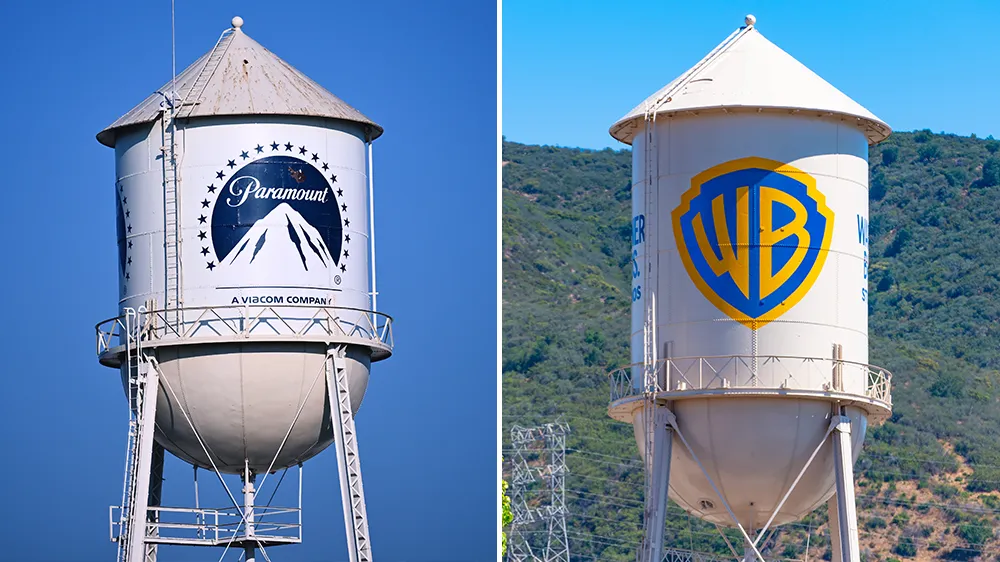
The debate around a potential combination of Paramount and Warner Bros. Discovery has become one of Hollywood’s favorite stress tests: a merger story that is really about the future of television, streaming, debt, sports rights, theatrical distribution and the shrinking number of companies with enough scale to compete globally.
It also has produced a familiar set of assumptions. Some are reasonable. Others are too neat for a business that has rarely rewarded neat thinking. In entertainment circles, the proposed pairing is often discussed as if it would instantly solve every problem facing two legacy media giants. The reality is more complicated, and the myths around the deal say as much about Hollywood’s anxiety as they do about the companies involved.
Myth one: bigger automatically means stronger. Scale matters, especially in streaming, where the largest platforms can spend globally, market globally and absorb expensive misses. But size alone does not create a winning strategy. A combined Paramount and Warner Bros. Discovery would have an enormous library, major franchises, news assets, sports relationships, cable networks and studio infrastructure. It would also inherit overlapping operations, competing corporate cultures and significant pressure to find savings quickly.
The industry has seen this movie before. Consolidation can create leverage with distributors, advertisers and technology partners. It can also produce years of internal restructuring that distracts executives from making the shows and movies that actually drive consumer loyalty. A larger company is not automatically a healthier one if the deal leaves it too focused on cost-cutting and too cautious in creative risk-taking.
Myth two: streaming would be fixed overnight. A merged company could make a stronger case for a broader streaming service, combining recognizable brands and deeper catalogs. HBO, Warner Bros., DC, Discovery, Paramount Pictures, CBS, Nickelodeon, MTV, Comedy Central and Showtime are valuable labels with different audiences. On paper, that looks like a powerful bundle.
But streaming is no longer only about having a vast library. Consumers are increasingly selective, churn is high, and profitability depends on pricing, user experience, advertising technology, international execution and disciplined content spending. Simply placing more programming under one roof does not guarantee subscribers will pay more or stay longer. The hard work would be deciding what the service stands for.
Myth three: this would be all about movies. The theatrical implications are significant, but the heart of the conversation is broader. Paramount and Warner Bros. are two of Hollywood’s most historic film studios, and a combination would immediately raise questions about release calendars, franchise management and talent relationships. Yet the bigger strategic value may sit in television production, unscripted programming, live sports, news and global distribution.
Both companies operate across multiple businesses that are under pressure at the same time. Linear cable continues to decline. Advertising remains uneven. Sports rights are expensive. Streaming requires constant investment. The film slate is only one piece of a much larger balance-sheet puzzle.
Industry Context
The push toward consolidation is not happening in a vacuum. Hollywood is still adapting to the aftermath of the streaming land grab, when nearly every major media company decided it needed a direct-to-consumer platform to compete with Netflix. That strategy gave consumers more choice but left legacy companies trying to protect declining cable profits while funding expensive streaming operations.
Wall Street’s mood has shifted sharply. Subscriber growth is no longer enough. Investors want profit, free cash flow and credible plans to manage debt. That has changed the tone of dealmaking across the entertainment business. The question is less “How many subscribers can this company add?” and more “Can this company survive the transition without destroying its core assets?”
Myth four: regulators would view this as a routine media deal. Any combination of major studio and television assets would invite scrutiny. The regulatory climate has become more skeptical of large mergers, particularly in industries that affect consumers, labor markets and information distribution. Even if the companies argue that they need scale to compete with Netflix, Amazon, Apple, YouTube and TikTok, regulators would likely examine the impact on competition in television, film production, streaming, news and advertising.
The deal would also be judged in a political environment where media ownership remains a sensitive topic. Broadcast stations, cable news assets, sports rights and studio output deals all carry implications beyond entertainment gossip. Approval would not be impossible, but it would not be automatic.
Myth five: Hollywood talent would simply adjust. Writers, directors, producers, actors and agents have become wary of consolidation because it often means fewer buyers. Fewer buyers can translate into fewer greenlights, tougher negotiations and reduced leverage for creators. A merged Paramount and Warner Bros. Discovery could still commission a large volume of programming, but the perception of a shrinking marketplace would matter.
That concern is especially acute after years of disruption. The pandemic battered production schedules and theatrical habits. Labor strikes exposed deep tensions over compensation, streaming residuals and artificial intelligence. Cost-cutting across the media sector has left many creatives and executives convinced that consolidation often benefits balance sheets before it benefits storytelling.
At the same time, the counterargument is not frivolous. Supporters of a merger would say that a financially stronger company is better positioned to invest in big swings, protect franchises and compete internationally. A weakened legacy studio is not necessarily a better employer or creative partner. The industry’s dilemma is that both arguments can be true.
What Happens Next?
The future of any Paramount-Warner Bros. Discovery combination depends on more than boardroom ambition. Financing, debt management, shareholder approval, regulatory review and strategic clarity would all shape whether the idea becomes a transaction or remains an irresistible Hollywood parlor game.
If the companies or their stakeholders move forward, expect the sales pitch to focus on scale, global reach, streaming efficiency and the strength of combined intellectual property. Expect critics to focus on debt, integration risk, regulatory hurdles and the possibility of another wave of job cuts. Both narratives will find an audience because both reflect real pressures inside the business.
The most important question is not whether two famous names can be placed under the same corporate umbrella. It is whether the merged company would have a sharper identity than the two separate companies have today. In a marketplace defined by consumer choice and investor impatience, a merger is only the opening scene. The harder act is proving that consolidation can produce momentum rather than merely manage decline.