
FEATURED ENTERTAINER OF THE WEEK
Elton John
Musician, singer-songwriter, pianist and composer
July 14, 2026
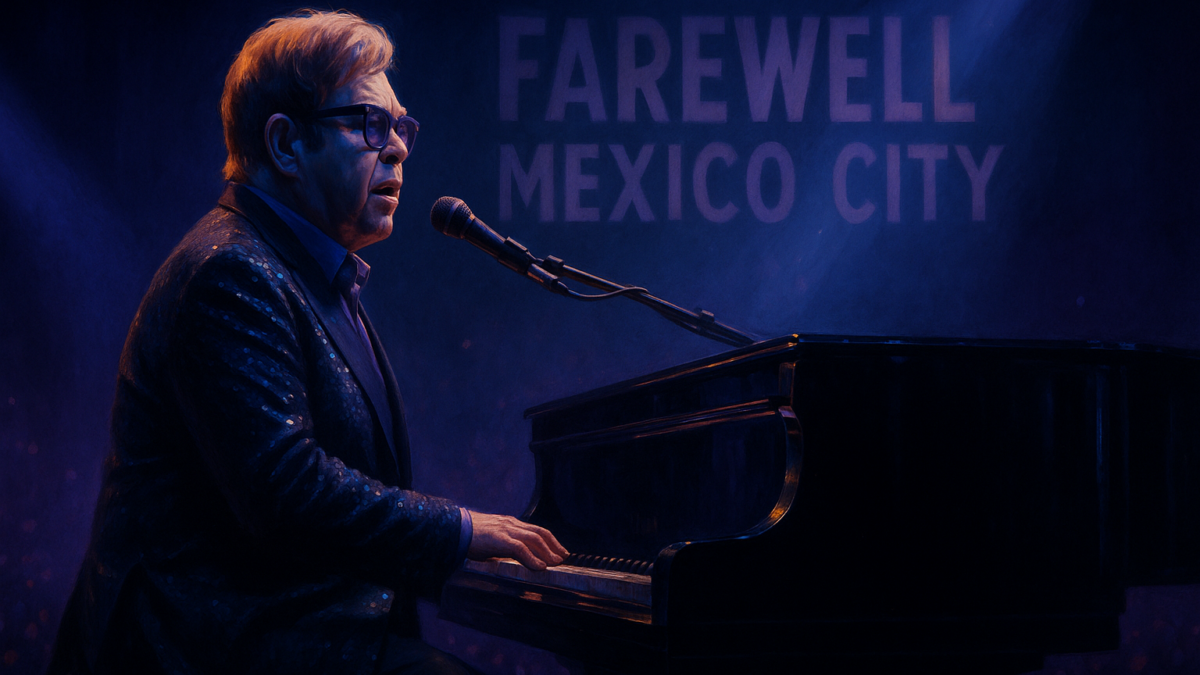
Elton John Announces Farewell Concerts in Mexico City
Elton John has said goodbye before, but the goodbye has never been a simple wave from the piano bench. His farewells tend to arrive with a little theater, a little gratitude and the sense that the audience is being folded into a much larger story. That is why his newly announced return to Mexico City matters. After 14 years away from the city, Elton will play two “Farewell To Mexico” concerts at Estadio Banorte on October 2 and 3, giving Latin American fans a piece of the farewell tour experience that the pandemic disrupted. The news is not just another date on a legacy artist’s calendar. It is a reminder of how unusually durable Elton John’s career has been: a child prodigy from suburban England who became a 1970s pop phenomenon, survived excess and critical fatigue, rebuilt himself through sobriety and philanthropy, conquered film and theater, and then reached a new generation through collaborations that made him sound oddly contemporary without losing the thump of that unmistakable piano. Few entertainers have managed to be both era-defining and era-proof. Elton’s catalog is now part of public memory, but his career has never sat still for long. The Mexico City concerts point back to the grand scale of his touring life, but they also underline something more intimate: Elton John’s relationship with audiences has always been built on emotional directness. Whether he is singing “Your Song” in a plain, almost conversational tone or filling a stadium with “Rocket Man,” he has made spectacle feel personal. That is the real reason he remains fascinating. Under the feathers, sequins, sunglasses and theatrical exits is a songwriter-performer who turned vulnerability into mass entertainment and kept finding new ways to make it travel.
Quick Facts
| Born | March 25, 1947, as Reginald Kenneth Dwight |
| Birthplace | Pinner, Middlesex, England |
| Nationality | British |
| Years Active | 1962–present |
| Residence | Windsor, Berkshire, England |
| Spouse | David Furnish; civil partnership in 2005, married in 2014 |
| Children | Two sons, Zachary and Elijah |
Early Life
Before he became Elton John, Reginald Dwight was the kind of child who could reproduce a melody after hearing it once. He grew up in Pinner, in a family where music was present but not always comfortable. His father, Stanley Dwight, had served in the Royal Air Force and played trumpet; his mother, Sheila, enjoyed records and encouraged the boy’s appetite for popular music. Reg showed extraordinary facility at the piano early, winning a junior scholarship to the Royal Academy of Music at 11. The training gave him technique, but not exactly the life he wanted. He was more excited by records, radio and American rock and roll than by the disciplined path of a classical pianist. In his teens, he played in pubs and joined bands, including Bluesology, which backed visiting American soul and R&B acts. Those years mattered. Elton’s later flamboyance can obscure how much of his foundation came from practical working-musician experience: playing for rooms that talked over him, learning how rhythm moved a crowd, absorbing gospel, soul, blues and rock before he ever became a star. His name change was not cosmetic so much as transformational. “Elton” came from Bluesology saxophonist Elton Dean, and “John” from singer Long John Baldry. Reg Dwight did not disappear overnight, but Elton John gave him a shape large enough to hold the performer he was trying to become.
Family
Parents
- Stanley Dwight, his father, was a Royal Air Force flight lieutenant and a trumpet player.
- Sheila Eileen Dwight, his mother, supported his early interest in popular music and records.
Siblings
- Elton John has four paternal half-brothers from his father’s second marriage: Geoff, Stan, Simon and Robert.
Career
The hinge of Elton John’s career was not a dramatic audition in front of a producer, but a failed audition and an envelope of lyrics. In 1967, Reg Dwight answered an advertisement placed by Liberty Records, which was looking for talent. Bernie Taupin, a young lyricist from Lincolnshire, answered the same advertisement. Neither man got the conventional break he was hoping for, but publisher Ray Williams connected them. Taupin sent lyrics by post; Elton set them to music. For years afterward, the strangeness of that process remained part of the magic: Taupin wrote words separately, often in another room or another country, and Elton composed rapidly at the piano. Their partnership became one of pop’s great long-running creative marriages precisely because it was not built on sameness. Taupin supplied images, Americana, romantic ache and narrative fragments; Elton supplied melody, propulsion and the emotional lift that made private lines feel communal. The first album, “Empty Sky,” arrived in 1969 with limited commercial impact. The second, 1970’s “Elton John,” changed everything. “Your Song” was not bombastic, and that was its genius. It sounded like a confession from someone surprised by his own sincerity. When Elton played the Troubadour in Los Angeles that year, the American music world noticed. Critics, musicians and tastemakers saw a performer who could kick over the piano bench one minute and deliver a ballad with startling tenderness the next. What followed in the 1970s was one of the most intense commercial runs in pop history. Albums such as “Tumbleweed Connection,” “Madman Across the Water,” “Honky Château,” “Don’t Shoot Me I’m Only the Piano Player,” “Goodbye Yellow Brick Road” and “Captain Fantastic and the Brown Dirt Cowboy” turned Elton and Taupin into a hitmaking engine. “Rocket Man,” “Daniel,” “Crocodile Rock,” “Bennie and the Jets,” “Saturday Night’s Alright for Fighting,” “Goodbye Yellow Brick Road” and “Someone Saved My Life Tonight” were not variations on one formula. They moved through glam rock, balladry, country-soul, gospel, music-hall and cinematic pop. Elton’s look became as famous as the music: platform boots, feathered costumes, rhinestones, baseball uniforms and an endless parade of glasses. Yet the showmanship never entirely swallowed the musicianship. Beneath the outfits was a serious pianist who understood groove, dynamics and how to make a chorus land like a door flying open. Success also brought strain. By the late 1970s and 1980s, Elton was dealing with addiction, punishing work habits and the commercial instability that comes when a phenomenon becomes expected to remain a phenomenon forever. There were still major songs — “I’m Still Standing,” “Sad Songs,” “Nikita,” “Sacrifice” — but the most important turn in his life was personal. He became sober in 1990, a decision he has often described as the foundation for everything that followed. Sobriety did not make Elton smaller; it made him more durable. In the 1990s, he entered one of the most consequential second acts in modern entertainment. His friendship with Ryan White, the Indiana teenager who became a national symbol in the fight against AIDS stigma, deeply affected him. Elton founded the Elton John AIDS Foundation in 1992, turning his celebrity into one of the entertainment world’s most visible philanthropic platforms. At the same time, he moved into family entertainment on a massive scale. With lyricist Tim Rice, he wrote songs for Disney’s “The Lion King,” including “Can You Feel the Love Tonight,” which won the Academy Award. That success led to further stage and screen work, including “Aida” and “Billy Elliot the Musical.” These projects mattered because they placed Elton’s melodic gift in new storytelling contexts. He was no longer just a rock star with a back catalog; he was a composer whose work could shape theatrical worlds. His later years have brought another unusual chapter: elder-statesman status without retreat. “Candle in the Wind 1997,” rewritten in memory of Diana, Princess of Wales, became one of the best-selling singles of all time, but Elton resisted becoming a monument to grief. He kept touring, collaborating and occasionally surprising listeners. “Cold Heart,” his 2021 collaboration with Dua Lipa and Pnau, recycled elements of his catalog into a sleek dance-pop single and returned him to the upper reaches of the charts. The Farewell Yellow Brick Road tour, announced as his final global tour, became a massive commercial and emotional event, concluding in Stockholm in 2023. Then, in 2024, his televised Dodger Stadium farewell concert won an Emmy, making him an EGOT winner — one of the rare artists to win competitive Emmy, Grammy, Oscar and Tony awards. The Mexico City farewell concerts now arrive as a coda with a specific emotional charge. Elton’s career has always been global, but touring disruptions meant that not every audience received the goodbye he intended to give. Returning to Mexico City after 14 years is not about extending a farewell indefinitely; it is about closing a circle with fans who have waited a long time.
Television
- The Muppet Show (1978) — Guest performer
- The Nanny (1997) — Himself
- The Simpsons (1998) — Himself
- Ally McBeal (2001) — Himself
- Will & Grace (2002) — Himself
- Elton John: Me, Myself & I (2007) — Subject and performer
- Nashville (2016) — Himself
- Elton John Live: Farewell from Dodger Stadium (2022) — Performer and executive producer
Filmography
- Tommy (1975) — The Pinball Wizard
- The Lion King (1994) — Songwriter
- Tantrums & Tiaras (1997) — Subject
- Spice World (1997) — Himself
- The Road to El Dorado (2000) — Songwriter, performer and producer
- The Country Bears (2002) — Himself
- Gnomeo & Juliet (2011) — Executive producer and music contributor
- Kingsman: The Golden Circle (2017) — Himself
- Rocketman (2019) — Subject and executive producer
- Elton John: Never Too Late (2024) — Subject
Awards & Honors
- 1987 — Grammy Award (Best Pop Performance by a Duo or Group with Vocal) — Won
- 1992 — Grammy Award (Best Instrumental Composition) — Won
- 1994 — Rock and Roll Hall of Fame (Performer) — Inducted
- 1995 — Academy Award (Best Original Song) — Won
- 1995 — Academy Award (Best Original Song) — Nominated
- 1995 — Academy Award (Best Original Song) — Nominated
- 1995 — Golden Globe Award (Best Original Song) — Won
- 1995 — Grammy Award (Best Male Pop Vocal Performance) — Won
- 1998 — Grammy Award (Best Male Pop Vocal Performance) — Won
- 1998 — Grammy Legend Award (Special merit award) — Won
- 2000 — Tony Award (Best Original Score) — Won
- 2000 — Grammy Award (Best Musical Show Album) — Won
- 2004 — Kennedy Center Honors (Lifetime artistic achievement) — Honored
- 2006 — Disney Legends Award (Music) — Honored
- 2009 — Tony Award (Best Original Score) — Won
- 2020 — Academy Award (Best Original Song) — Won
- 2020 — Golden Globe Award (Best Original Song) — Won
- 2024 — Primetime Emmy Award (Outstanding Variety Special (Live)) — Won
Business Ventures
- Founded The Rocket Record Company in the 1970s, releasing his own music for a period and supporting other artists.
- Established Rocket Entertainment, the management and production company associated with his music, film and stage projects.
- Co-founded Rocket Pictures with David Furnish, producing film and television projects including “Gnomeo & Juliet” and “Rocketman.”
- Owned and chaired Watford Football Club during key periods beginning in the 1970s and later served as the club’s honorary life president.
- Launched Elton John Eyewear in partnership with Walmart and Sam’s Club, with designs inspired by his long association with statement glasses.
- Built a major stage-musical portfolio as composer and producer through projects including “Aida,” “Billy Elliot the Musical” and “The Devil Wears Prada.”
Philanthropy
- Founded the Elton John AIDS Foundation in 1992, one of the entertainment industry’s most prominent HIV/AIDS charitable organizations.
- Established the foundation after years of loss in the AIDS crisis and after his friendship with Ryan White, whose experience had a lasting impact on him.
- The Elton John AIDS Foundation has supported HIV prevention, treatment, testing, advocacy and stigma-reduction work in multiple countries.
- Hosted high-profile fundraising events including the annual Elton John AIDS Foundation Academy Awards Viewing Party.
- Used music releases, celebrity partnerships and public platforms to raise money and awareness for HIV/AIDS work.
- Supported LGBTQ+ rights and has frequently connected his philanthropy to broader questions of dignity, healthcare access and equality.
Current Projects
- Will return to Mexico City after 14 years for two “Farewell To Mexico” concerts at Estadio Banorte on October 2 and 3.
- Continues work through the Elton John AIDS Foundation, including fundraising and global HIV/AIDS advocacy.
- Remains active through Rocket Entertainment and Rocket Pictures on music, film, theatre and documentary projects.
- Released “Who Believes in Angels?” with Brandi Carlile, continuing his late-career pattern of collaboration with artists from younger generations.
- The stage musical “The Devil Wears Prada,” featuring music by Elton John, continues to represent his ongoing presence in theatre.
Interesting Facts
- Elton John and Bernie Taupin began collaborating after both answered the same music-business advertisement in 1967.
- For much of their partnership, Taupin wrote lyrics first and Elton composed music separately, often very quickly.
- He won a junior scholarship to the Royal Academy of Music at age 11.
- His stage name combines references to Bluesology saxophonist Elton Dean and singer Long John Baldry.
- He legally changed his name to Elton Hercules John; “Hercules” came from a horse in the British sitcom “Steptoe and Son.”
- His 1975 album “Captain Fantastic and the Brown Dirt Cowboy” was the first album to debut at No. 1 on the Billboard 200.
- His 1975 Dodger Stadium concerts became among the defining images of 1970s rock spectacle, complete with a sequined baseball uniform.
- He toured the Soviet Union in 1979 with percussionist Ray Cooper, an unusually significant cultural exchange for a Western rock star at the time.
- “Candle in the Wind 1997,” rewritten for Diana, Princess of Wales, became one of the best-selling singles in history.
- He has been sober since 1990 and has often credited sobriety with saving both his life and career.
- He is a devoted Watford Football Club supporter and once owned and chaired the club.
- His 2021 collaboration “Cold Heart” with Dua Lipa and Pnau introduced parts of his catalog to a new streaming-era audience.
- He became an EGOT winner in 2024 after his Dodger Stadium farewell special won a Primetime Emmy.
- His collection of flamboyant glasses became so closely associated with him that eyewear eventually became one of his documented business ventures.
- Taron Egerton, who played him in “Rocketman,” did his own singing in the film.
Why ShowBiz Selected This Entertainer
Elton John is featured this week because the announcement of his “Farewell To Mexico” concerts gives a specific and emotional shape to the long goodbye he began with the Farewell Yellow Brick Road tour. The pandemic kept him from touring Latin America during that final global run, leaving some audiences outside the farewell narrative that became such a major late-career event. His return to Mexico City after 14 years is therefore more than a scheduling update. It reconnects one of the world’s most enduring performers with a major audience that had reason to wonder whether the goodbye had passed them by. The moment also captures the unusual arc of Elton’s career. He is no longer chasing pop dominance, yet he remains newsworthy because his work belongs simultaneously to nostalgia, contemporary collaboration, theatre, film and philanthropy. A farewell concert from Elton John carries the weight of “Your Song,” “Rocket Man,” “The Lion King,” “I’m Still Standing,” “Rocketman” and decades of advocacy. Mexico City is the headline, but the deeper story is how an artist who built his career on emotional spectacle is still finding ways to make the final curtain feel personal.
Watch Next
- Elton John Live: Farewell from Dodger Stadium
- Rocketman
- Elton John: Never Too Late
- Tantrums & Tiaras
- The Lion King
- Tommy
- Classic album: Goodbye Yellow Brick Road
- Classic album: Captain Fantastic and the Brown Dirt Cowboy
- Classic album: Honky Château
- Concert performance: Elton John at Dodger Stadium