
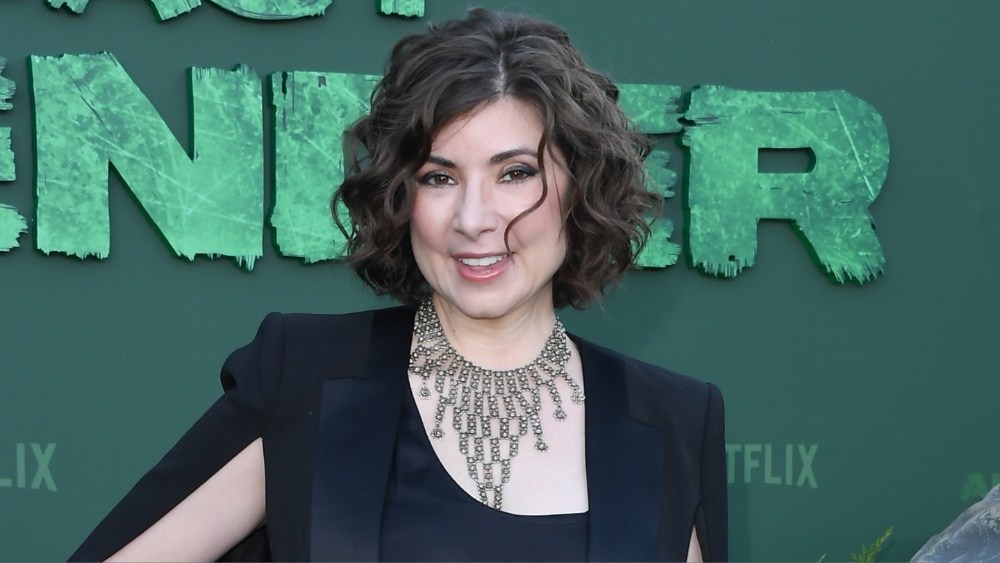
FEATURED ENTERTAINER OF THE WEEK
Christine Boylan
Television writer, producer and showrunner
August 31, 2026
Christine Boylan Strikes First-Look Deal With Paramount TV Studios
Christine Boylan has built the kind of television career that rarely announces itself with red-carpet noise, yet quietly shapes what millions of viewers end up discussing. Her name travels through writers rooms, genre franchises and streaming credits rather than tabloid headlines. This week, it moved into a more public kind of industry spotlight: Boylan has signed a first-look deal with Paramount TV Studios to develop and produce original series. For a writer-producer whose résumé moves from caper television to fairy-tale mythology, Marvel drama and Netflix’s live-action Avatar: The Last Airbender, the pact is more than a routine Hollywood announcement. It signals that a major studio is betting on her taste, her room leadership and her ability to build shows that can live beyond a logline. Boylan is especially interesting because her career has unfolded across several versions of modern television. She came up in an era when network procedurals and cable dramas still trained writers in relentless episode-making. She then moved through the boom years of shared universes, comic-book television and global streaming adaptations. That background matters now. First-look deals are often awarded to producers who can generate new properties, manage existing intellectual property and understand what a platform needs before a series even exists. Boylan’s selection this week is a reminder that some of television’s most consequential creative figures are not always its most photographed. They are the people who know how a season arcs, why an episode turns, when a character has earned a revelation and how a recognizable title can be translated for a new audience without becoming merely decorative.
Quick Facts
| Nationality | American |
| Years Active | 2000s-present |
Early Life
Public biographical information about Christine Boylan’s early life is limited, which is not unusual for a television writer-producer who became known through credits rather than performance. Unlike actors, whose personal histories are often folded into publicity from the beginning, writers frequently enter public view only after their work accumulates enough weight to become a calling card. Boylan’s documented story begins most clearly in television, where her credits show a steady movement through writers rooms that demanded speed, structure and an appetite for genre. That absence of an overly packaged origin story is itself revealing. Boylan’s professional identity has been built around the work: scripts, season engines, adaptations and the collaborative architecture of serialized television. Her career suggests the education that writers rooms provide when they are functioning at their best. A young writer learns not only how to write a scene, but how to break story under pressure, protect a character’s emotional logic, survive notes, adjust production realities and keep a season moving after the first idea has lost its novelty. Boylan’s later success on ambitious genre shows makes sense when seen through that route. The mechanics of television are unforgiving. A fantasy world still needs a clean act break. A superhero story still needs an emotional center. A streaming epic still needs episodes that create momentum rather than simply deliver lore. Boylan’s early public record points to a writer who learned those muscles inside working series rather than by becoming an overnight brand.
Career
Christine Boylan’s career is best understood as a tour through the changing priorities of American television. She has written and produced for shows that live in very different neighborhoods: the puzzle-box pleasures of Leverage, the romantic procedural rhythm of Castle, the fairy-tale reinvention of Once Upon a Time, the occult comic-book atmosphere of Constantine, the bruised vigilantism of Marvel’s The Punisher, the socially conscious teen-superhero world of Marvel’s Cloak & Dagger, the young-adult mystery of The Society, the global spy machinery of Citadel and the fantasy-adventure scale of Avatar: The Last Airbender. That range is not just a list of credits. It explains why a studio would want her in business now. Television has become a medium of translation. Producers are asked to translate comics, animation, novels, brands and older hits into series that feel immediate. Boylan’s résumé shows repeated experience with that problem. On Leverage, a show built around con artists correcting injustices, the pleasure came from precision: each episode had to function like a small machine, with setup, misdirection and reveal. That kind of construction is excellent training for serialized genre work because it teaches a writer how to hide information in plain sight while still making the episode satisfying. Castle, another important stop, offered a different discipline. A broadcast procedural depends on chemistry, pace and repeatability. It has to be welcoming to casual viewers while rewarding the faithful. Boylan’s time in that ecosystem placed her inside one of television’s most commercially durable forms. Once Upon a Time broadened the canvas. The ABC series succeeded by treating familiar fairy-tale characters not as museum pieces, but as figures who could be remixed through contemporary television melodrama. It required a comfort with mythology, reveals, family secrets and competing timelines. For Boylan, it also placed her inside a series that showed how aggressively network television could court fan engagement before the streaming era fully took over. Her later move into comic-book television was a natural extension, but not a simple one. Constantine, based on DC’s Hellblazer mythology, occupied a darker supernatural lane. Marvel’s The Punisher was harder-edged still, centered on trauma, violence and moral consequence. Marvel’s Cloak & Dagger, by contrast, approached superhero material through the lives of two young people connected by grief, class, race and mysterious powers. The contrast between those Marvel projects is important. Boylan was not simply moving from one comic-book logo to another. She was working on shows with different tonal obligations and different audiences. The Punisher had to confront the weight of Frank Castle’s violence. Cloak & Dagger had to make extraordinary abilities feel tied to ordinary vulnerability. The Society, released by Netflix in 2019, added another layer to Boylan’s streaming-era profile. The series followed teenagers forced to build a new social order after finding themselves isolated from the adult world. It was renewed for a second season before that renewal was reversed amid pandemic-era production complications, a striking example of how television success can still be overtaken by circumstances outside a creative team’s control. For a producer, that kind of disruption is part of the modern landscape. A strong concept, critical attention and audience interest do not always guarantee continuation. Boylan’s later work on Citadel and Avatar: The Last Airbender placed her in the middle of high-scale global entertainment. Citadel, from Prime Video, represented the international franchise ambitions of streaming television. Avatar, meanwhile, carried the burden of one of the most beloved animated series of the 2000s. Any live-action adaptation of Avatar arrives with expectations already in the room: fans remember the world, the bending disciplines, the emotional clarity of Aang’s journey and the moral complexity of characters such as Zuko. Boylan’s role as an executive producer and writer on the Netflix adaptation put her inside a project where reverence and reinvention had to coexist. Her later elevation, alongside Jabbar Raisani, to showrunner duties for the next stages of Netflix’s Avatar: The Last Airbender underscored the trust placed in her command of story and production. The Paramount TV Studios first-look deal now extends that trajectory from hired leadership to originating power. A first-look pact does not guarantee that every idea becomes a series, but it gives a producer a studio home and signals confidence in her development instincts. For Boylan, it is also a logical next step. After years of helping build and steward other people’s worlds, she is positioned to create new ones of her own.
Television
- Leverage (2008-2010) — Writer and producer
- Castle (2011-2012) — Writer and producer
- Once Upon a Time (2012-2014) — Writer and producer
- Constantine (2014-2015) — Writer and producer
- Marvel’s The Punisher (2017) — Writer and co-executive producer
- Marvel’s Cloak & Dagger (2018-2019) — Writer and executive producer
- The Society (2019) — Executive producer
- Citadel (2023) — Writer and producer
- Avatar: The Last Airbender (2024-present) — Writer, executive producer and showrunner
Business Ventures
- Signed a first-look agreement with Paramount TV Studios to develop and produce original series for the studio.
- Works as a producer and executive producer in scripted television, with credits spanning network, cable and streaming series.
Current Projects
- Developing and producing original series under a first-look deal with Paramount TV Studios.
- Continuing in a leadership role on Netflix’s Avatar: The Last Airbender, with the series renewed for additional seasons.
Interesting Facts
- Boylan’s career has moved through several major television business models: broadcast network series, basic cable dramas, Marvel-branded streaming television and global franchise streaming.
- She has worked on both Marvel and DC-related television properties, including Marvel’s The Punisher, Marvel’s Cloak & Dagger and Constantine.
- Her résumé shows a repeated attraction to worlds with rules: cons in Leverage, fairy-tale realms in Once Upon a Time, superhero mythology in Marvel television and elemental bending in Avatar: The Last Airbender.
- Leverage gave Boylan experience with heist-style plotting, one of the most demanding forms of television structure because the audience must understand the plan only as much as the story wants them to.
- Castle placed her inside a procedural format, a valuable training ground for writers because each episode must deliver a satisfying standalone story while still serving long-running character dynamics.
- Once Upon a Time required writers to balance familiar cultural icons with new mythology, a challenge similar to modern franchise adaptation.
- Marvel’s The Punisher and Marvel’s Cloak & Dagger sit in very different corners of Marvel television, showing Boylan’s ability to move between adult vigilante drama and young-adult superhero storytelling.
- The Society was renewed for a second season before Netflix reversed course amid pandemic-related production complications, making it one of the notable casualties of that disrupted television period.
- Avatar: The Last Airbender is one of the most scrutinized adaptation assignments in modern fantasy television because the original animated series retains a passionate multigenerational fan base.
- A first-look deal is not the same as a series order; it gives a studio the first opportunity to buy or develop a producer’s projects, making it a vote of confidence in the producer’s creative pipeline.
- Boylan’s public profile is unusually work-centered, with far more information available about her writers-room and producing credits than about her private life.
- Her career shows how contemporary television increasingly depends on writer-producers who can move comfortably between original development and established intellectual property.
Why ShowBiz Selected This Entertainer
Christine Boylan is featured this week because her first-look deal with Paramount TV Studios marks a significant new chapter in a career built on genre fluency and production experience. The pact positions her not merely as a writer hired onto major shows, but as a creator-producer with a studio home for developing original series. That timing is meaningful. Boylan arrives at the deal after a run of credits that includes Avatar: The Last Airbender, Citadel, The Society, Marvel’s Cloak & Dagger, Marvel’s The Punisher, Once Upon a Time, Castle and Leverage. In other words, she has worked across the kinds of shows the television business keeps asking for: adaptable, serialized, world-driven and capable of attracting passionate audiences. Her selection also reflects a broader industry trend. Studios want producers who understand both character-first storytelling and franchise architecture. Boylan’s career has repeatedly placed her at that intersection. The Paramount agreement suggests confidence that she can now convert that experience into new series, not just help steer existing ones.
Watch Next
- Avatar: The Last Airbender
- Marvel’s Cloak & Dagger
- Marvel’s The Punisher
- The Society
- Once Upon a Time
- Leverage
- Castle
- Constantine
- Citadel